
While exploring Venice, taking a short day trip to Murano offers a chance to step beyond the Grand Canal and experience the island where Italy’s centuries-old glass artistry still lives and breathes. The soft hum of boats fades as you drift past Venice’s edge — and Murano beckons gently on the horizon.
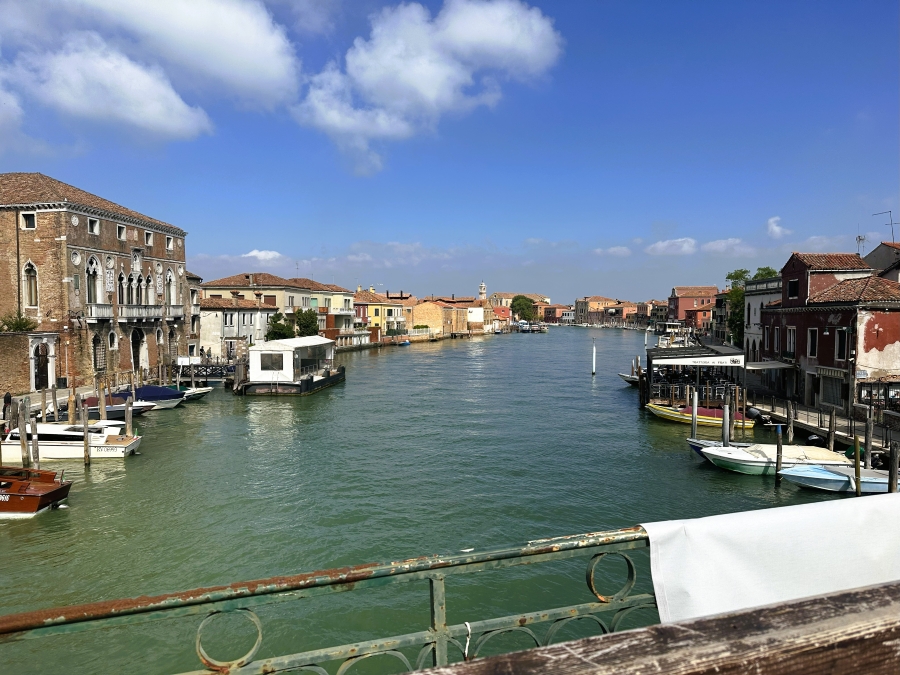
Located in the Venetian Lagoon of northern Italy, Murano is made up of seven small islands seamlessly linked by bridges that cross its eight canals. Once a humble fishing port, Murano later became the world’s home of Venetian glassblowing, where craftsmanship and flame have intertwined for over 700 years. Today, visitors and artisans from across the globe come here to admire its exceptional glass creations — a dazzling mix of heritage and innovation that defines Murano’s identity as Venice’s island of glass.
After the energy and crowds of Venice, wandering through Murano’s quieter canals and studios offers a more reflective side of lagoon life. Planning your day trip to Murano from Venice is simple, with frequent Vaporetto lines shuttling passengers between the islands throughout the day. If you’ve found this post, you’re likely planning your own Murano day trip (and perhaps a visit to the colorful island of Burano or Torcello). So here’s a concise Murano travel guide sharing its highlights, history, and travel tips — to help make your visit truly memorable.
Planning a day trip to Murano: How to get there from Venice
The Venetian Lagoon is home to several islands — including Venice, Murano, Burano, Torcello, Giudecca, Sant’Erasmo, and San Michele, to name a few. Of these, Murano is one of the most visited, thanks to its close proximity — just 1.5 km from Venice — and its world-famous tradition of glassmaking.
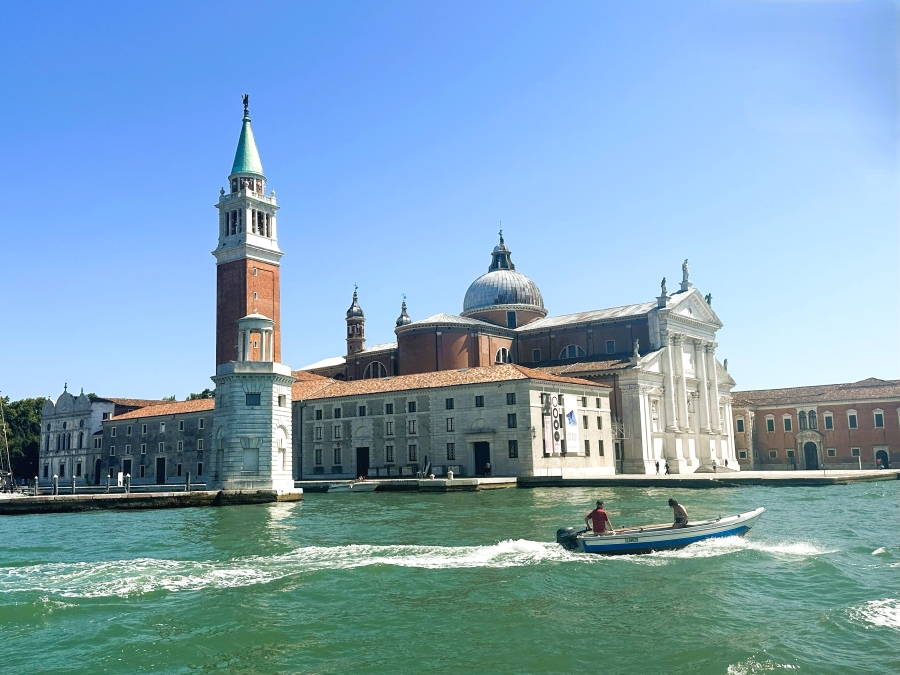
Frequent ACTV Vaporetto lines shuttle passengers back and forth across the lagoon along clearly marked channels. As the boat hums across the lagoon, the skyline of Venice drifts slowly behind you — a quiet transition from the city’s rush to the stillness of open water. Taking the Vaporetto is the most affordable way to reach Murano, though boats can become crowded during the peak summer months. Private water taxis or small-group tours to Murano, Burano and Torcello offer a more relaxed and flexible alternative, but they are considerably more expensive. If you do hire a private water taxi, look for the license number and yellow stripe displayed on all official vessels.
Most visitors arrive at Murano Colonna, the island’s main gateway, though every route offers a beautiful view of Venice receding into the horizon. We chose to explore the lagoon by Vaporetto, keeping our Murano day trip on a budget while giving us more flexibility to explore the island at our own pace.
ACTV Vaporetto lines from Venice to Murano
From Piazzale Roma, Line 3 reaches Murano’s first stop in about 20 minutes. It continues through all the main island stops — Colonna, Faro, Navagero, Venier, and Museo. The Colonna stop lies closest to the glass-making workshops while Museo stop is nearest to the renowned Murano Glass Museum.
If you depart from Fondamente Nove, Lines 12 and 13 bring you to Murano Faro in about 9 minutes, while Line 4.1 reaches Murano Colonna in roughly the same time. For a more scenic circuit, Line 4.2 completes the loop around the lagoon in the opposite direction — a lovely option if you enjoy watching Venice and its islands drift past in a gentle way.
Venezia City Pass and the ACTV travel card
We purchased the Venezia Unica Pass (formerly known as the Venezia City Pass) since we planned to visit several museums and islands while making the most of the ACTV transport network.
The Gold Pass includes a 72-hour ACTV travel card valid on Vaporetto lines, along with entry to multiple museums — including the Glass Museum of Murano and the Lace Museum of Burano.
Alternatively, you can purchase 24-, 48-, 72-, or 7-day ACTV travel cards, which can be a more economical option if you plan to use the Vaporetto frequently during your stay. Remember to validate your travel cards before boarding the Vaporetto — a small step that saves you a fine later.
Day trip to Murano: History of glass making in Murano
During the 12th and 13th centuries, many homes in Venice were built of wood — a serious fire risk given the intense heat of the glassmaking furnaces. To prevent potential disasters, a law was passed in 1291 requiring all furnaces to be relocated to the nearby island of Murano.
This decision not only safeguarded Venice from fire but also helped preserve the secret techniques of Venetian glassmaking on this small island.
Since then, the precise and ancient art of glassmaking has remained largely unchanged, closely guarded and carefully passed down from one generation of Murano artisans to the next. These craftsmen continue to honor their centuries-old heritage in the factories and workshops that line the island’s canals today. It’s no wonder that Murano has become synonymous with glass — a legacy forged in fire and perfected through time.
Glasswork and glassblowing techniques from Murano
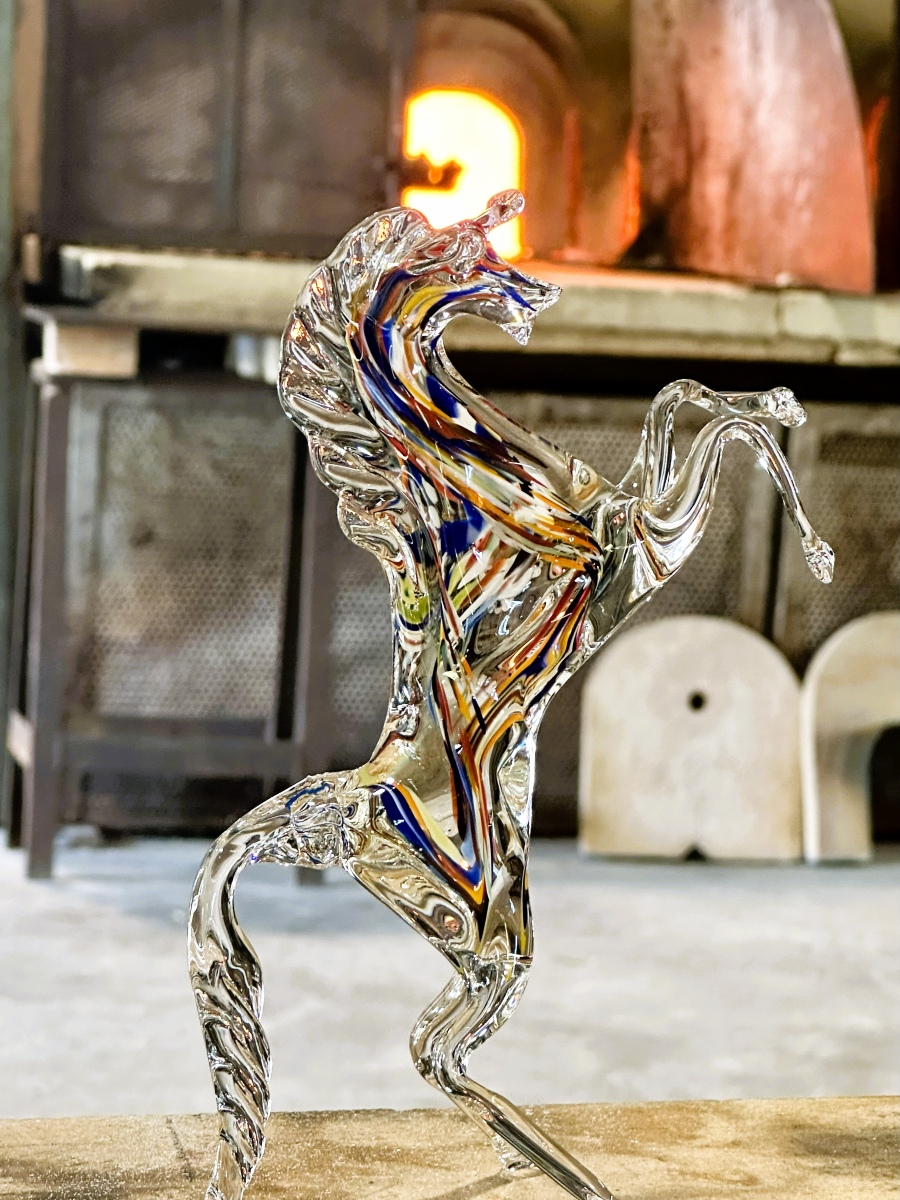
Once the glass factories were established on the island, Murano quickly rose to fame across Europe and beyond for its exquisite glass and masterful glassblowing techniques. It was here that Aventurine glass — glass flecked with delicate threads of gold — was first invented.
As you stroll through Murano, you’ll see captivating examples of its craftsmanship, from Cristallo (clear glass) and Lattimo (opaque milk glass) to the island’s most vibrant creation, Millefiori, known for its intricate floral patterns and bursts of color.
The vibrant Millefiori glass art of Murano
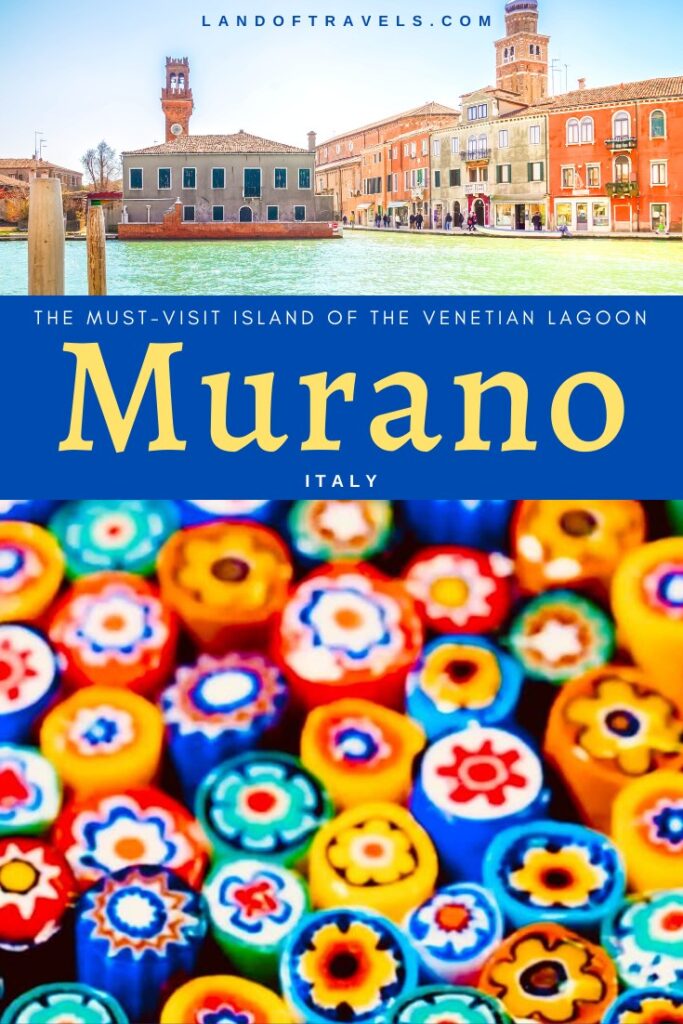
We were captivated by the vibrant Millefiori glasswork that we discovered in the boutiques and souvenir shops scattered across Murano. The word Millefiori literally translates to “a thousand flowers,” and the technique lives up to its name — delicate floral patterns blooming in glass.
This intricate process involves overlaying several thin glass layers inside a specially designed millefiori cane, which is then cut into small pieces. These colorful slices are assembled into plates, bowls, jewelry, and decorative art pieces —their patterns revealed and sealed by the precise application of heat.
Every Millefiori creation feels like a small universe of color — proof that the artisans of Murano can turn molten glass into living art.
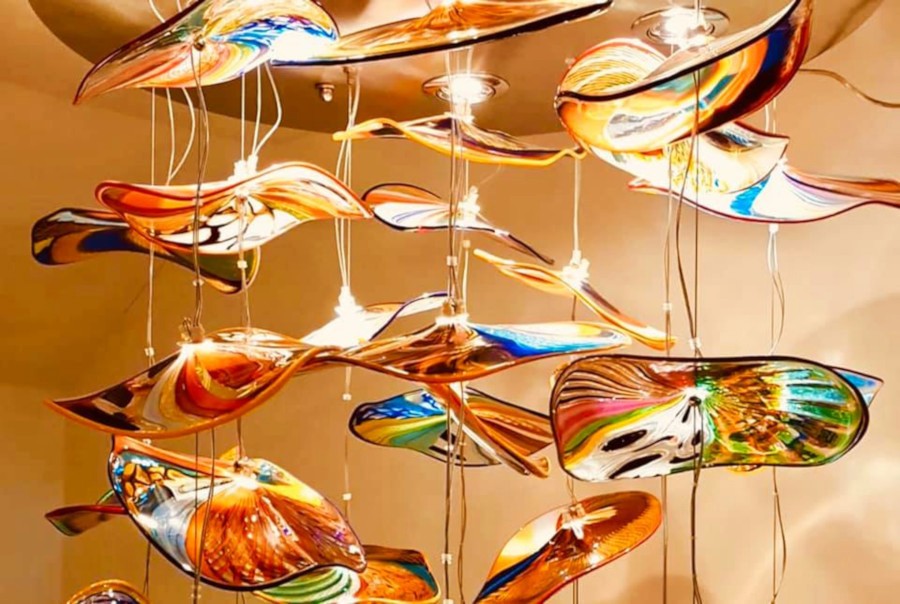
Day Trip to Murano: The must-see sights of this Venetian island
Murano is a small, walkable island best explored on foot. Whether you arrive at Colonna, Faro, Museo, or any of the other Vaporetto stops, wandering along its peaceful canals and weaving through narrow alleys quickly becomes part of the experience itself.
That said, there are a few must-see sights and can’t-miss experiences that truly capture the island’s character. Here’s our guide to the best things to see during your day trip to Murano.
1. Museo del Vetro – the Murano Glass Museum
Murano and glass are inseparable — one cannot be mentioned without the other. It’s only fitting then that this island has an entire museum devoted to this most treasured craft, and it’s one you shouldn’t miss. Founded in 1861, the Museo del Vetro (Murano Glass Museum) traces the history of Venetian glass and the evolution of Murano glass art across the centuries.
Housed within Palazzo Giustinian, near the Museo Vaporetto stop, the museum occupies what was once the residence of the bishops of Torcello. Inside Palazzo Giustinian, light filters through high windows and dances across exquisite glass displays. Many of the exhibits were donated by Murano’s master glassmakers and factory owners, preserving the island’s deep lineage of artistry and tradition.
As you explore the museum further, you will notice how the ornate ceilings of the first floor reveal the quiet grandeur of a bygone era. Among its treasures are three magnificent chandeliers, the most striking being a 60-branched masterpiece by Giovanni Fuga and Lorenzo Santi — a creation that still seems to shimmer with the light of centuries past.
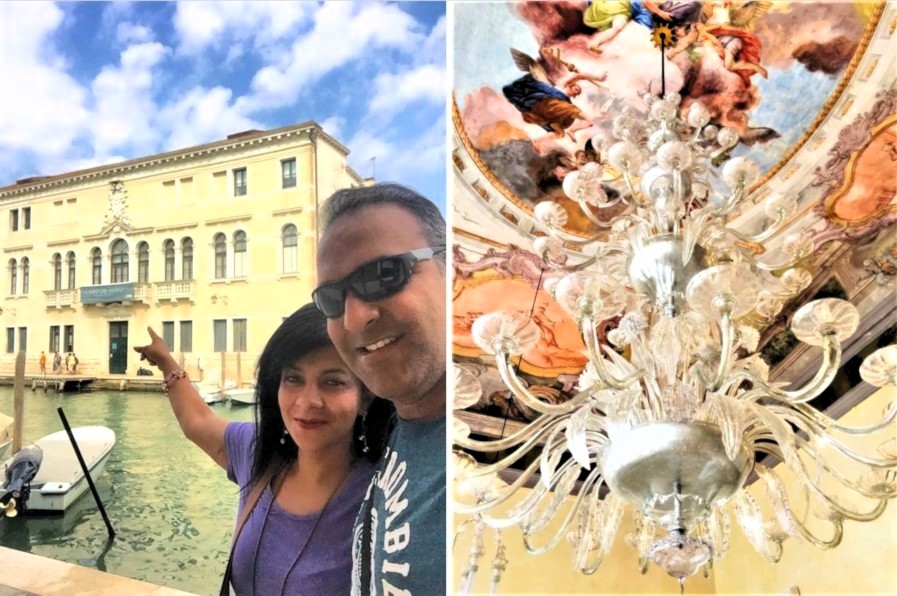
These stunning chandeliers and the Baroque elegance immediately made me recall walking through frescoed halls in Salzburg and the grand salons of Vienna — a reminder of how Venetian artistry once illuminated royal courts of Habsburg Europe and beyond.The museum’s galleries unfold chronologically, beginning with ancient Roman relics and culminating in modern masterpieces by renowned designers such as Carlo Scarpa, Venini, and Barovier & Toso.
One display in particular captures the essence of Murano’s craft — a miniature Italian garden sculpted entirely in glass. Every leaf, flower, and blade of “grass” is rendered from crushed glass, each detail a testament to the precision of the island’s artisans.
Tickets & Passes for Murano Glass Museum:
Tickets cost €12 for adults and can be purchased online to save time and skip the entry lines. If you’re also visiting Burano’s Lace Museum, consider the combo ticket for both museums — a convenient and budget-friendly option. Admission is also covered by the Museum Pass, included with the Venezia Unica Pass.
2. Torre dell’ Orologio (Clock Tower of Murano) and the nearby glass artwork
If you arrive at the Colonna vaporetto stop and walk straight down the alley beside the canal, you’ll soon see the red-brick clock tower of Murano rising in Campo Santo Stefano — the Torre dell’Orologio.
Located near the Church of San Pietro Martire, this graceful landmark offers a chance to take an elevator ride to the top for a bird’s-eye view of the island of Murano and the surrounding lagoon.
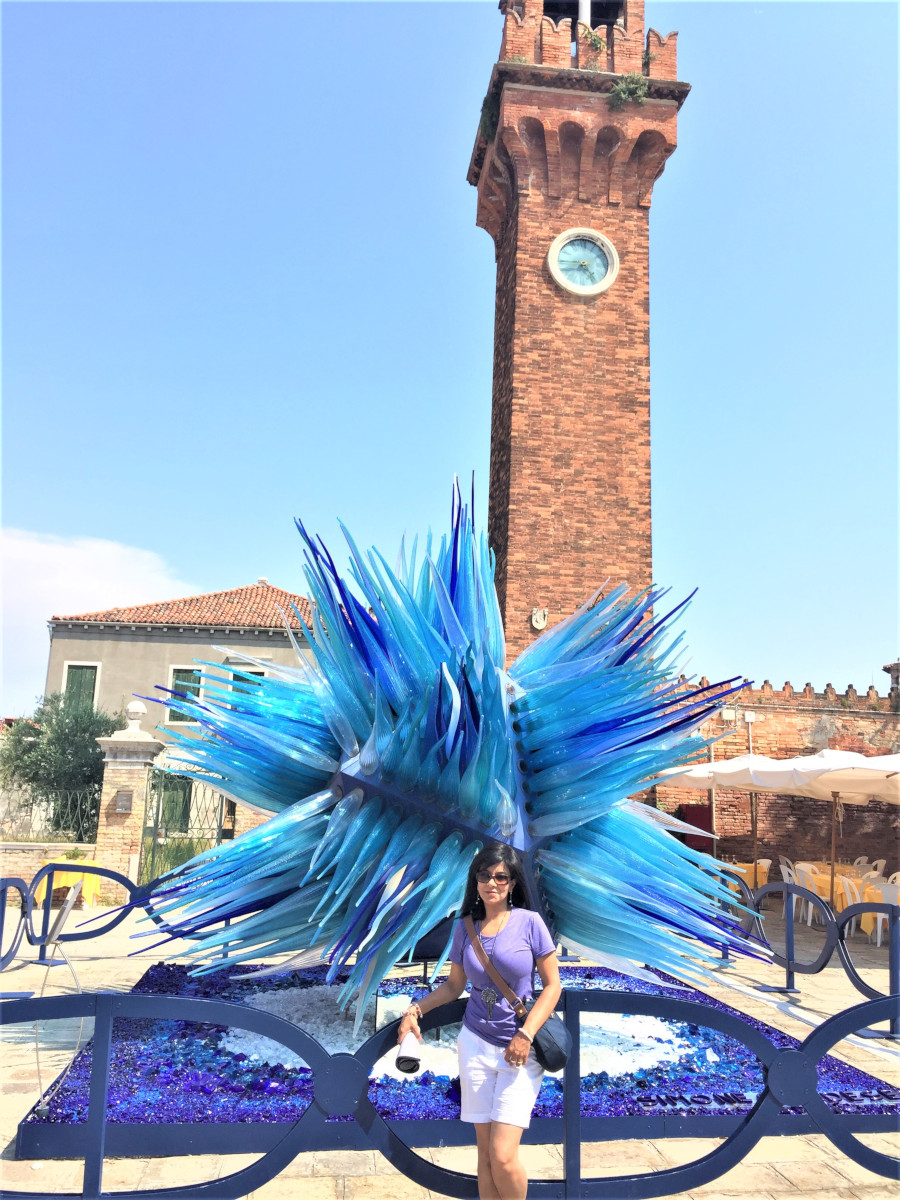
Our hotel staff had mentioned that at the base of this clock tower stood a striking glass installation created by Murano’s master artisans — one of the island’s most-photographed attractions. And true to their word, the Comet Glass Star did not disappoint. The dazzling starburst sculpture — crafted from nearly 500 pieces of hand-blown glass in six luminous shades of blue — greeted us as we stepped into Campo Santo Stefano to see the clock tower.
3. Basilica dei Santa Maria e San Donato
The splendid church of Santa Maria e San Donato is one of the most visited landmarks on the island of Murano. Located in Campo San Donato, just a short walk from the Museo del Vetro (Murano Glass Museum), this 12th-century basilica is among the oldest churches in the Venetian Lagoon.
It houses the relics of Saint Donatus of Arezzo and is celebrated for its Romanesque architecture. A graceful bell tower stands beside it, while Byzantine arches embellish the red-and-white brick facade — a timeless reflection of Murano’s layered history. Hanging behind the altar are curved bones once believed to be those of the dragon slain by Saint Donatus — relics that blend faith, legend, and the mystery of the sea.
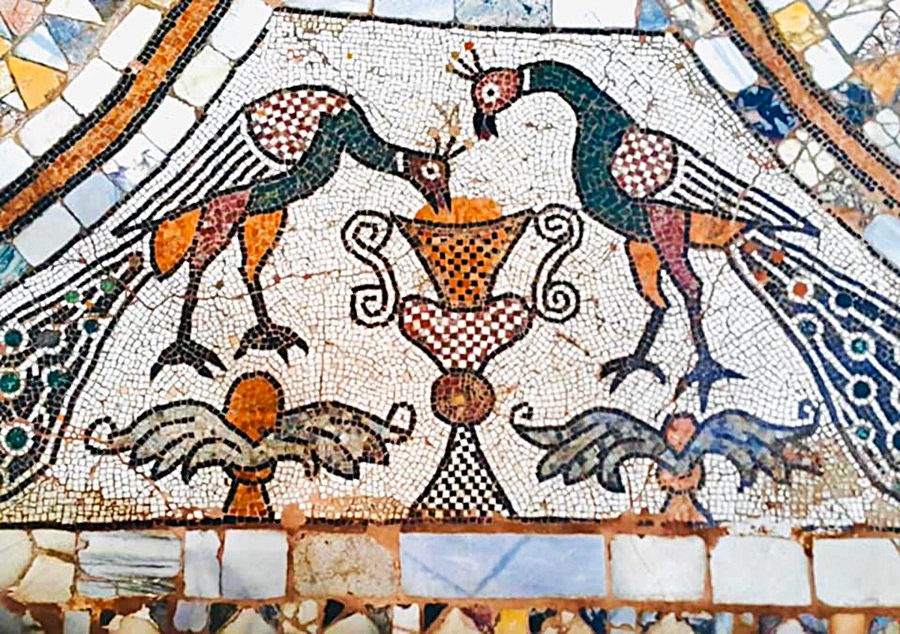
Set beside a quiet canal, the basilica is also renowned for its ornate mosaic floor, created by Byzantine artists in 1141. Above the altar, another exquisite mosaic of the Virgin Mary, made with Murano-blown glass, glows softly in the filtered lagoon light — a reminder that even here, faith and craftsmanship intertwine.
4. Indulging in gelato during a day trip to Murano
As we wandered through Murano on a warm afternoon, we decided to pause for a sweet treat and stopped by Murano Gelateria Artigianale, located near the Museo stop. This charming gelateria offers an excellent selection of homemade, artisanal gelato at reasonable prices — the perfect refreshment between sightseeing stops.
The Amaretto and Limone flavors were absolutely divine — light, creamy, and bursting with authentic Italian flavor. Outside by the canal, we lingered for a while, spoons tapping our gelato cups as the lagoon breeze drifted gently through the quiet street.
5. Witness Venetian glass craftsmanship in a glassmaking demonstration
One of the most memorable things to do during a day trip to Murano is attending a glassmaking demonstration led by skilled artisans who have perfected this craft over generations.
Many glass factories (fabbriche) are clustered near the Colonna vaporetto stop, along Fondamenta dei Vetrai, and in the Faro district. Here, visitors can watch 15–20 minute demonstrations for a small entry fee. While the larger and more renowned factories often require an appointment in advance, many smaller studios welcome visitors to walk in and witness the glassblowers at work beside the blazing furnaces (fornaci).
It’s fascinating to watch the artisans draw molten glass from a 3,000-degree furnace, rolling and shaping the glowing orange mass with prongs and specialized tools until it transforms into a delicate vase, sculpture, or bowl. Watching this process — the precision, rhythm, and quiet artistry — was one of the highlights of our Murano visit.
Before photographing or recording, always check with the staff for permission. If allowed, avoid using flash — it can be distracting to the maestros as they work beside the glowing furnaces. Keep in mind that many glass factories are closed on Sundays, so it’s best to plan your visit accordingly..
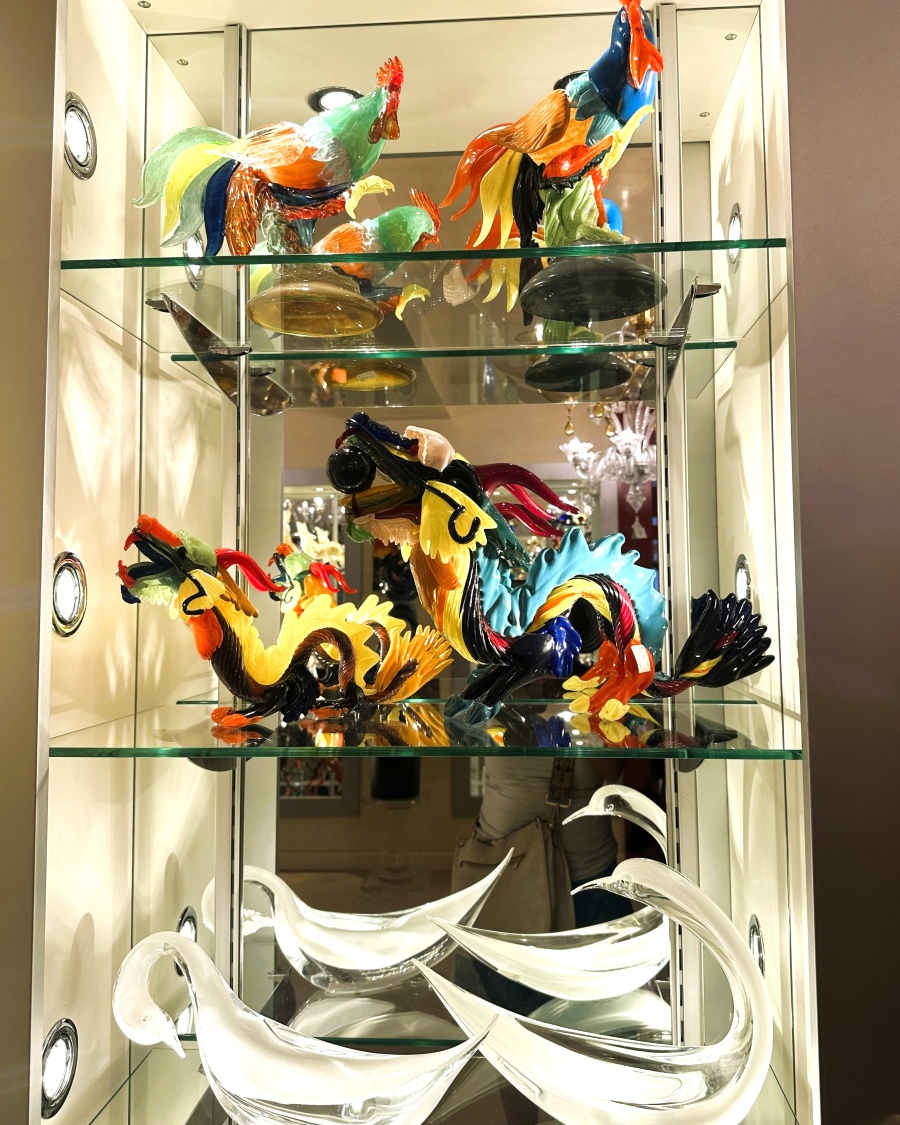
6. Shopping for Murano glass souvenirs
The venerable art of Italian glassmaking is beautifully showcased in the boutiques, art galleries, souvenir shops, and workshops that line the alleys of Murano.
As you wander through the island, you’ll find everything from glass sculptures and chandeliers to contemporary art pieces, jewelry, and mirrors — each one a reflection of Murano’s enduring craftsmanship.
To preserve and distinguish authentic creations, the Vetro Artistico Murano trademark certifies glass products handcrafted by Murano artisans. When making a purchase, look for this trademark seal of authenticity — it’s your assurance that the piece truly originates from the island’s furnaces.
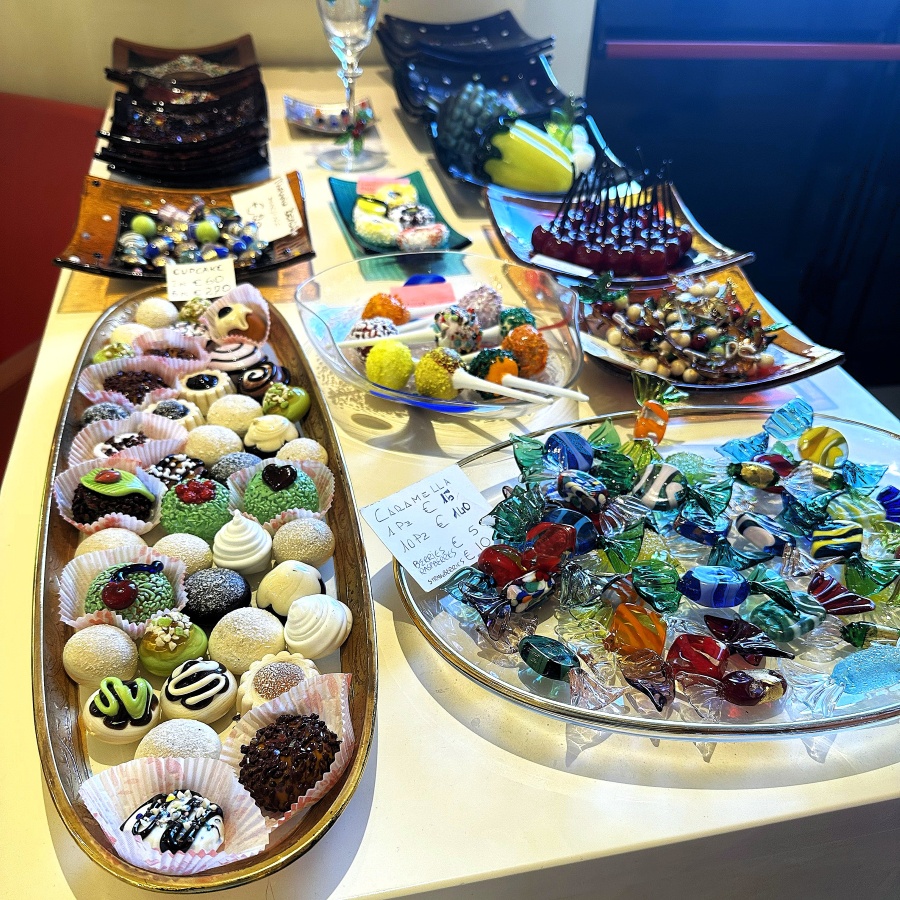
The lead glassblower in each factory, known as the maestro, creates pieces that command the highest prices, admired for their refinement and technique. Prices vary widely depending on the time, skill, and process involved — from small keepsakes costing a few euros to intricate masterpieces worth thousands. Each purchase, however small, carries a spark from Murano’s eternal furnaces.
7. Wrap up your day trip to Murano with a leisurely stroll around the island
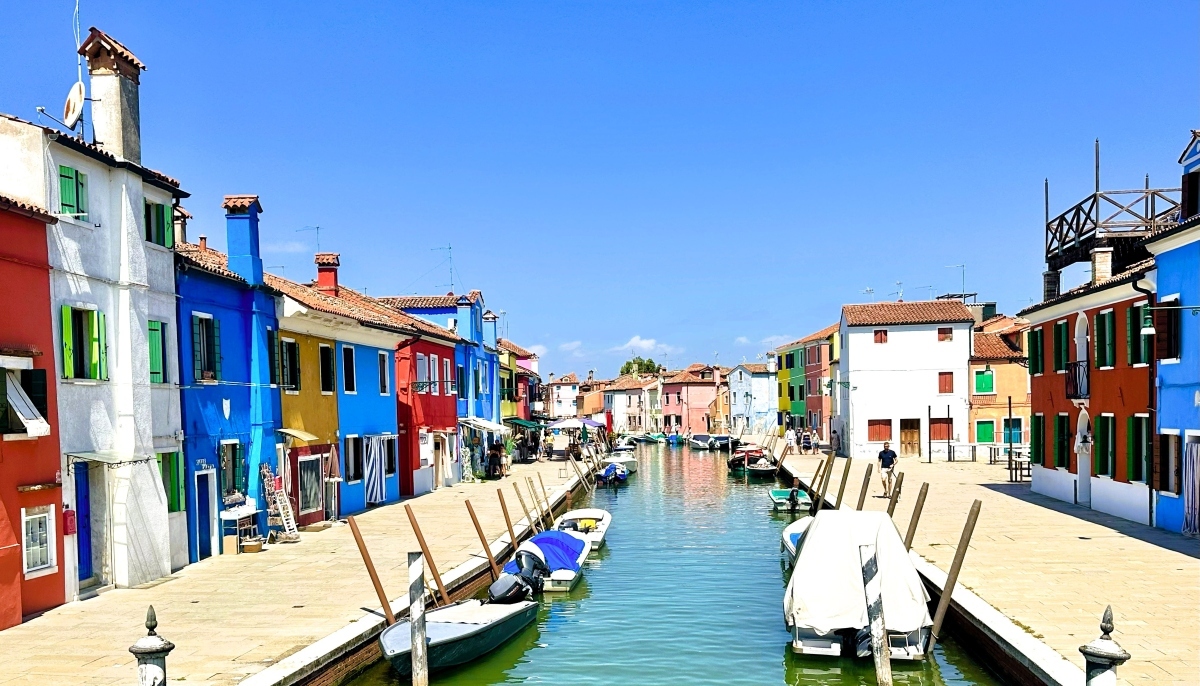
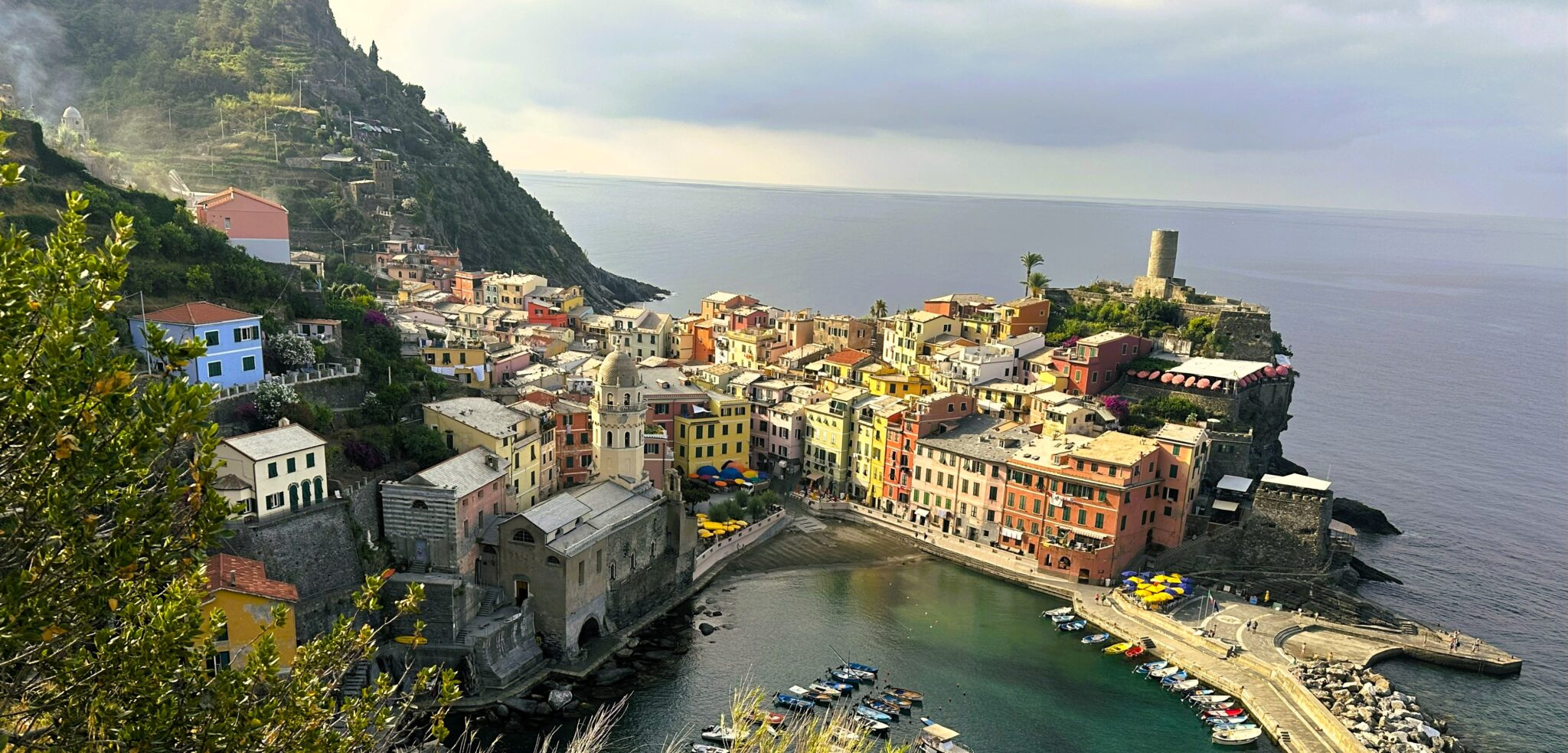
Finally, the best way to discover Murano is simply to stroll along its cobblestone alleys, cross its graceful bridges, and follow the quiet curve of its canals. In many ways, Murano feels like a miniature version of Venice — colorful, timeless, but much quieter in spirit. The island’s pastel homes and laid-back rhythm reminded us of our visit to Cinque Terre, while a chance encounter with a floating vegetable market offered a charming glimpse into everyday life on the island.
As we planned to take the vaporetto to Burano after exploring Murano, we wandered toward the southeastern edge of the island, near the Faro stop, where we came across a beautiful, active lighthouse.
While Murano may not have as many colorful houses as Burano, it carries a quiet, authentic charm — making it hard to believe that Venice’s bustle lies just across the lagoon.
If you’re planning on visiting the colorful island of Burano next, don’t miss our detailed Burano travel guide. Experiencing both Murano and Burano in a single day reveals how two islands of the same lagoon express Italian artistry in beautifully different ways.
Ciao, Dear Murano
Murano is a unique destination where visitors can experience the daily life of the Veneto and witness an art form that has endured for centuries. Refined, exquisite glassworks have been created in the world-famous furnaces of Murano for generations, and this craft continues to shape the island’s identity today.
It’s a memorable experience to watch the centuries-old art of glassblowing on this island of the Venetian Lagoon. A leisurely day trip to Murano reveals why it’s often called the “Glass Island” —a place where artistry, light, and time still move at their own rhythm. We thoroughly enjoyed witnessing this timeless Italian craftsmanship and hope to return to explore the Venetian Lagoon once more.
Until then… ciao, dear Murano.
Disclaimer: It’s a pleasure for us to share our travel experiences with all our readers and we sincerely hope to inspire your future travels. In order to help us maintain this blog and offset the costs of running it, we have sprinkled affiliate links throughout the site. If you choose to make a purchase via any of these affiliate links, we’ll earn a tiny commission at no additional cost to you.
If you enjoyed reading this post, please don’t forget to share it!

Hello ! I’m Aditi …..
Welcome to Land Of Travels – a travel blog that my husband Manish and I started to share our travel stories and travel tips. We are full-time professionals, dedicated parents, foodies, and it is our shared passion for travelling that lead us to become part-time bloggers.
I was born and brought up in Northern India, and have been living in Bay Area, California for more than two decades now. Since childhood, I’ve always had a passion to travel far & wide and experience different cultures. I am passionate about planning our trips and exploring off-the-beaten-path destinations.
My sincere hope is that the travel tips offered on this blog will help you plan your next memorable adventure.
Happy travels!
~ Aditi Sharma ~












Despite having taken a number of trips to Venice, we still haven’t made it to Murano. I’d love to take a hands-on glass making class during a visit.
I love the look of the comet glass star! It is absolutely stunning. Also, I love travel blogs! As a stay at home mom I travel through people like you that share their journeys and experiences! Thank you!
Those glass works are so beautiful! Its our first time hearing about Murano. Thank you for all the information Aditi 🙂
I love that glass work. It’s vibrant and intricate. The shapes are interesting. Good find!
What a gorgeous place and gorgeous pieces of artwork. Thanks for letting us see it through your eyes.
Nice pictures! We preferred Burano over Murano, but both were nice!
Omg I love Murano! Love all your pictures as well.
I’m blown away by the variety and diversity of the glass in Murano. I’ve been to Venice but never to Murano—now I can’t wait to go! I’ll definitely see the glass museum first.
I didn’t have the chance to go there on my venetian trip but this makes me want to go back!
This looks like such a gorgeous place to visit. I wish I would have gone here last time I was in Venice! Great post!
I would love to visit Murano someday! The colors of the glass are so beautiful. The gelato, of course, looks beautiful too – yum!
Ahh yes brings me back to my travels there!! The glass blowing is such an amazing art form! Great post.
Murano looks amazing and I love these glass souvenirs. I was in Venice 2 years ago and wish I had time to go to Murano as well!
Wow. Brings back memories. I visited Murano (and Burano) in my 20’s. I’ve always dreamed of going back now with my family. One of these days. I only remember visiting the glass museum and watched a demonstration. We missed all of these other things you listed. Next time…
I really want to visit this country. It looks really beautiful.
We had the opportunity to visit Murano a few years ago and absolutely loved it. You have given the perfect information to help people have a great visit!
Thank you for your kind words.
This takes me back to when I visited Europe, Venice included, 27 years ago!!! I can’t believe it’s been that long. Your photos are beautiful and inspiring!!!!
Thank you for your kind words. Glad the post brought back fond memories.
Gosh this takes me back to my time in Europe! Beautiful!
Beautiful glasswork and very well written post !!!
Thanks. Glad you enjoyed reading about Murano – the glasswork of this Venetian island is truly splendid.
The history of glass blowing in Murano is very interesting! The glasses pieces artwork is amazing, would love to have some around my home. The gelato looks amazing as well!
I’m so excited to visit this part of Italy and admire the Venetian glass. I’ve been to a few museums which had glass like this and it is always so impressive!
The glassworks are really pretty especially the millefiori. The sculpture is really impressive. It sounds like a unique experience just walking around the streets seeing a different form of glass art at every corner.
I’ve been meaning to visit Murano and your post inspired me to go through with it… hopefully for this year 🙂
Love this post. I always enjoy going to Venice and Murano is one of my favourite parts. The glass blowing is indeed fascinating to watch. Did you purchase any glass art?
Glad you enjoyed reading the post. I couldn’t help but indulge in shopping for some beautiful Murano jewelry.
The history of glass blowing almost being “banished” to the island of Murano to prevent city fires back in the Middle Ages is fascinating! I’m just so impressed with the variety of styles you photographed. Also, a mosaic made of blown glass just sounds so stunning.
I love Murano glass! I am a picker and get so excited when I find this at garage sales for cheap! I hope one day I can go to the murano factory to see how this is made! Great guide.
Another gorgeous post Aditi!
I have never been to Murano myself, but my sister visited and bought me one of their gorgeous necklaces. It is really cool to see where it was made!
I had no idea the reason the glassmakers moved to that area was to avoid fire in Venice. Although, now you say it, it makes total sense!
oooh Venice is fairly close to where I live but I never thought of heading to Murano too! The glasswork looks absolutely exquisite – the intricate patterns and the colours are fascinating. I think I’d overshop for souvenirs, it’s just so pretty!
We spent a few days in Venice last December and absolutely loved it! Since we only had 4 days and prefer slow travel, we decided not to go to Murano and Burano, but to keep these islands for when we visit Venice again next time. Now your photos make us dream and we’re so looking forward to visiting Venice again!
Such a nice guide! I love Murano and Burano 🙂
Really enjoyed all of your photos, especially the ones of the artwork and closeups of the food!
I’m so anxious to get to Italy, especially northern Italy. One of my biggest regrets from my last trip to Italy is not buying more Venetian glass so I think you’ve convinced me that I definitely need to day trip to Murano!
Such a great and thorough post! Murano sounds like a perfect day trip idea and that colourful glass is just beautiful!
What I like the most from my trips are … side-trips! I love visiting lesser known places and discover very beautiful sights close to my main destination that many (or most) travellers would miss. Great guide here, thanks! 🙂
So many pretty details!
This place looks great! I had never heard of this before but would definitely love to visit 🙂
I highly recommend a visit to Murano, Burano, and Torcello on a day trip from Venice.
We have some beautiful Murano glass bought in Venice many years ago. The glass shops were my favourite Venetian activity. Would absolutely love to go to Murano itself one day. Thanks for sharing – excellent post and beautiful photographs.
I’ve never heard of Murano before, but it really makes me want to go visit Venice even more now! Great guide.
This is a fantastic travel guide. I would love to go back to Venice and visit both Murano and Burano.
Wow! I’ve actually never heard of Murano before! I’ve visited Venice and totally wish I would’ve gone to Murano while I was there. It looks so cool!
Great guide! When I was there, I tried to combine Murano and Burano into one day-trip. Murano was second on my itinerary and I got there late and totally short-changed it. I’d love to go back!
Such amazing pictures! Love your detailed guide, it’s super helpful ❤️
Thank you!
Lovely guide, really enjoyed the photos. I love the blue glass sculpture as well!
Glad you enjoyed reading the post!
Thank you so much for sharing! This is a gorgeous place, and your guide is so thorough. Pinning now so I can add this to my bucket list!
Thank you! Glad you enjoyed reading the post. Murano is a must-visit!
I made it to Burano while visiting Venice, but didn’t make it to Murano. After reading this fantastic post, it’s definitely on my short list!
I love this post! The photos are stunning and the information is so useful. We’re heading to Venice in April and now I’m convinced we should visit Murano too.
Thank you for your kind words. Glad you found the post informative.
Wow, that is fantastic. I have been to Venice twice now and I wish I would had known this. Well, I guess there is always a next time.
The islands of the Venetian lagoon are a must-see and so easy to get to from Venice. I highly recommend a trip to Murano, Burano, and Torcello while you are there.
I love your pictures in this post, it makes me want to go there and see for myself! It would be interesting to see all the glass factories and museums and true artwork behind it.
Thank you! Indeed – the glasswork of Murano is exquisite.
I love your post because it is detailed and shows a certain side of Venice, that isn’t common. I think, when people think of Venice, they imagine other things than glass. You have uncovered a part of Venice I didn’t know about.
I am glad that this post introduced you to charming Murano. It’s a joy to get away from the hustle-bustle of beautiful Venice to explore Murano, Burano, and Torcello – the quieter, unique islands of the Venetian lagoon.
Great guide! I went to Venice but didn’t get around to going to Murano, which now officially seems like a mistake, haha. Oh well, I’ll just add that as another excuse to get back to Venice 🙂
Thank you. It’s always fun to return to Venice – so whenever you are there next hope you will be able to explore these charming islands of the lagoon on a day trip: Murano, Burano, and Torcello.
Great post what beautiful and colorful photos! What an amazing place Murano is, so vibrant and beautiful, truly a bucket list destination.
The glass blowing is so beautiful and would be amazing to see. It would also be a nice break from the hustle and bustle of Venice to idly explore Morano away from the crowds.
Indeed! Exploring Murano and seeing the fascinating displays of glass art and learning about how the famous glasswork of Murano is made is quite an experience.
Ahh, this brings back memories ? – great guide. I visited Murano back in 2008 and loved watching all the glass blowers at work in their little studios, and wandering around the peaceful, pretty streets. That amazing piece of glasswork by the clock tower was there back then.
I missed Murano as I went for day tour to Venice from Florence. But niw looking your photos make me tempt to vosit this region again. I would love to check thos glass crafts which is local and unique craft of this region.
Murano sounds like a great destination. I would like to visit the glass museum. It looks so amazing
The islands of Murano, Burano and Torcello must-see when visiting Venice. We loved exploring Murano – the glass art there is stunning.
I have been lucky enough to visit Murano, my favorite part was the boat ride there! All the glass is so beautiful. Such a fun day trip along with Burano.
Visiting Murano and Burano was a memorable experience for us during our trip to Venice. Thanks for visiting the post.
The bright colors are amazing! I bought my family Murano glass in Venice but forgot to pick up something for me to keep. I must return!
And when you do….do plan a trip to Burano as well. Murano is to glass as Burano is to lace – both are must-see islands of the Venetian lagoon.
Such intricate designs and even more incredible that they’re done with glass. I used to do a lot of polymer clay work, and so I know how much time and effort it takes to make these flower designs. I envy the artisans who get to play with glass all day, what a creative career.
We were awestruck by the striking glass art of Murano and being able to see the glassmaking process by the maestros at various glass factories was a memorable experience.
You look stunning standing in front of this glass artwork Aditi. The Glass Museum and the glass artworks are all amazingly beautiful. I’ll try to include this in our itinerary if we happen to visit Venice in the future. Thanks for sharing.
Thank you so much! I hope you get to visit Murano and the nearby islands of the Venetian lagoon next time you visit Venice.
I am soooo jealous that you got to go here! I’m so in love with Murano glass. This just makes me want to go even more! Excellent guide.
If you love Murano glass, then you must visit the island itself. I was awestruck by the amazing craftsmanship of the maestros of Murano.
I love glass art, so this would be the perfect day trip for me. Just the museum alone would be worth the trip! Thanks for all of this great information.
So glad you found the post informative. If you love glass art and are happen to be in Venice, then planning a day trip to Murano is a must.
We live half the year in Veneto so Murano is a place I know very well. The colors of the island and its glass never fails to impress me. That glass structure is striking!
We loved exploring this quieter slice of the Veneto region. The glasswork of Murano is absolutely incredible.
I have been to Venezia twice but never made to Murano. The amazing glass they make there is a must-see so next time i make sure I get on a boat and spend a day there. And definitely in low season.
I hope you will be able to visit Murano, Burano and Torcello the next time you visit Venice. The islands are beautiful, easy to explore on foot and so convenient to get to from Venice. They make for a great day trip.
Who won’t want to visit a beautiful place like this one. ?? Lovely captures and lots of great information. Thank you for sharing your experience. I am marking it on my travel list.
Glad you enjoyed reading the post and found it informative. Murano indeed is charming and the glasswork is incredible.
I have been to Murano many years ago and it was a memorable trip. I love how you have captured the beautiful glass Millefiori technique! Enjoyed visiting Murano again through your blog! 🙂
Glad you enjoyed reading the post. The colors and technique of millefiroi left us awestruck.
Wow! I went to Venice but didn’t get a chance to go to Murano since we were only there for a few hours 🙁 But it would have been great since you said it is only 20 minutes away! I would have love to have gone to the museums!
Murano is located very close to Venice and is so easy to get to with the frequent vaporetto service. Hope you can make the trip to Murano and other nearby islands of the lagoon next time you plan a trip to Venice.
I lived in Venice 20 years ago. I went on Murano pretty often and had there my own glass jewelry shop from where I bought a lot of jewels. I don’t know if the shop still exists, but the place is equally beautiful.
Absolutely – we loved exploring Murano and Burano. The glass jewelry of Murano is so beautiful – I couldn’t help but purchase a few pieces for myself as well.
So lovely! What could be better than taking a vaporetto and then wandering the colourful streets, savouring a delicious gelato! Brings back wonderful memories for me – I even treated myself to a small piece of jewellery. Your photos are so colourful!
Our day trip to the islands of the lagoon beyond Venice was so memorable – after the hustle-bustle of Venice, we loved the quiet feel of these islands, despite visiting in peak season. I couldn’t help but treat myself to some beautiful Murano jewelry as well.
I’m adding Murano to my travel bucket list. Would love to see the glass factories and museums. It must have been awesome to see the techniques of glassmaking in person.
Indeed! We were fascinated by the demonstration – the artisans are truly masters of their craft – deftly shaping the molten glass into such beautiful shapes and designs. It was lovely to escape the crowds of Venice and explore the quieter, charming islands of Murano and later on Burano.
We visited Murano a million years ago when I was a kid and we lived in Europe for the first time. As I’ve obsessed over Dale Chihuly and his glass art here in the US, my mind has often flashed back to the glass blowing demonstration I saw in Murano!
What a unique island!! The photos you captured are beautiful!
Thank you! Visiting Murano and Burano on a day trip from Venice was a truly memorable experience for us.
Makes me want to go and visit! Their glass works are so beautiful! Always heard of Burano so its nice to read about Murano