
Some places in the world seem crafted by nature for a single purpose — to inspire awe. The Blue Grotto in Capri is one of them. A small sea cave tucked into Capri’s limestone cliffs, where sunlight slips through an underwater opening and turns the whole chamber into a luminous shade of brilliant blue. The effect feels almost unreal, and it’s no wonder this cave has become one of Italy’s most iconic natural wonders.
During our first trip to the Amalfi Coast, we took the ferry to Capri and explored the island at a slower pace, staying for two nights. We loved it so much that a few summers later, we returned with our children — and watching them experience the Blue Grotto in Capri (Grotta Azzurra) was one of those unforgettable moments I’ll treasure always.
One of the first questions travelers ask is whether the Blue Grotto is truly worth visiting. In my experience, it absolutely is — especially when you visit during the right season and plan your timing well. Inside this cave, every shade of Capri’s cobalt sea seems to collect into one glowing, suspended world.
This guide takes you through what the Blue Grotto really is, why it’s so iconic, and exactly how to visit — whether by boat from Marina Grande or by taking the bus to the steps near the grotto in Anacapri — along with costs, timing, logistics, and local tips.

Contents
What Is the Blue Grotto and Why Is It So Famous?
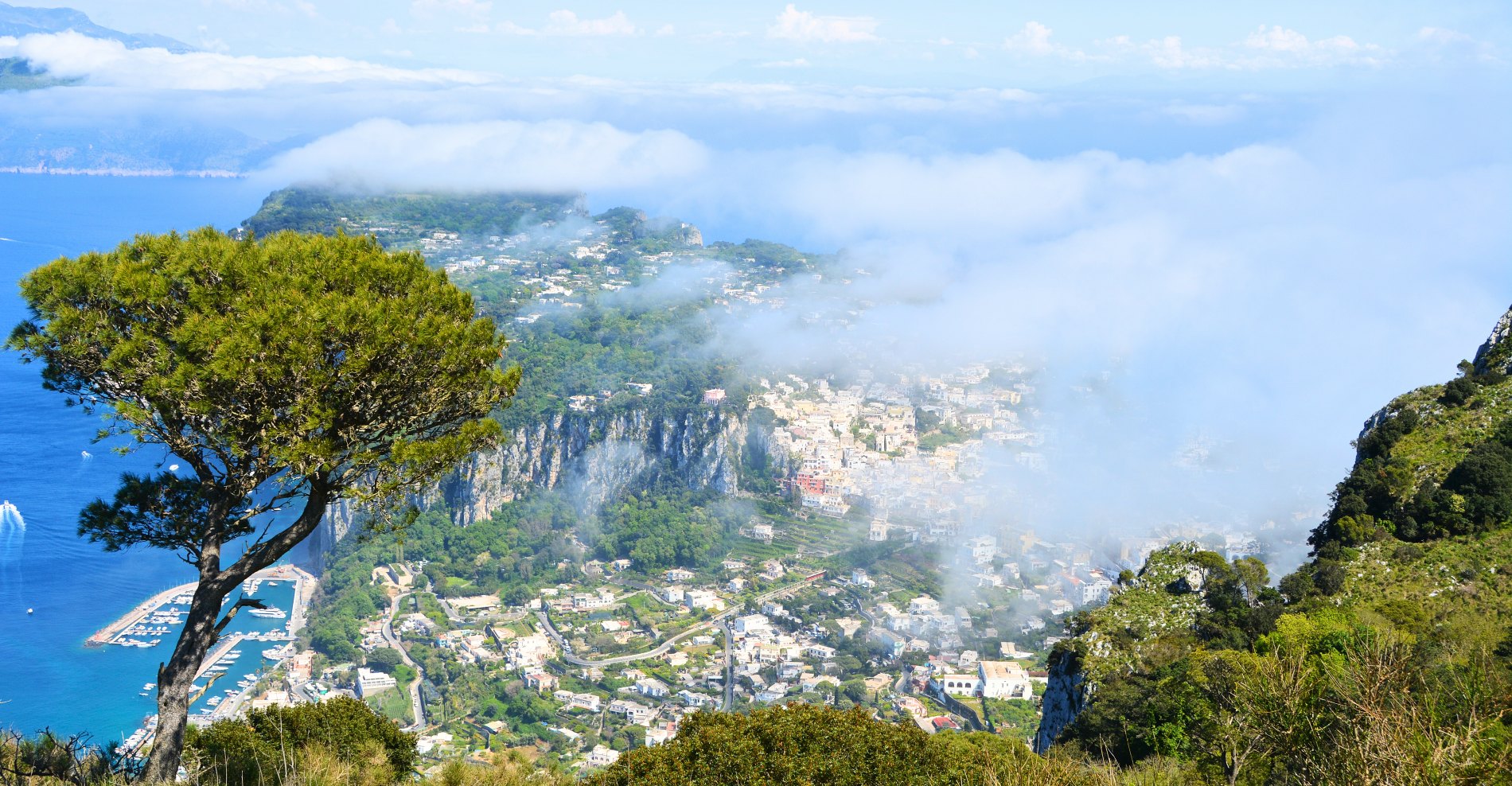
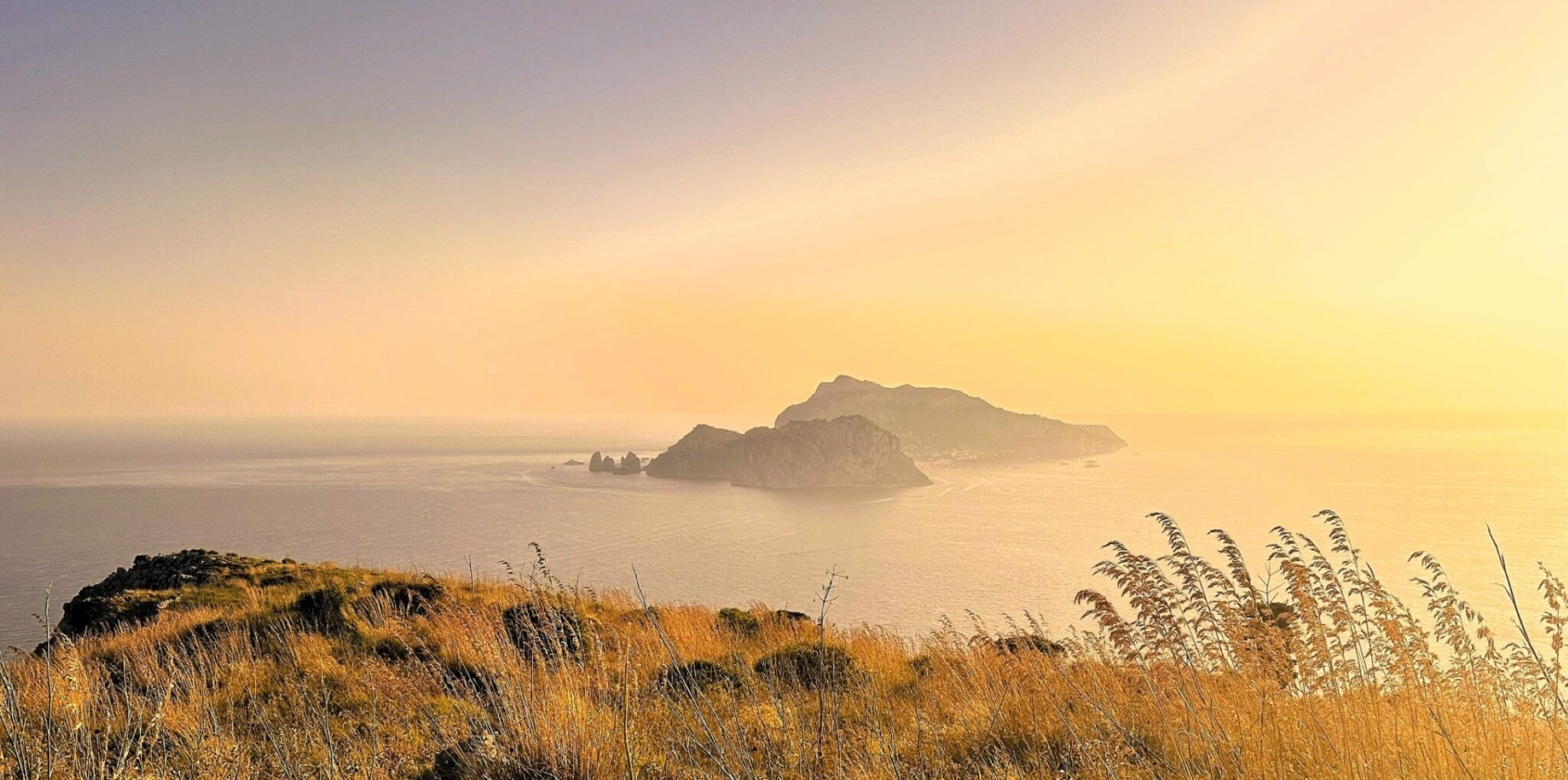
Located in the waters of the Tyrrhenian Sea, Capri captivates with its lively piazzas, dramatic limestone cliffs, sweeping viewpoints, hidden coves, and the iconic Faraglioni rocks. Among its most visited sights is the Blue Grotto (Grotta Azzurra) — a cliff-side sea cave in Anacapri, on the northwest coast of the island. It’s one of Italy’s most popular natural wonders thanks to a rare optical phenomenon: a cavern where the seawater glows in a brilliant shade of blue. The cave itself is modest, with a narrow entrance, but its magic lies entirely in how sunlight interacts with the sea inside.

What to Expect Inside the Blue Grotto
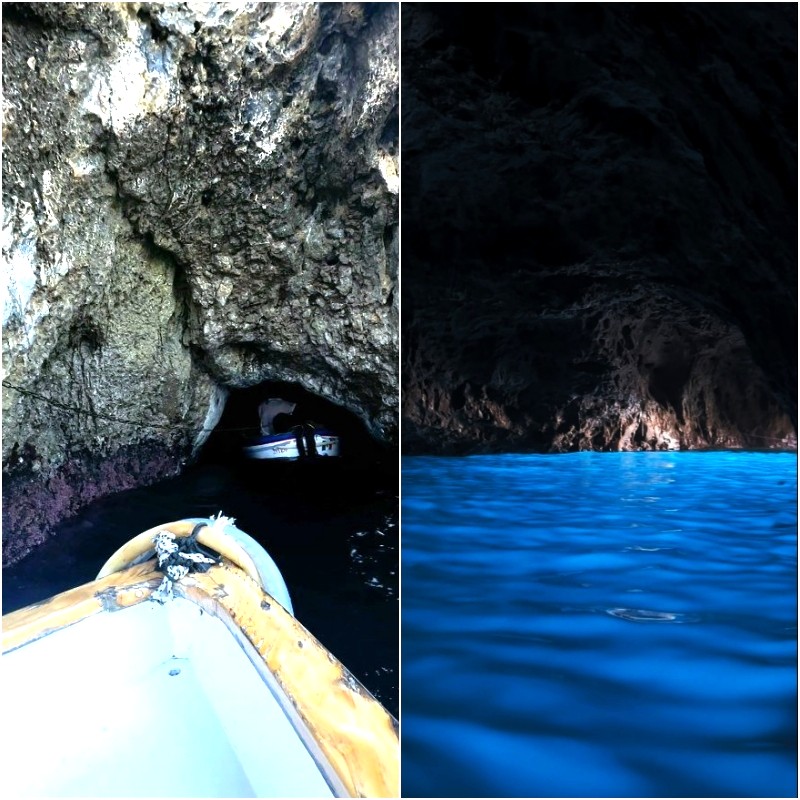
Stepping into the Blue Grotto feels a little like entering another world tucked inside the cliffs of the island. After the brief moment when the wooden rowboat squeezes through the narrow opening, your eyes adjust — and the entire chamber begins to glow in electric blue. To me, the space inside felt larger than expected (about 60 meters long and 35 meters wide), yet calm and removed from the bustle outside — intimate enough that you can hear every dip of the oars and every echo of the songs sung by the boatmen. Children are often mesmerized, and adults fall quiet without realizing it — such is the charm of the Blue Grotto. Even though the circuit inside the cavern is short, the moment itself feels cinematic and lingers long after you return to the sunlight outside.
So What Makes the Blue Grotto Blue?
Sunlight enters the grotto through two openings: the small sea-level slit you pass through by rowboat, and a much wider underwater opening just beneath it. As the sunlight travels through the sea, the water absorbs the longer color wavelengths — the reds, oranges, and yellows — converting them into faint heat before they ever reach the chamber. What remains are the shorter blue wavelengths, which reflect off the pale limestone floor, and rise into the cave as that radiant, luminous glow.
The intensity of this neon-blue light depends entirely on how the sunlight meets the water. On overcast days, you may not see the same brilliance. Even on clear days, the glow shifts in tone, usually peaking between 12pm and 2pm when the sun is highest.

Why Is the Blue Grotto So Famous?
There are only a handful of places in the world where you can witness a phenomenon like this, which is why the Blue Grotto in Capri has earned its legendary status. The visit itself feels like a tiny adventure — ducking into a rowboat, gliding through the narrow entrance, and suddenly entering a chamber bathed in blue. It’s a natural symphony between sunlight, seawater, and limestone, and that vibrant glow is what has made the Grotta Azzurra famous across the world.
It’s also relatively easy to visit during a stay on Capri or even on a day trip from Sorrento, the Amalfi Coast, or Naples, which only adds to its popularity.
This cinematic effect has drawn visitors for centuries. Emperor Tiberius, who had relocated to Capri during the end of his reign is also said to have enjoyed swimming here back then — and while swimming is strictly prohibited today, the grotto continues to attract travelers from every corner of the globe for a brief but unforgettable experience.
How to Visit the Blue Grotto in Capri – All Options Explained
There are several ways to visit the Blue Grotto in Capri, and each offers a slightly different experience. You can reach it from the island itself or combine a visit with a day trip from Naples, Sorrento, Positano, Amalfi, Ravello, or other Amalfi Coast towns. Whether you prefer booking a group tour, organizing everything on your own, or hiring a private boat, the grotto is surprisingly easy to reach — but only when sea conditions allow the entrance to open.
If you are planning a self-guided day trip to Capri or planning on spending a few nights on the island, check out our comprehensive guide on Capri that explains how to get there and things to do on the island.

Firstly, Does Any Tour Guarantee Entry to the Blue Grotto?
Unfortunately, no tour — private or group — can guarantee entry. The grotto opens and closes entirely based on sea conditions, which can change throughout the day. Because the entrance to the cave is narrow and sits right at sea level, it becomes unsafe for the rowboats to enter if the water is choppy, and in that case all visits are suspended. When this happens, boat tours might extend time spent near other highlights of the boat tour such as the Emerald Grotto, natural arch, or sea cliffs near the Faraglioni to compensate for the missed Blue Grotto stop.
For this reason, visiting the Blue Grotto always involves a bit of luck alongside thoughtful planning for time of day and season. However, when the sea is calm and the cave is open, even a short visit feels like a tiny, unforgettable glimpse into one of nature’s most luminous spectacles.
What to Expect with the Rowboat Experience
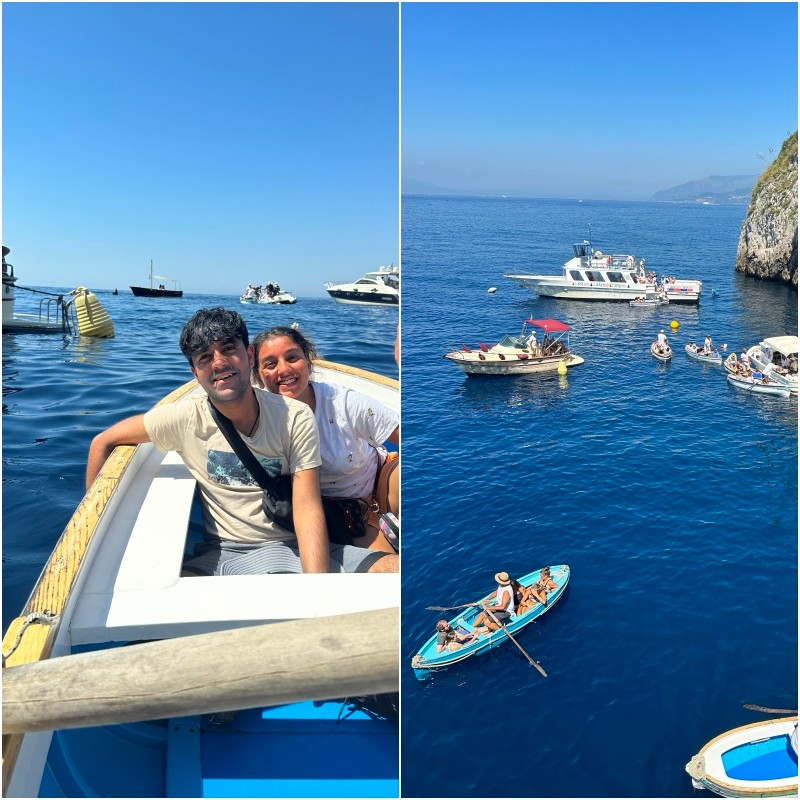
Regardless of how you arrive near the entrance of the Blue Grotto, the way you finally enter the cave is always the same: via the small rowboats managed by local boatmen. Each rowboat holds just a few passengers, and at the entrance you will be asked to lie flat across the bottom of the boat with your arms tucked by your sides while the boatman pulls the vessel through the narrow opening using a metal chain. Once inside, on a sunny day at the right hour, you find yourself immersed in a mesmerizing electric-blue glow.
The time spent inside the cave lasts only a few minutes, but it is atmospheric and far more beautiful than photos can capture. The boatman typically rows in a slow circle to allow everyone to soak in the experience. Often, the rowers even sing traditional songs such as “O Sole Mio,” which echo softly in the chamber, coupled with the gentle rhythm of oars slipping quietly into the water.
So now if you are wondering how to reach the grotto entrance, here is a list of the most common ways to visit the Blue Grotto in Capri to help you choose what might work best for your itinerary.
Visiting Blue Grotto from Marina Grande, Capri : The Classic Boat Tour Route
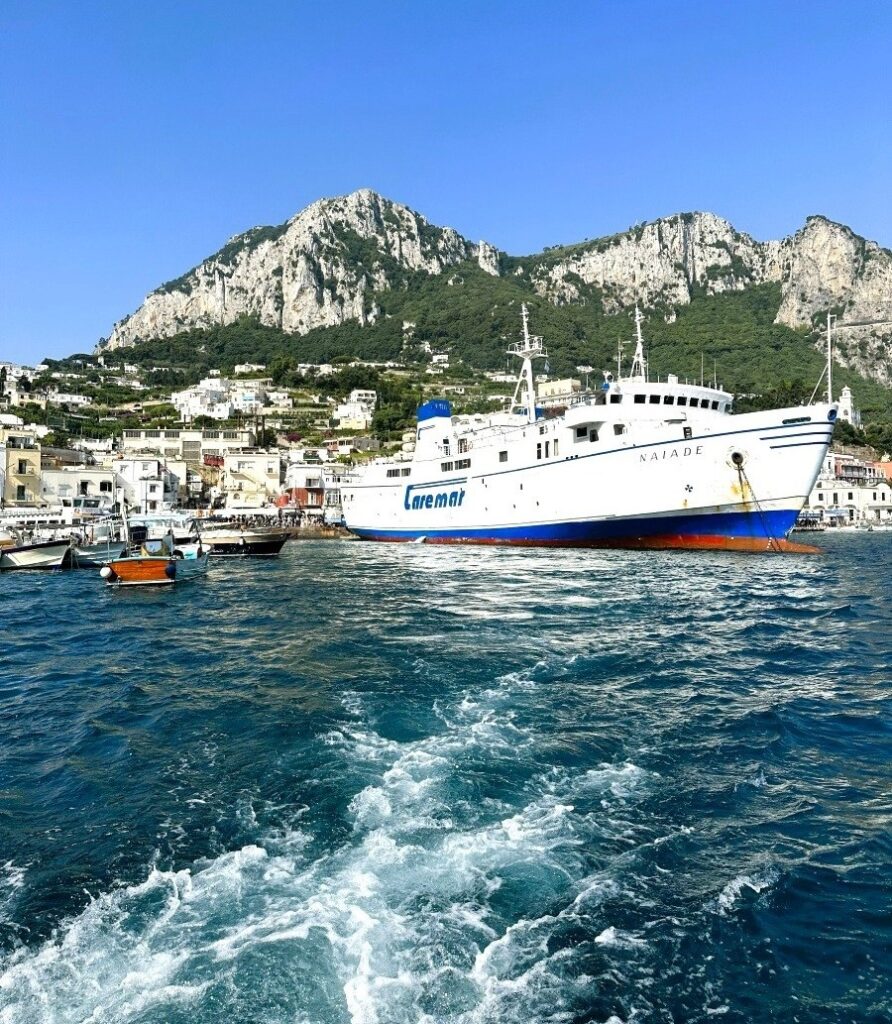
Whether you are staying on the island of Capri or day tripping, the most classic and scenic way to visit the Blue Grotto Capri is by taking a boat tour from the island’s main marina. Along Marina Grande’s waterfront, small kiosks sell tickets either for a full island tour with a Blue Grotto stop or for a shorter, direct trip to the grotto. Some of the popular operators for these tours are Motoscafisti and Laser Capri. You can purchase tickets online as well to avoid lines and disappointment due to tours being sold out in peak season, but remember that entrance to the Blue Grotto is weather-dependent and never guaranteed.
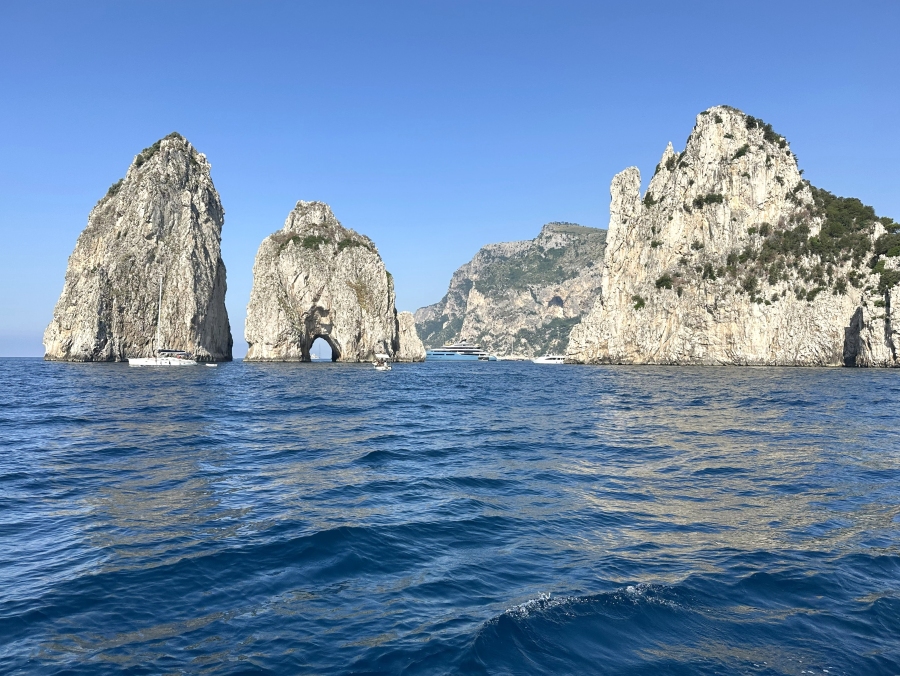
The full island boat tour that includes a Blue Grotto stop takes you on a scenic loop past Capri’s cliffs and the Faraglioni rocks, with commentary about the island’s coves and legends, before arriving at the entrance to Grotta Azzurra. The island boat tour ticket for a group tour typically costs between €20-€25 per person. The Blue Grotto entrance fee is generally not included and must be paid separately once you transfer to the wooden rowboat.
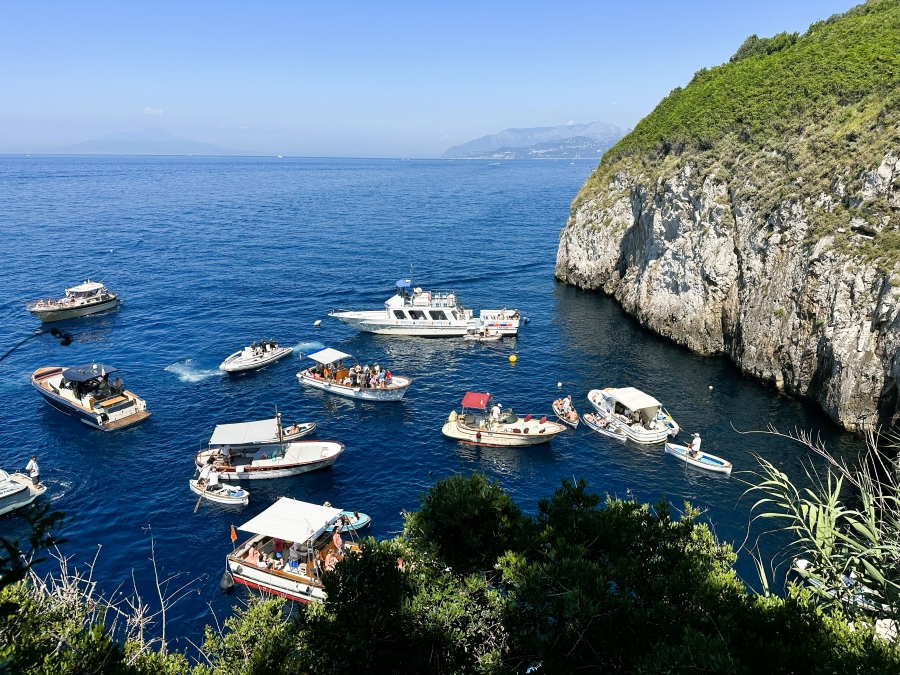
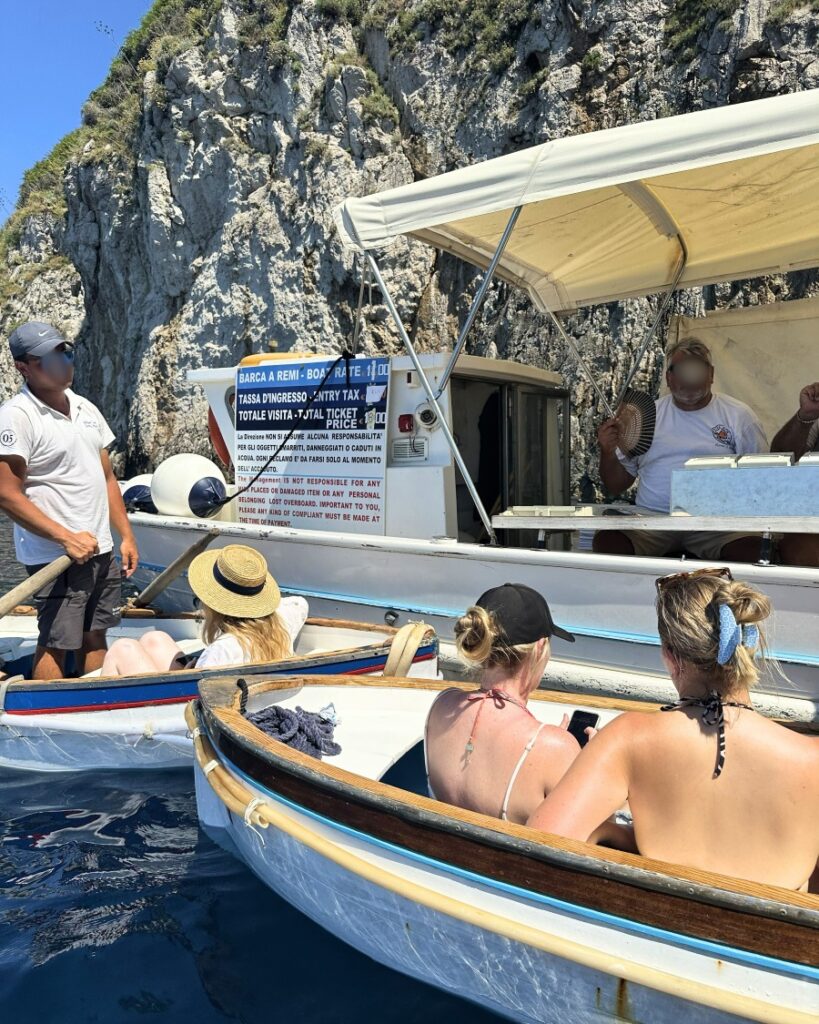
The transfer itself is part of the experience: the larger island tour boat waits nearby while you carefully climb down into the rowboat, and your boatman then rows you across to the grotto entrance. The entire process, from waiting on the bigger boat to transferring into the rowboat and finally entering the cave, can take anywhere from a few minutes to over an hour depending on how many other tours are waiting.
While the island tour with a Blue Grotto stop feels complete, it does come with one risk: some boats wait at the grotto only for a limited time. If the line of rowboats is very long, they may skip the Blue Grotto and return to the marina, even if you bought a ticket that listed it as a stop. To avoid disappointment, a good alternative is to buy a direct return ticket from Marina Grande to the Blue Grotto, or to visit from Anacapri using the bus-and-staircase route described below.
Visiting the Blue Grotto from Anacapri : The Bus to Staircase Route
The Blue Grotto is located at sea level beneath the cliffs of Anacapri. For visitors exploring or staying in Anacapri, one of the most convenient ways to visit is by taking the local bus from Anacapri town down to the grotto staircase near the Gradola terminus at the end of Via Grotta Azzurra. This route is usually quicker and more budget-friendly than departing from Marina Grande, as the bus from Anacapri to the grotto stop costs only about €2.40 one way. It’s a good idea to check the return bus schedule at the Anacapri bus station and confirm that the Blue Grotto is open for visits that day before you set off.
You can also take a one-way taxi from Anacapri’s main square, Piazza Vittoria, to reach the grotto staircase in Anacapri and return by bus afterwards — but in general, the buses are frequent, reliable, and far more economical than the island’s iconic (but expensive) convertible taxis.
From the Anacapri bus station, the Grotta Azzurra bus runs regularly, winding past residential lanes and viewpoints. In about ten minutes, you arrive at the stop above the grotto. From here, a cliffside staircase leads down to a small dock where the rowboats wait to bring visitors inside. You pay the grotto entrance fee at the floating ticket boat, and from there the rowboat takes you into the cave.
During one of our summer visits to Capri, we stayed on the Anacapri side and found this bus-and-staircase route far more efficient, even in peak season. We boarded the bus around 2:20 pm and were inside the Blue Grotto by 2:50 pm. It was seamless, quick, and overall an excellent experience. The main consideration is the staircase — steep in parts and requiring a climb back up afterwards — but otherwise this route is simple, affordable, and ideal in high season if you’re comfortable with stairs.
Visiting the Blue Grotto on a Day Trip from Sorrento, Naples, or the Amalfi Coast
If you are not staying on Capri, visiting the Blue Grotto can easily be part of a day trip from nearby Naples, Sorrento, Ischia, or the Amalfi Coast. Many organized tours combine the transfer to Capri, a boat tour around the island, and a few hours of free time on Capri itself. The Blue Grotto is often listed as an optional stop that the captain will attempt if sea conditions permit.
Prices for these day trips vary widely. Group tours typically range between about €70 and €130 per person, depending on departure point and what is included, while semi-private and private options offer a more intimate and customized experience at a higher price. Some tours include the grotto entry fee in their total cost, but many do not, so it is important to read the fine print and confirm this in advance when comparing options.
Best Time to Visit the Blue Grotto – Season, Time of Day and Closures
Visiting the Blue Grotto in Capri is one of those experiences where timing matters just as much as the method you choose to get there. While entry is never guaranteed, the months from late May through early October generally bring calmer seas, making it more likely for the grotto to open. Even then, wind and swell conditions can fluctuate by the hour, and it’s not uncommon for the sea to become choppier later in the afternoon. Cloud cover also plays a role: on overcast days, the signature electric-blue hue can appear much softer or, at times, barely visible. These months are also peak tourist season, so it’s no surprise that queues for the Blue Grotto can grow long, especially around midday.
In terms of the time of the day, the best time to see the signature sapphire glow of the grotto on a clear day tends to be between 12pm-2pm when the mid-day sun is at its peak. Early mornings and late afternoons are often less crowded, but the blue glow is comparatively muted.
As for operating hours, the Grotta Azzurra is technically open year-round when sea conditions allow, except on December 25th and January 1st. Hours vary by season: 9:00 am–6:00 pm in summer, 9:00 am–4:30 pm during April, May, and October, and 9:00 am–2:00 pm in winter.
Locals always advise staying flexible when planning a visit to the Blue Grotto and checking the weather forecast. Additionally, the simplest way to check its real-time status is by asking your hotel or B&B staff, inquiring at the kiosks along Marina Grande in Capri and checking the live signage board at the marina.
Blue Grotto Costs and Entrance Fees – What to Budget
If you are planning your visit to the Blue Grotto in Capri independently, it helps to understand that the total cost involves three separate parts: your ferry to Capri, the transportation that brings you to the grotto’s entrance, and the official fee for entering the cave. Because these are paid at different points in the journey, many visitors underestimate the final amount. Here is a clear breakdown of what to expect.
1. Getting to Capri (Ferries)
Ferries connect Capri with Naples, Sorrento, and the towns along the Amalfi Coast, with schedules and prices shifting by season and ferry type. Conventional and high-speed hydrofoils operate throughout the day, with one-way fares from Naples typically ranging between €20 and €50, while hydrofoils from Sorrento average around €20. Popular ferry operators include SNAV, Caremar, Gescab–Alilauro, and NLG.
2. Island Boat Tours from Marina Grande: €20–€25 per person
These classic group tours circle the island and pause at the Blue Grotto if sea conditions allow. The blue grotto entrance fee is usually not included even if the tour says island boat tour with blue grotto stop so it is best to confirm at the kiosk near Marina Grande if in doubt. Online reservations cost the same and may allow cancellation up to 24 hours in advance depending on the operator, but they are generally non-refundable if your tour starts within 24 hours and the grotto closes due to rough seas.
3. Direct Shuttle Boat to the Grotto: approx. €24 round-trip
A faster alternative from Marina Grande if you don’t want the full island loop. The shuttle brings you to the grotto, where the separate grotto entry fee has to be paid first.
4. Bus from Anacapri to the Grotto Staircase: €2.40 each way
This is the most budget-friendly option. You’ll take the local bus to the staircase above the grotto in Anacapri and pay the grotto entrance fee at the floating ticket boat below. During high-season afternoons, this route is often quicker than arriving by boat.
5. Blue Grotto Entrance Fee – Rowboat: €18 per person
This fixed fee of €18 per person to enter the blue grotto in the rowboat is paid at the floating ticket point just outside the grotto. It is not included in most boat tours, even when the tour lists the Blue Grotto as a stop. As only the licensed wooden rowboats are allowed to enter the narrow opening, this charge is always separate.
Additionally, keep in mind that tipping (approx €5 per person) for the rowboat once you exit the blue grotto is not mandatory but customary especially if your boatman sings, helps with photos, or adds a touch of character to the short visit.
6. Private and Semi-Private Boat Tours: €180–€800+ per group
Departing from Capri, Sorrento, Naples, or towns along the Amalfi Coast, private tours offer flexibility in timing and itinerary along with an overall luxurious feel if your budget allows. These often include stops at coves along the way where swimming is permitted before reaching the grotto entrance. As in the case of other ways of reaching the Blue Grotto, guests are still required to transfer to the official rowboats at the cave entrance, so the entry fee still applies unless specifically stated in your booking terms that it is covered.
How Long Does a Visit to the Blue Grotto Take?
Realistically, the full Blue Grotto experience can take anywhere from 1 to 3 hours, depending on the route you choose to reach the entrance of the grotto, the number of boats already waiting, and the time of year. In peak summer afternoons, the queues move slowly while on quieter days or early mornings, the process seems to run faster.
The actual time spent inside the Blue Grotto is surprisingly short. Most rowboat visits last about five minutes, just long enough for the boatman to guide the wooden boat on a slow circle around the chamber before exiting through the narrow opening. Despite its brevity, we found the experience unforgettable — especially since it was our first time witnessing a glowing blue cave and that ethereal, suspended light that the Blue Grotto is so beloved for.
Is a visit to the Blue Grotto in Capri Worth It?
In my experience — yes, the Blue Grotto is worth visiting, but it depends largely on your expectations and the weather conditions. When everything lines up — calm seas, bright midday light, and that brief, magical moment when the sun hits at the perfect angle — the cave transforms into something extraordinary. The glow is striking — unlike anything else you’ll see on Capri.
That said, the Blue Grotto is an experience shaped by nature. On overcast days or in softer morning light, the color can appear muted. The visit inside the grotto is also short, and entry depends entirely on sea conditions, which makes it unpredictable — with some waiting involved, especially in peak season. For travelers who prefer longer, more active outings, or for those who have seen blue caves elsewhere in the world and are visiting on a cloudy day, this may feel less impressive.
But if you appreciate nature’s quieter phenomena — the shimmer of seawater on limestone, the hush that settles as the rowboat glides in a loop, the way the chamber seems to glow from within — the Blue Grotto is a moment that stays with you. Families tend to love it, couples often find it romantic in a whimsical way, and first-time visitors to Capri usually walk away feeling they’ve witnessed something rare.
For us, catching that luminous glow on a clear summer afternoon felt unforgettable — a sight that lived up to both the hype and the effort it takes to see it under ideal conditions.

Blue Grotto Tips – What to Know Before You Go
Visiting the Blue Grotto is simple in theory, but a few thoughtful choices can make the difference between an effortless visit and a frustrating one. These quick, practical tips will help you plan with confidence and maximize your chances of seeing the grotto at its luminous best.
1. Check the grotto status early — ask your hotel in Capri or Anacapri, the kiosks at Marina Grande, or the live signboard at the marina before purchasing a tour.
2. Keep your schedule flexible if you’re staying on the island — visit the Blue Grotto as soon as it opens during your stay, because conditions can change quickly.
3. Choose ideal weather and sea conditions — calm seas, a bright sunny day, and midday light give you the highest chance of entry and the strongest glow.
4. Expect some waiting at the entrance — bring a hat, sunscreen, and water, especially in summer.
5. If you are prone to motion sickness, pack reliable medication. The ferries from the mainland and boat tours around Capri can be choppy depending on wind and season.
6. Bring small cash — the €18 per person rowboat entrance fee and the customary tip are cash-only.
7. Follow all entry instructions — lie completely flat in the rowboat with arms tucked by your side; swimming inside the grotto is strictly prohibited.
8. If you are day-tripping, double check the timing of the last ferries back to the mainland to avoid getting stranded.
Other Blue Caves Around the World
While Capri’s Grotta Azzurra is one of the most famous sea caves in the world, it’s not the only place where sunlight, seawater, and rock combine to create striking shades of blue. Here are a few more blue caves around the world that are famous for their own optical magic:
Blue Cave, Biševo (near Vis and Hvar), Croatia
Often considered the closest counterpart to Capri’s Blue Grotto, the Blue Cave of Biševo glows a striking silver-blue when midday sunlight passes through its submerged entrance. It’s a celebrated day-trip destination from Vis, Split, and Hvar — especially popular among travelers exploring Croatia’s Dalmatian coast.
Blue Cave, Kastellorizo (Greece)
One of Europe’s largest sea caves, this blue cave is located on the remote Greek island of Kastellorizo. When the sun hits the underwater entrance at the right angle, the chamber fills with deep, sapphire light, creating an effect that feels both expansive and serene.
Blue Cave, Saipan (Northern Mariana Islands)
Popular among advanced divers, this deep Pacific cave radiates brilliant electric blue when the overhead sun filters through its underwater entrance. It is considered one of the brightest and most visually dramatic sea caverns in the Pacific.
Blue Grotto, Malta (Wied iz-Zurrieq)
A visit to this blue grotto is on the bucket list of many heading to Malta. This Blue Grotto is a network of sea arches and coastal caves where Mediterranean light refracts through crystal-clear water resulting in deep blue tones along the limestone walls. Boat tours, such as this private boat tour in Malta, depart regularly, offering views of the grotto along with sweeping perspectives of the nearby Dingli Cliffs.
Blue Cave, Montenegro (Luštica Peninsula)
Carved into the cliffs of the Luštica Peninsula near the entrance of the Bay of Kotor, Montenegro’s Blue Cave is one of the Adriatic’s most luminous sea grottos. Boats can enter directly, and swimming inside the glowing water is allowed — making it a favorite stop on boat tours from Kotor, Perast, and Herceg Novi.
What Else to See in Capri If the Blue Grotto Is Closed
Sea conditions can change quickly, and even in summer the Blue Grotto may close without warning. The good news is that Capri is full of viewpoints, walks, and coastal landscapes that offer just as much beauty — often with fewer crowds.
Here are wonderful alternatives if the grotto is closed or if you simply have more time to wander the island:
1. Villa San Michele in Anacapri
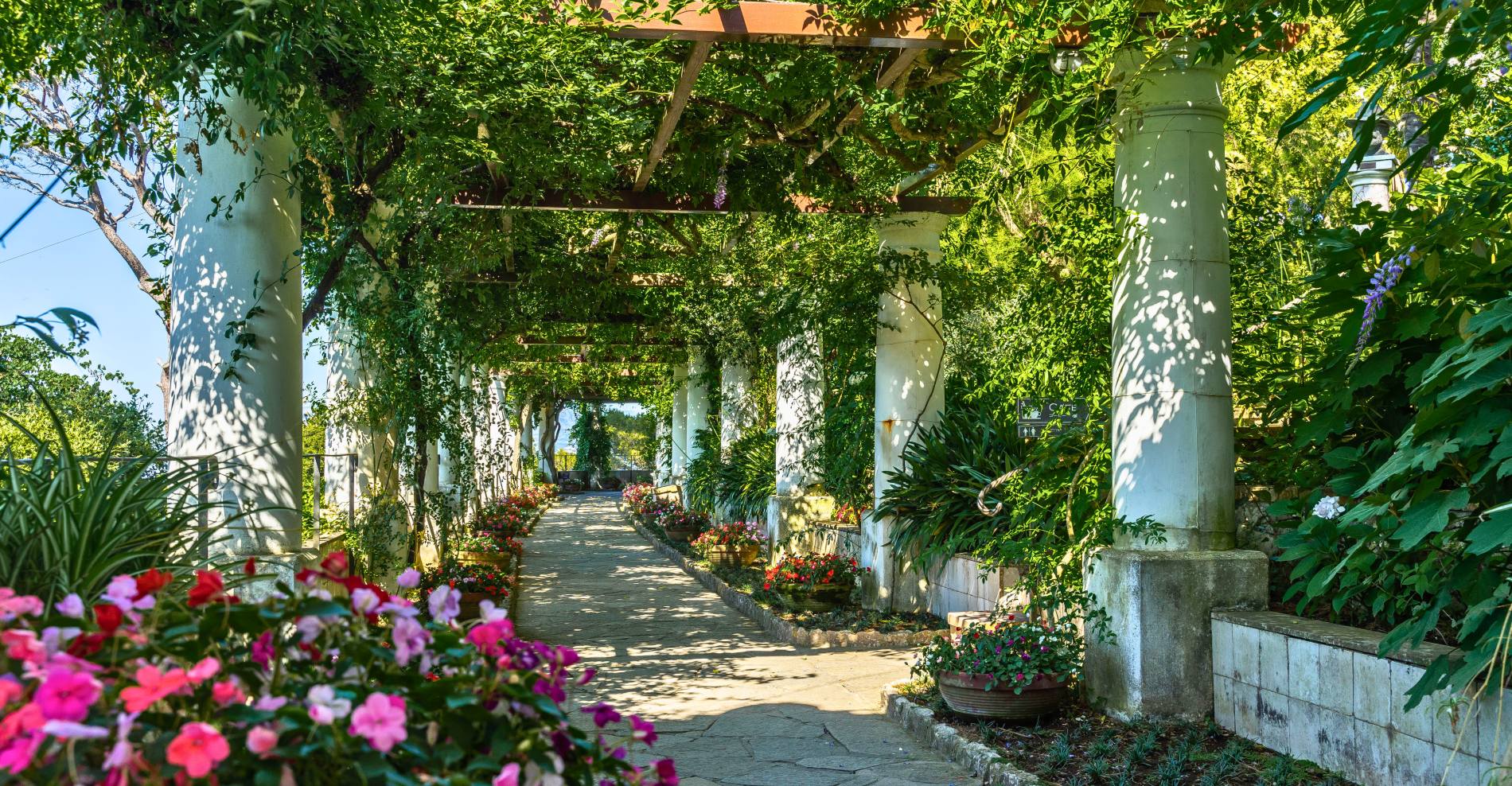
One of Italy’s most atmospheric villas, Villa San Michele offers sweeping views over the Bay of Naples and serene gardens that feel timeless even in peak season.
2. Monte Solaro Chairlift – Seggiovia Monte Solaro
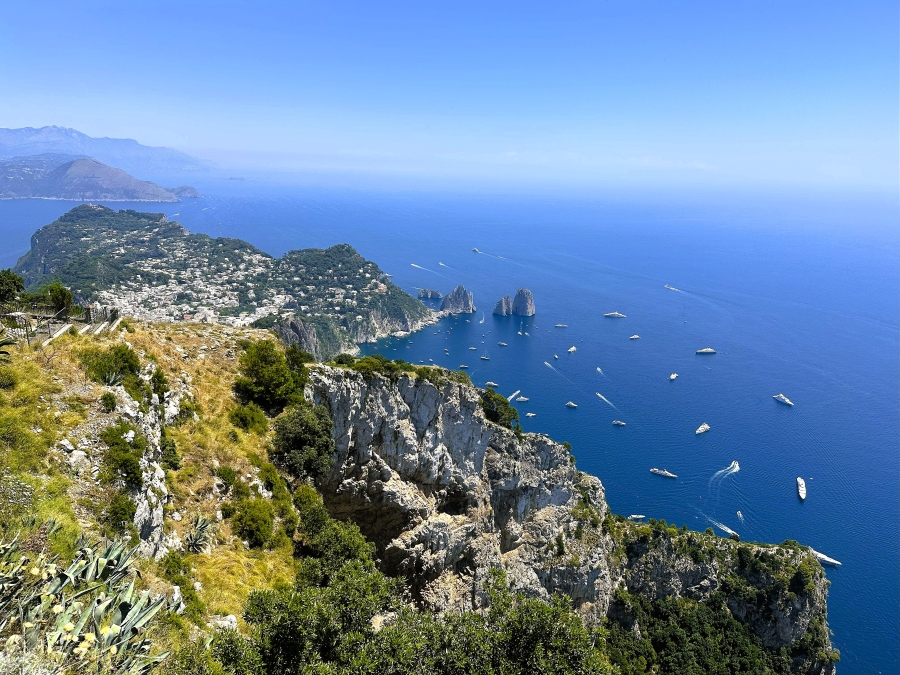
A peaceful 12-minute ascent to Capri’s highest point on the Monte Solaro in the chairlift is an unforgettable, relaxing experience for all ages. On a clear day, the views over the entire island, Sorrento Peninsula, and Amalfi Coast are truly breathtaking. You can take the chairlift up and hike down if you prefer and have sufficient time in your itinerary.
3. Via Krupp and Giardini di Augusto
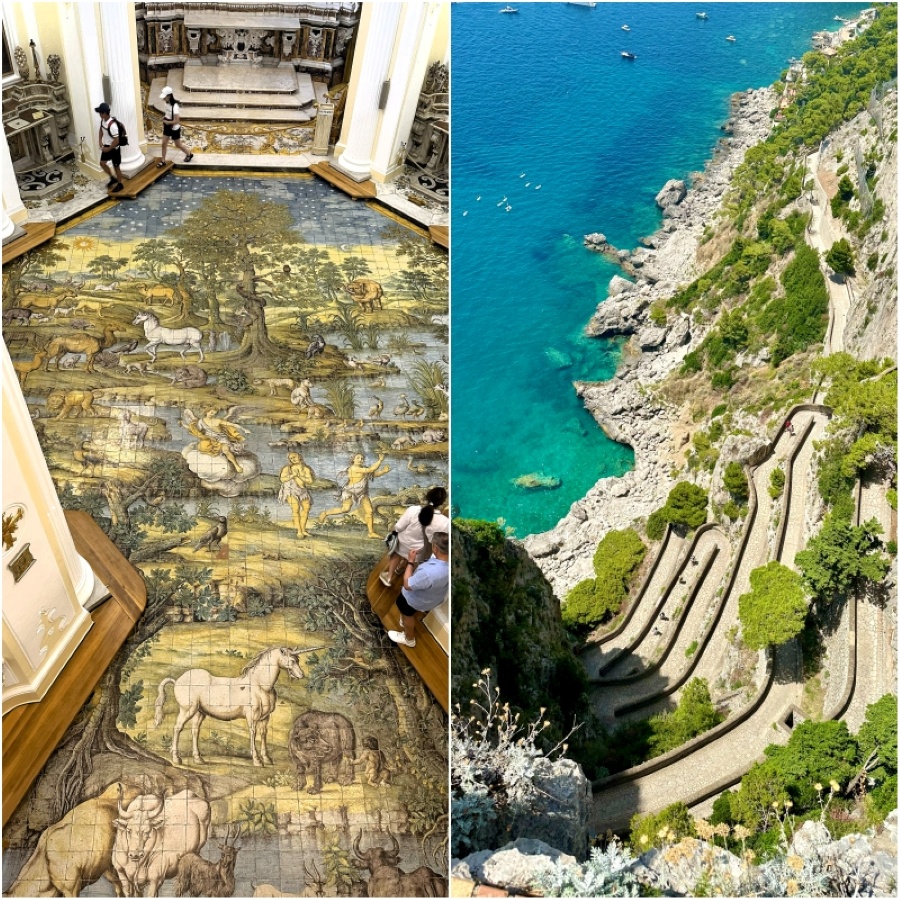
A classic Capri pairing: the terraced botanical gardens and the zigzagging Via Krupp path carved into the cliffs, offer perfect views over the Faraglioni and the shimmering coastline below.
4. The Faraglioni Boat Loop
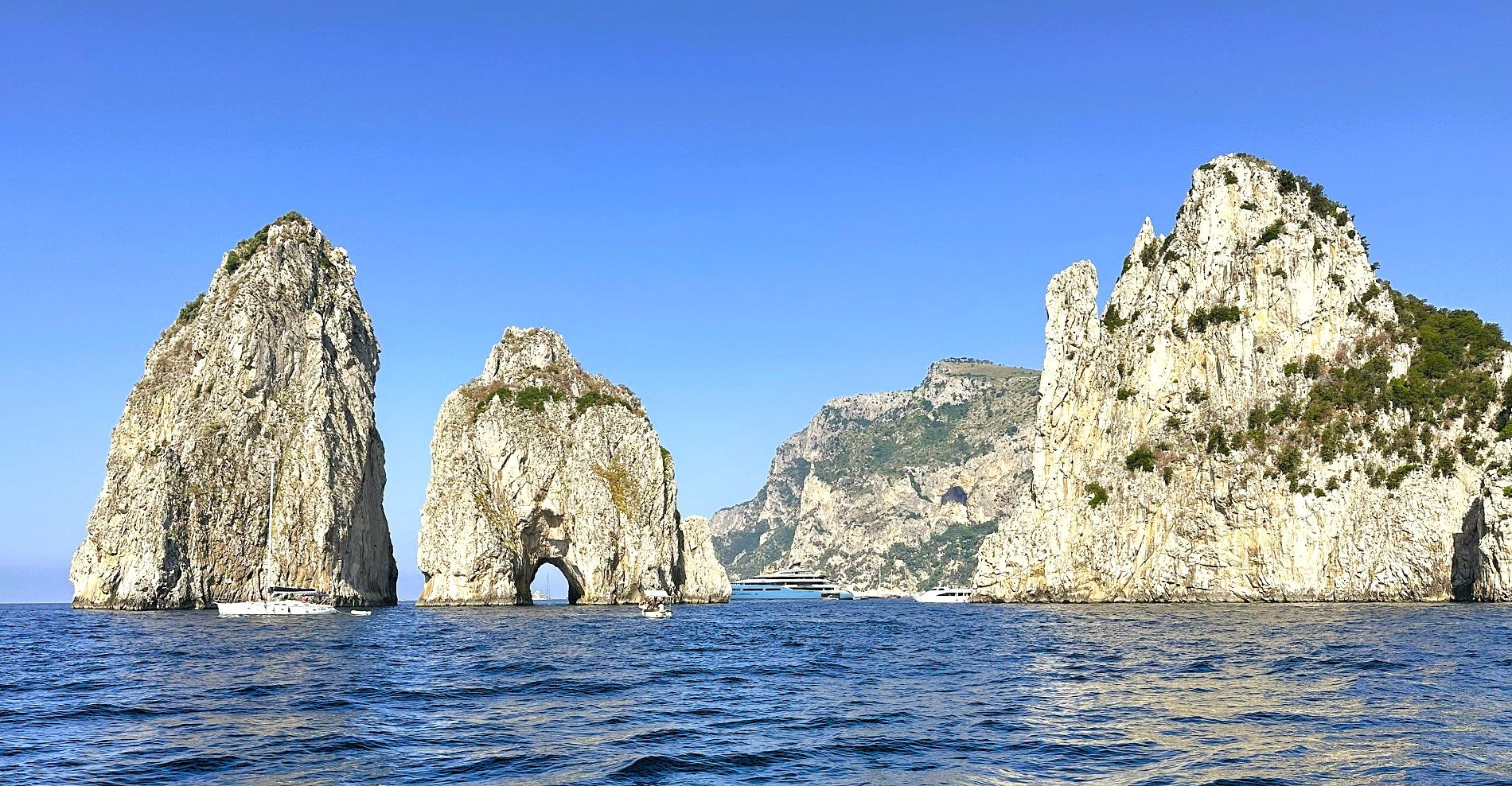
If your Blue Grotto entry was skipped, a short loop around the Faraglioni coastal rocks still offers iconic scenery and archway photo moments. This trio of limestone giants rises straight from the Tyrrhenian Sea and stands among Capri’s most recognizable landmarks, long symbolizing the island’s dramatic coastline.
5. Anacapri Old Town
Quieter and more atmospheric than Capri Town, Anacapri is a joy to explore, with its whitewashed lanes, artisan workshops, family-run trattorias, and the beautiful Church of San Michele.
6. Punta Carena Lighthouse
If you are staying overnight on the island, consider heading to Punta Carena Lighthouse — an excellent sunset viewpoint with dramatic cliffs, open sea views, and a relaxed, local feel.
For a full list of Anacapri’s best views, hidden gems, scenic hikes, cafés, see my curated Anacapri guide that is packed with tips, itineraries, and local insights to help you plan the perfect visit.
Additionally, for a full list of things to do on Capri island that can help you plan your day, see my complete Capri Travel Guide.
Final Thoughts on Visiting the Blue Grotto Capri
The Blue Grotto in Capri is one of those Italian classics that earns its reputation — not just through hype, but also through the quiet magic of light meeting sea. It’s also one of those places where nature decides the timing, not us — and that’s part of its charm. Whether you approach by boat from Marina Grande or descend from Anacapri’s quiet pathways, the moment you slip into the glowing chamber feels beautifully suspended in time.
And if the Blue Grotto is closed — or if you decide to skip it — Capri never disappoints. The island is full of viewpoints, coastal walks, hidden lanes, and sea cliffs that offer their own kind of wonder.
Either way, the Blue Grotto remains one of Capri’s most iconic experiences — a brief moment of light and stillness that lingers long after your trip ends. I hope this guide helps you plan your own visit to this remarkable natural wonder and experience the many charms of Capri. Until then… Ciao, Capri.
View this post on Instagram
Disclaimer: It’s a pleasure for us to share our travel experiences with all our readers and we sincerely hope to inspire your future travels. In order to help us maintain this blog and offset the costs of running it, we have sprinkled affiliate links throughout the site. If you choose to make a purchase via any of these affiliate links, we’ll earn a tiny commission at no additional cost to you.
If you enjoyed reading this post, don’t forget to share it!

Hello ! I’m Aditi …..
Welcome to Land Of Travels – a travel blog that my husband Manish and I started to share our travel stories and travel tips. We are full-time professionals, dedicated parents, foodies, and it is our shared passion for travelling that lead us to become part-time bloggers.
I was born and brought up in Northern India, and have been living in Bay Area, California for more than two decades now. Since childhood, I’ve always had a passion to travel far & wide and experience different cultures. I am passionate about planning our trips and exploring off-the-beaten-path destinations.
My sincere hope is that the travel tips offered on this blog will help you plan your next memorable adventure.
Happy travels!
~ Aditi Sharma ~



Fascinating guidelines to a fairytale destination
Looks like the Blue Grotto Capri is an awesome spot to visit with my family. Thanks a lot for sharing your experiences.
It really is such a special spot — that incredible blue light feels almost unreal in person! I hope you and your family get to experience it together one day — it’s truly a memory-maker.
I do not think I have ever heard of this place, but the pictures look magical! I need to book more travel, there is so much of the world I haven’t seen yet.
The entire Blue Grotto experience feels surreal. I hope you get the chance to visit on a future trip; Capri has so many little wonders waiting to be discovered!
The blue grotto in capri is somewhere I haven’t heard of but looks absolutely incredible
The Blue Grotto is tiny but magical — the sunlight reflecting through the water creates the brightest blue. Hope you get to see it in person someday!
I’ve never visited Capri and I can’t wait to do so. I’ve been to Italy a few times though, such a beautiful country. The grotto is out of this world, I can’t get over how beautiful the water is…wow.
Italy really does spoil us with beauty, and Capri feels extra special — and the Blue Grotto is one of those places that stays with you long after you leave. I hope you get to experience it on your next trip — it’s a memorable addition to any Capri itinerary.
Wow what a beautiful place to visit truly breath taking. I definitely want to visit here one day
Capri truly is breathtaking, and the Blue Grotto is one of its most unique spots. The whole experience — from getting to the entrance, transferring into the rowboats to finally seeing that glowing water — feels so special. I hope you get the chance to visit one day. It is definitely worth adding to your Italy travel list.
These little boat tours are so good. I haven’t been to Capri but I have done cave tours in the Greek islands and Malta and thoroughly enjoyed them.
If you’ve enjoyed sea caves in Greece and Malta, you would love the Blue Grotto in Capri too. The tiny rowboats make the experience intimate, and when the sunlight hits just right, the whole chamber glows electric blue. Definitely one to add to your future travel plans!
Oh wow! What stunning pictures. This looks like such a wonderful experience. I have to say though I’d be so nervous about the tides changing. Eeek! Definitely looks like a bucket list type excursion.
Claire
Thank you, Claire! It really is a wonderful experience — the colors inside the grotto are breathtaking. And I completely understand your nerves about the tides. The boatmen are careful, which is why the grotto closes anytime the sea gets even slightly rough. It’s a beautiful little adventure if you ever make it to Capri!
I feel like a rowboat experience in the Grotto would probably be the best way for me. That just feels so magical.
The rowboat experience really is the heart of visiting the Blue Grotto — it’s the only way to enter the cave. To reach the rowboats, you first either come on one of the larger island boats or walk down the staircase from Anacapri. Inside the grotto, the light is so vivid that it feels surreal. If you ever go, try to aim for a calm, sunny day — the glow is even brighter then.
Holy wow! I feel like ANY time of year would be the right time of year to go to Blue Grotto. It is so beautiful there!
Thanks so much! It really is beautiful year-round — that glowing blue looks magical in any season. The color does depend a bit on the weather though; overcast skies tend to mute the tones, and the grotto closes entirely when the sea gets rough. But on a calm, bright day, it’s absolutely unforgettable. I hope you get to see it one day!
What a mysterious experience and stunning blue colours,
visited a similar cave in Croatia but there were not so many
boats.
Thank you so much! The Blue Grotto really does have this magical, almost theatrical atmosphere — but yes, it definitely gets busy, especially in high season. How lovely that you’ve experienced the Croatian cave!
Great tips on visiting one of the most magical places. I loved every minute of my trip to Capri, including a visit to the Blue Grotto.
I’m so glad you found the tips helpful! Capri truly is one of those places that stays with you long after you leave, and the Blue Grotto is a must-see when the weather and sea conditions are ideal. So happy to hear your visit was just as magical.
The Blue Grotto looks beautiful. We’ve visited the Blue Cave in Montenegro and that was so beautiful, this one also looks beautiful.
I’ve heard wonderful things about the Blue Cave in Montenegro — that glowing turquoise color looks incredible in photos. It’s amazing how each cave has its own personality even though the phenomenon is similar.
Great Post! Super helpful information about visiting the Blue Grotto- especially about how to get there, possible waits and potential closures. Capri and the Blue Grotto are on my bucket list, so I will take your advice, go early, hope for calm seas, but plan accordingly incase everything doesn’t go as planned and leave some time or days (on my trip) for adjustments!
I’m really glad you found the guide helpful! Your plan sounds perfect — a little flexibility with timing makes such a difference with the Blue Grotto because the sea can be unpredictable. On a clear day and around the ideal time mentioned, the glow is surreal. I hope you get the calmest seas and the brightest blue when you go!
Hello! The blue grotto seems to be one of the greatest natural sites not only in Capri, but in whole Italy! I’m really glad to know there are so many options to see it that are available on the island!
It really is one of Italy’s most unique natural wonders. I love that Capri gives you so many ways to experience it, whether from Anacapri, Marina Grande, or by boat around the island. I hope you get to visit soon!
We spent a few days on Capri and were very sad we did not get to visit the Blue Grotto. Good tip about planning to visit at the right time. I just love that neon blue colour of the water! Thanks for checking out the various ways to visit.
The Blue Grotto is such a weather-dependent experience. I’m glad the timing tip was helpful – under ideal conditions, the neon blue really is something special. I hope you get the chance to return some day to Capri and get to experience the glow of this sea-cave.
Tons of great tips in this post!
Thank you so much! I’m happy the tips were useful. The Blue Grotto is such a fascinating combination of nature and timing — knowing what to expect can really transform the experience.
I’ve never been to Capri, but every time I see photos of the Blue Grotto, I’m honestly blown away. That glowing blue looks almost unreal. Your guide makes me want to experience it in person even more!
I felt the same way the first time I saw its photos! That electric blue doesn’t feel real until you’re actually inside the cave. I hope you get to experience it in person one day. It’s unforgettable.
Amazing photos, the Blue Grotto looks gorgeous. I really enjoyed this post.
Thank you, Sharyn! The light inside the grotto is unlike anywhere else I’ve been. I’m so glad you enjoyed the photos — they barely do justice to how surreal it looks in person.
As an Italian who’s never been to Capri thank you for such a detailed and interesting article!
Thank you, Maricla! As an Italian, you have so many incredible places at your doorstep — I hope you get to visit Capri someday!
This looks incredible and quite the adventure! I had no idea something like this existed in Italy. Saving this excursion for my future travels.
It does feel like an adventure, doesn’t it? Capri has so many beautiful corners but this one feels almost otherworldly. So happy it’s going on your future travel list!
I’ve never been to the Blue Grotto. Looks amazing. I hope to be able to see it one day…
I hope you get to visit — stepping into the cave and seeing that sudden glow of blue is truly something special.
I was really glad that I saw the Blue Grotto with my daughter when she was a teenager. We did the h
Journey as a day trip from Naples. We still talk about it rained decades later. The water is sooooo blue in the grotto.
What a beautiful memory, Terri — especially sharing it with your daughter. I love how certain travel moments stay vivid for decades. And yes…the water really is unbelievably blue!
This place looks absolutely magical. The Blue Grotto has been on my bucket list for years, and your post makes me want to experience that glowing electric-blue water even more. I love the way you describe the moment the light shifts inside the cave — it sounds unforgettable. Saving this guide for when I finally make it to Capri!
The moment the light shifts inside the cave genuinely feels cinematic – it is truly unforgettable when visited at the ideal time and when the sea & weather conditions are ideal. I hope you get to check it off your bucket list soon!
Adding this to my “future travels” list!
It’s definitely a must-see if you are planning a future Italy trip that includes a visit to the Campania region.
Wow the blue grotto looks absolutely stunning! Would love to visit it one day 🙂
The Blue Grotto is truly stunning — the kind of place that doesn’t look real until you’re inside it. I hope you get the chance to visit one day!
I’ve read about the Blue Grotto before, but yours is the first article that’s made me actually think about going there. The fact that you can go down steps to the jetty instead of joining a tourist boat adds to the attraction.
Thank you
Thank you, Annie! I’m really glad the post gave you a fresh perspective. Walking down the steps at Anacapri feels so much more peaceful than joining one of the big boat tours that includes the grotto stop. We ended up doing just the island boat tour separately the next day, since we had visited the Blue Grotto via the staircase route the day before.
Wow. How beautiful. I have not been here but I would like too. Thank you for explaining the science behind this beautiful phenomenon. Adding to my wish list.
The science behind the grotto is fascinating — it makes the experience feel even more special when you understand how that surreal blue happens. I hope you get to see it someday!
Great tips about keeping your itinerary flexible while in Capri, allowing you to accommodate for the unpredictable sea conditions.
Thank you. Yes — having a flexible plan is key on Capri, especially for the Blue Grotto. The sea really has the final word there. I’m glad the tips helped!
This is so helpful. Definitely saving for my next trip. Can’t wait to see what else you have.
Thank you – I’m so happy to hear that you found this post helpful. I hope when you visit Capri, you are able to experience the grotto at its brightest blue possible — it’s such a magical sight.
Blue Grotto, CAPRI is mesmerizing gives one an out of this world experience ❤️
Out of this world is exactly how it feels — nature at its most theatrical.
Quite blue now. When I visited on a day trip from Naples, the other people I was with didn’t want to spend time here so I missed it! Must say that I thoroughly enjoyed the rest of Capri though.
That’s such a relatable story — sometimes the group decides the itinerary for us! I’m glad the rest of Capri made up for it. Hopefully next time you’ll catch the grotto on a calm, sunny day.
This was such an enjoyable read. The Blue Grotto looks stunning.
Thank you! The Blue Grotto is such a fun place to write about — the colors alone feel like they are weaving a beautiful story. I’m happy you enjoyed the read!
Exhilarating experience & extremely enjoyable description of the Italian marvel.
Capri really does make every experience feel exhilarating, especially when nature shows off like this. I’m so glad you enjoyed the post.
Mesmerizing
Exhilarating experience & extremely enjoyable description of the Italian marvel.
Mesmerizing is the perfect word for it — I still remember that first glimpse of glowing blue like it was yesterday.