
Spending one day in Pisa is a dream for many travelers exploring Tuscany — a chance to strike that classic pose beneath the Leaning Tower, wander through medieval piazzas, and watch the Arno shimmer beneath the evening light. Pisa may be small, but it blends its world-famous landmarks with quiet everyday life in a way that feels unmistakably Italian.
Pisa may be known for its famous tower in the Piazza dei Miracoli, yet beyond the crowds lie quiet streets, hidden courtyards, and bridges where local life carries on unhurried. Step away from the postcard view and you’ll find open-air markets, neighborhood cafés, and sunlit corners that feel genuine and full of character.
We stayed overnight in Pisa on our first visit to this Tuscan city —waking to the sound of church bells drifting across terracotta rooftops. On our next trip a few years later, we returned to Pisa on a day trip from Lucca, discovering how Pisa reveals a different charm at every hour — lively by day, reflective by dusk.
Whether you’re visiting for a quick stop along a tour or an overnight stay, this guide shares the best things to do in one day in Pisa — from climbing the Leaning Tower to tasting local Tuscan specialties along its riverside streets.
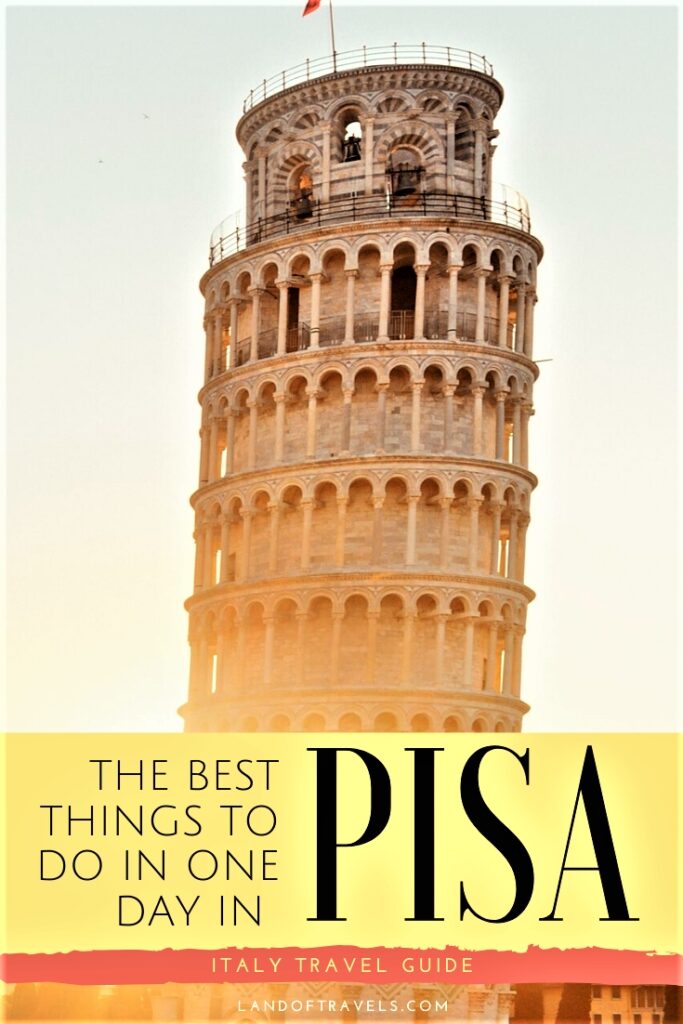
Table of Contents
How to reach Pisa and get to Piazza dei Miracoli
The historic city of Pisa, set in western Tuscany about 20 minutes from the Ligurian Sea, is one of the most accessible destinations in the region. Its compact size and excellent transport links make it ideal for a day trip from Florence, Lucca, or even the Cinque Terre.
How to Get to Pisa by Train
Trains run frequently between Pisa and major cities across Italy, which makes rail travel the easiest and most flexible way to arrive. From Florence, the journey takes between 45 minutes and 1 hour 30 minutes depending on whether you board a regional or high-speed train service. From La Spezia or Monterosso in the Cinque Terre, the trip takes between 1 hour 20 minutes and just under 2 hours, with direct trains running several times a day.
Most travelers arrive at Pisa Centrale, the main train station located about a mile south of Piazza dei Miracoli. If you are heading straight for the Leaning Tower of Pisa, some regional trains also stop at Pisa San Rossore, a smaller station that is only a short walk from the Field of Miracles. Luggage storage facilities are available inside or just outside Pisa Centrale and may be a mix of staffed counters and self-service lockers depending on season and demand.
Pisa is one of the easiest cities in Tuscany to reach without a car. You can check schedules and book tickets directly on the Trenitalia official website or at ticket machines inside each station.
How to Get from Pisa Centrale to the Leaning Tower
From Pisa Centrale, the LAM Rossa bus (Direction: Stazione 4) runs directly to the Torre stop near the Piazza dei Miracoli. Tickets can be purchased at kiosks and tobacco shops near the station or directly from the driver when boarding.
If ease and speed are your priority — especially after a long train ride or when traveling with luggage — taxis wait just outside the main station entrance. The ride takes about five to ten minutes and usually costs around €20, depending on traffic, time of day, and luggage.
If you prefer to explore on the way, a self-guided walk from Pisa Centrale to the Field of Miracles takes about 30 minutes via Corso Italia and Via Santa Maria. This walking route winds through local neighborhoods, bridges, and cafés — a wonderful way to glimpse the quieter, everyday side of Pisa before reaching its famous landmark. Once you exit the station, simply follow the signs for Corso Italia, the pedestrian street leading straight into the heart of the city.
Arriving By Air at Pisa International Airport (Galileo Galilei)
If you’re arriving from abroad, Pisa International Airport — also known as Galileo Galilei Airport — is located just 2 km from the city center. The Pisa Mover train connects the airport to Pisa Centrale in approximately 5 minutes, with frequent departures throughout the day, making it a convenient way to get to the city from the airport.
Best things to do in one day in Pisa:
The stunning architecture of Pisa and its centuries-old university have long drawn travelers, scholars, and dreamers to this Tuscan city. While the Field of Miracles with its iconic Leaning Tower, Baptistery, and Cathedral is the star attraction, Pisa rewards those who wander beyond it — across its bridges, through its quiet streets, and into its lesser-known piazzas.
We spent one day in Pisa during our late-summer trip to Italy, arriving from Florence in the afternoon to find the city bathed in golden light. Visiting later in the day turned out to be perfect — the crowds had thinned, the air had softened, and we could explore at our own unhurried pace. We stayed overnight before continuing onward to the Cinque Terre, grateful for the chance to see Pisa both lively by day and calm by evening.
Whether you’re visiting for a few hours or staying overnight, here are the best ways to spend one day in Pisa while making the most of your time and budget — from its world-famous monuments to its quieter, more authentic corners.
1. Explore Piazza dei Miracoli (Field of Miracles) – Best in Early Morning or Late Afternoon
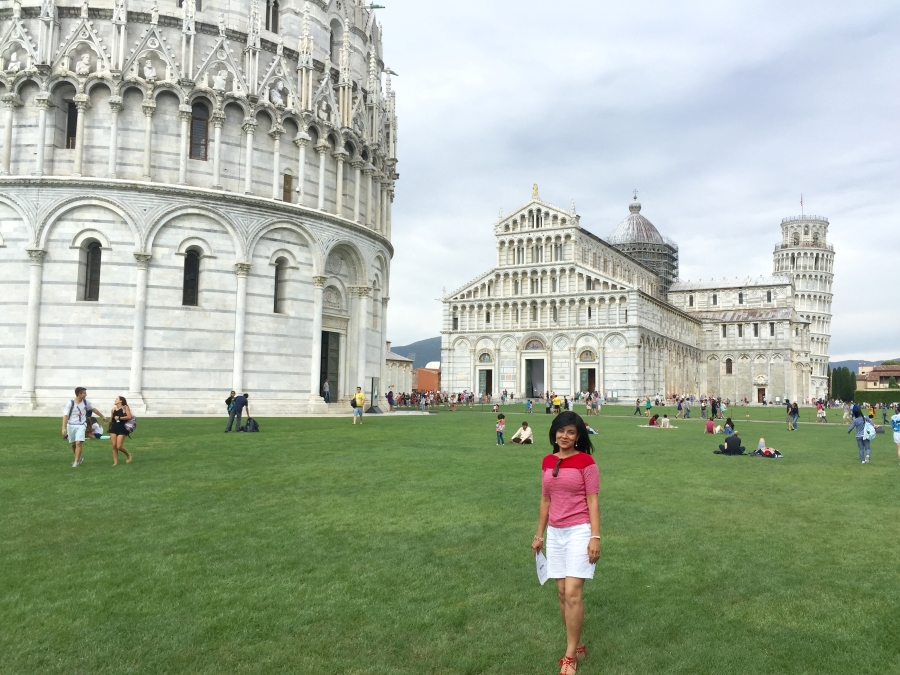
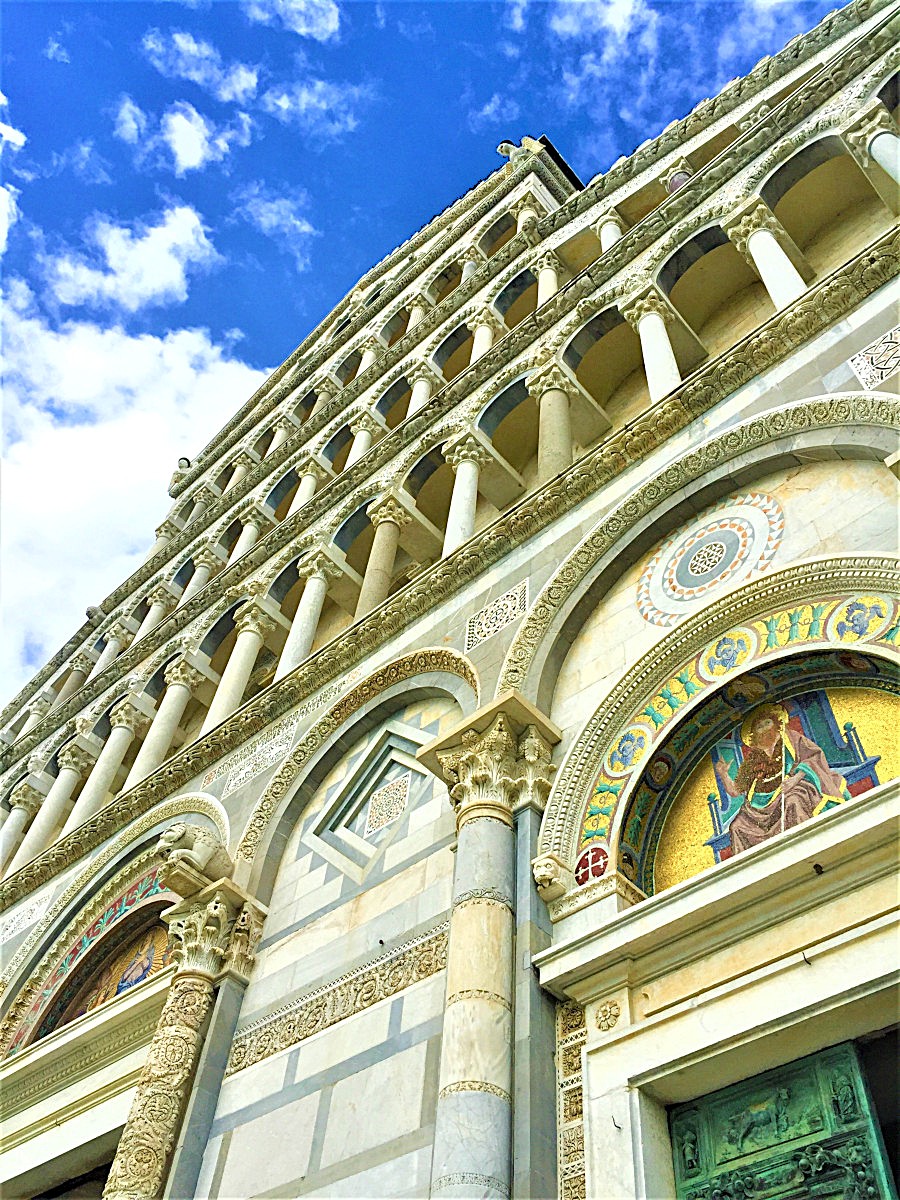
If you’re visiting Pisa, then heading to the white marble architectural complex of the Piazza dei Miracoli — the famed Field of Miracles — is likely at the top of your list. This cathedral square is a lush green, walled expanse that brings together some of the most significant religious monuments in Tuscany: the Leaning Tower of Pisa (Torre di Pisa), the Cathedral (Duomo di Pisa), the Baptistery of St. John, and the historic Campo Santo cemetery.
The Architecture and History of Piazza dei Miracoli
This UNESCO World Heritage Site is an architectural and artistic masterpiece, blending Gothic and Romanesque elements with a harmony that feels almost surreal when seen in person. The square is also known as Piazza del Duomo or Campo dei Miracoli.
Construction of this complex began in the 11th century and continued into the 14th century, during the height of Pisa’s maritime power in the Western Mediterranean. The Cathedral was the first monument built, designed to reflect the city’s wealth and prestige as a flourishing republic.
The ensemble of buildings here represents the distinctive Pisan Romanesque style — a style that later influenced architecture across Italy. Its artistic details even inspired great Renaissance masters, including Michelangelo.
Best Time to Visit the Field of Miracles
The piazza becomes crowded between 11 AM and 3 PM, especially in peak season, so visiting early in the morning or later in the afternoon offers a far more relaxed experience.
We first visited in late afternoon, when the marble glowed in soft golden light and the crowds began thinning. A few years later, we returned at its opening time of 9am, when the square was quiet, the lawns still damp with dew, and the Leaning Tower stood in near silence.
Both visits felt completely different — both unforgettable.
2. Visit the iconic Leaning Tower of Pisa
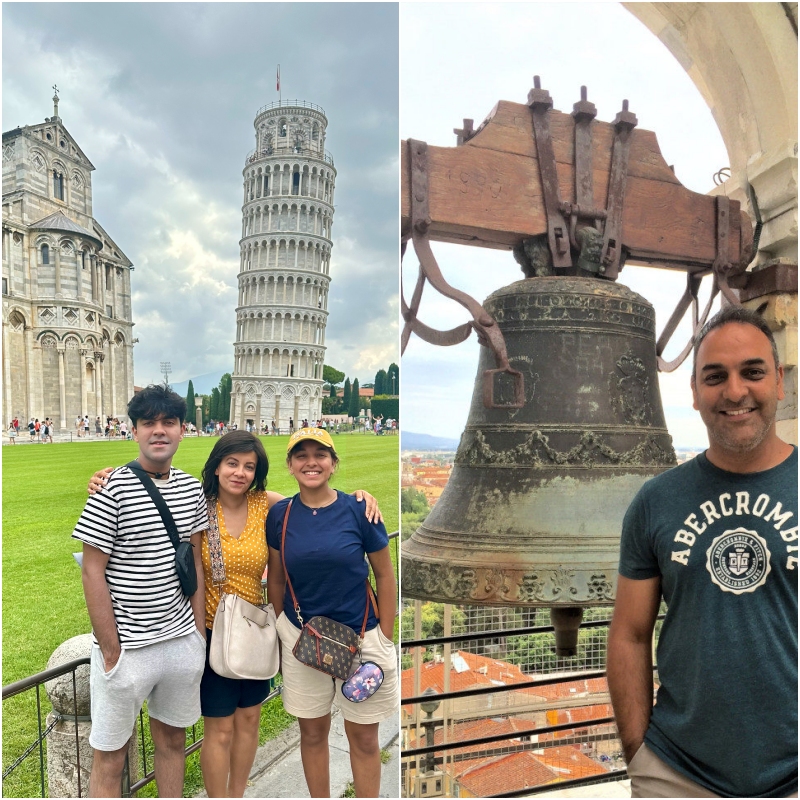
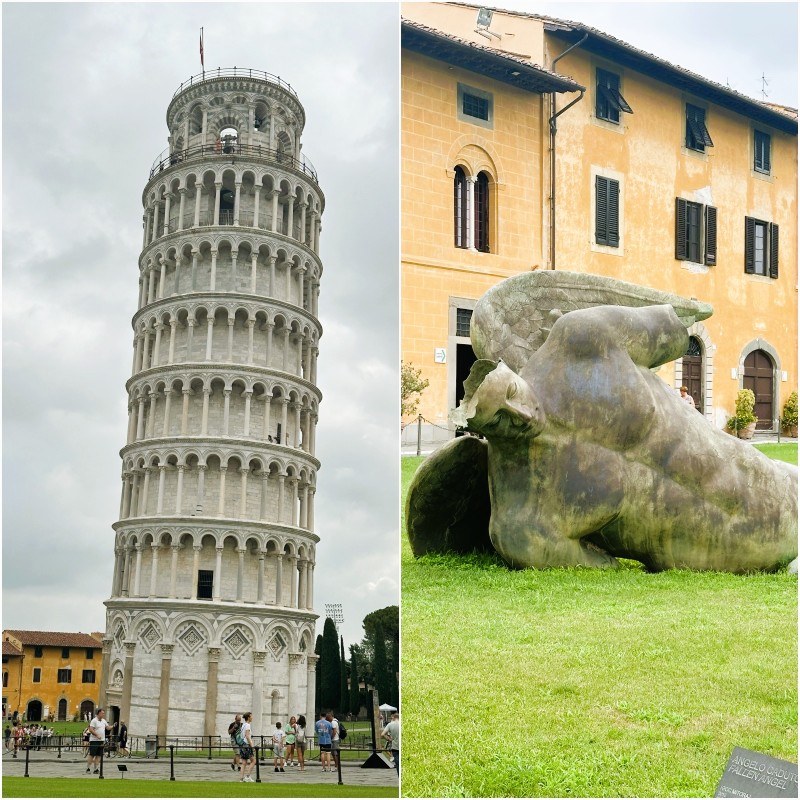
The Leaning Tower of Pisa (Torre di Pisa) is the most recognizable symbol of the city — a bell tower that leans so dramatically, it almost looks unreal when you first see it in person. Standing beside it, with its elegant arcades and pale marble glowing under the Tuscan light, is one of those travel moments that stays with you long after you’ve left.
The History and Lean of the Tower
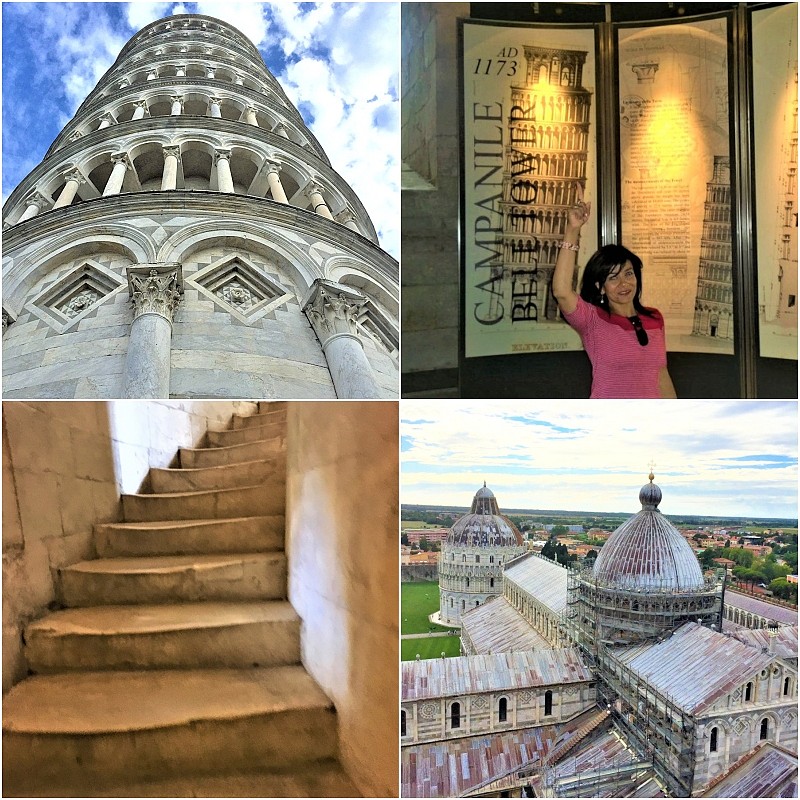
Construction of the tower began in 1173 and continued — with interruptions — until the 14th century. The tower began to tilt early in its construction when the first level was completed and the soft, marshy soil beneath the foundation began to sink on one side. For centuries, architects attempted to correct or slow the tilt, but the lean continued to increase.
The bell tower rises about 56 meters high, built over 8 stories and supported by 207 columns. It was once leaning at 5.5 degrees, but after extensive stabilization work in the late 20th and early 21st centuries, the tower has now been secured and sits at just under 4 degrees — safe, but still unmistakably tilted.
Climbing the Leaning Tower of Pisa
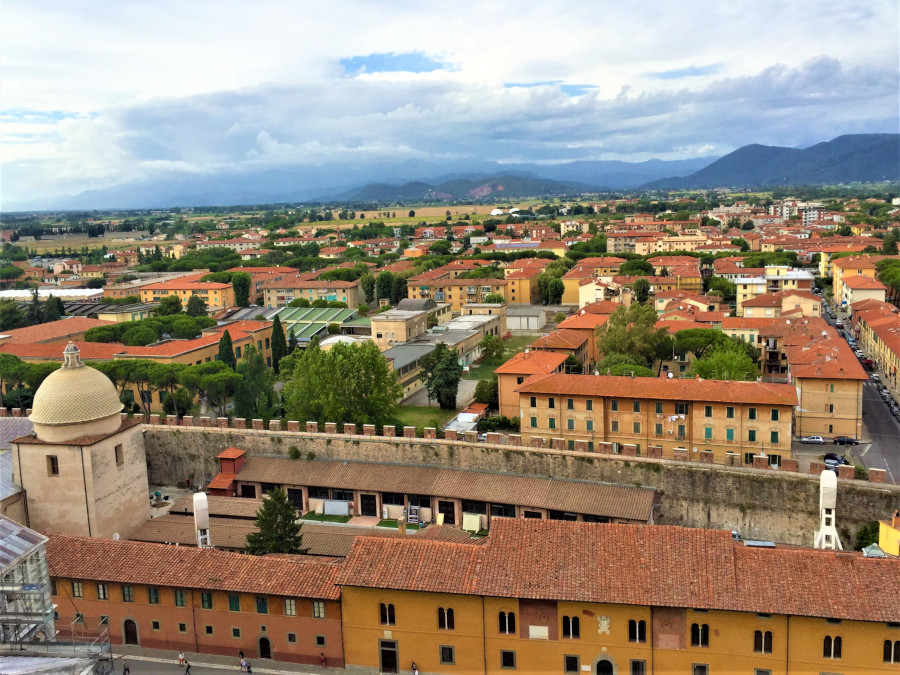
Many visitors take playful photos holding up the tower from the lawn — but another memorable way to experience it is from the inside. A narrow spiral staircase of nearly 300 marble steps leads to the top, where you can walk around the bell chamber and enjoy sweeping views of the Piazza dei Miracoli, the city, and the surrounding Tuscan landscape.
We chose to climb the tower in the early evening, once the heat and crowds had faded. The climb itself was fascinating — you can feel the tilt underfoot — and the views from the top were worth every step.
Tickets and Time Slots
Climbing the Leaning Tower requires a timed ticket, and prices start at 20 € for a Cathedral + Tower combination ticket. Full access tickets that include the Tower and all other monuments in the Piazza dei Miracoli cost 27 € (prices as of 2025). Advance reservations are strongly recommended, especially in high season, since time slots can sell out days in advance. Arrive at least fifteen minutes before your scheduled entry for the security check.
Age & Safety Restrictions
Children under 8 years old are not allowed to enter the tower, and those between 8 and 18 must be accompanied by an adult. Because of the steep, uneven staircase, the climb is not recommended for visitors with vertigo, cardiovascular conditions, or mobility limitations. The tilt is noticeable inside the staircase; if you’re prone to dizziness, it’s worth deciding before you book.
3. Marvel at the architecture and acoustics of the Pisa Baptistery
The Pisa Baptistery of St. John is one of the most striking monuments in the Piazza dei Miracoli, and its design, history, and unexpected acoustics make it far more than a quick stop between the Cathedral and the Tower.
About the Pisa Baptistery
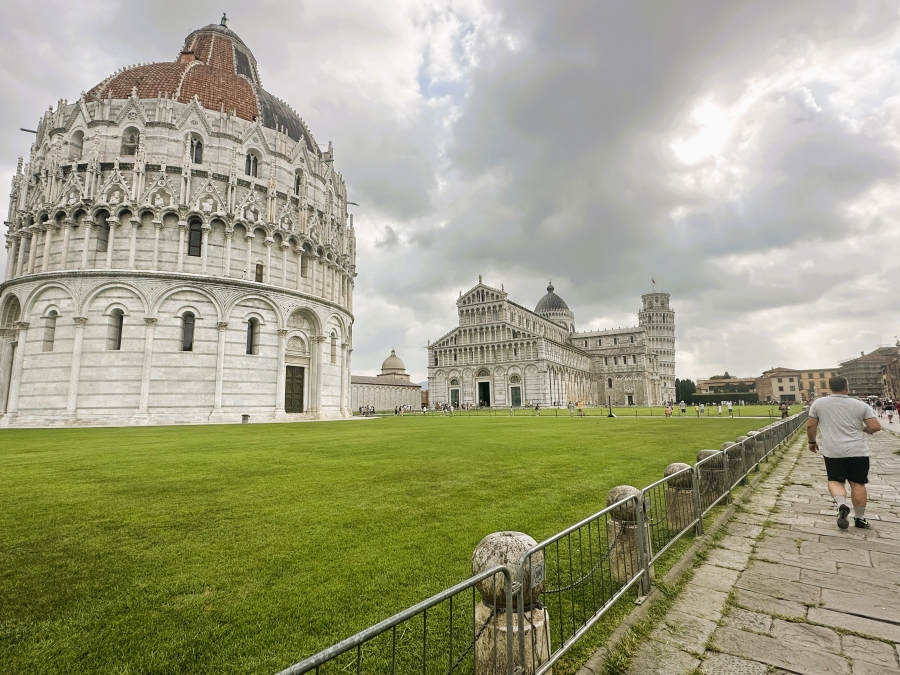
The round, marble-clad Baptistery is the largest baptistery in Italy and the second monument to be built in the Field of Miracles. It is also the first structure you encounter when entering the piazza through Porta Nuova. Moreover, its scale is immediately impressive — a perfectly circular form rising above the lawns with a domed roof that catches the Tuscan light. Like the Leaning Tower beside it, the Baptistery was constructed on soft subsoil and leans slightly — just 0.6 degrees — a subtle tilt that is almost imperceptible unless you know to look for it.
Architecture and Design
The structure reflects the evolution of Pisa’s architectural identity. The lower register, with its rounded arches and sturdy columns, is rooted in the Romanesque style of the 12th century. Higher up, the pointed arches and ornate sculptural details reveal the transition to Gothic influence, added in later phases of construction. A statue of St. John the Baptist, the patron to whom the building is dedicated, crowns the dome, while the main entrance faces directly toward the Cathedral.
Inside, the space is open and solemn, centered around the octagonal baptismal font. One of the true artistic treasures here is the 13th-century marble pulpit carved by Nicola Pisano, whose sculptural panels depicting scenes from the life of Christ are considered foundational works of Italian Renaissance sculpture.
The Baptistery’s Acoustics
What surprised us most, however, was not the architecture but the sound. The dome creates a natural resonance that turns even a single voice into something ethereal — a note can rise and linger as a soft layered echo that seems to drift down from the ceiling. It’s one of the most quietly beautiful experiences in the square, a moment where stone, space, and sound feel perfectly in tune.
Tickets and Entry Information
Admission to the Baptistery is available through the combination monument passes for the Piazza dei Miracoli. The Cathedral + Baptistery ticket begins at €8, while the full multi-monument ticket (excluding the Leaning Tower) costs €11, or €27 if you include the Tower climb as well. Prices are current as of 2025 and may change seasonally. Tickets can be purchased in advance or purchased at the on-site ticket office.
4. Witness the architectural and artistic magnificence of Pisa Cathedral
The Cathedral of Pisa — the Duomo di Santa Maria Assunta — is the white-marble heart of the Piazza dei Miracoli. Even if you only have a few hours in Pisa, stepping inside this cathedral is essential, as it holds the artistic and spiritual center of the entire complex.
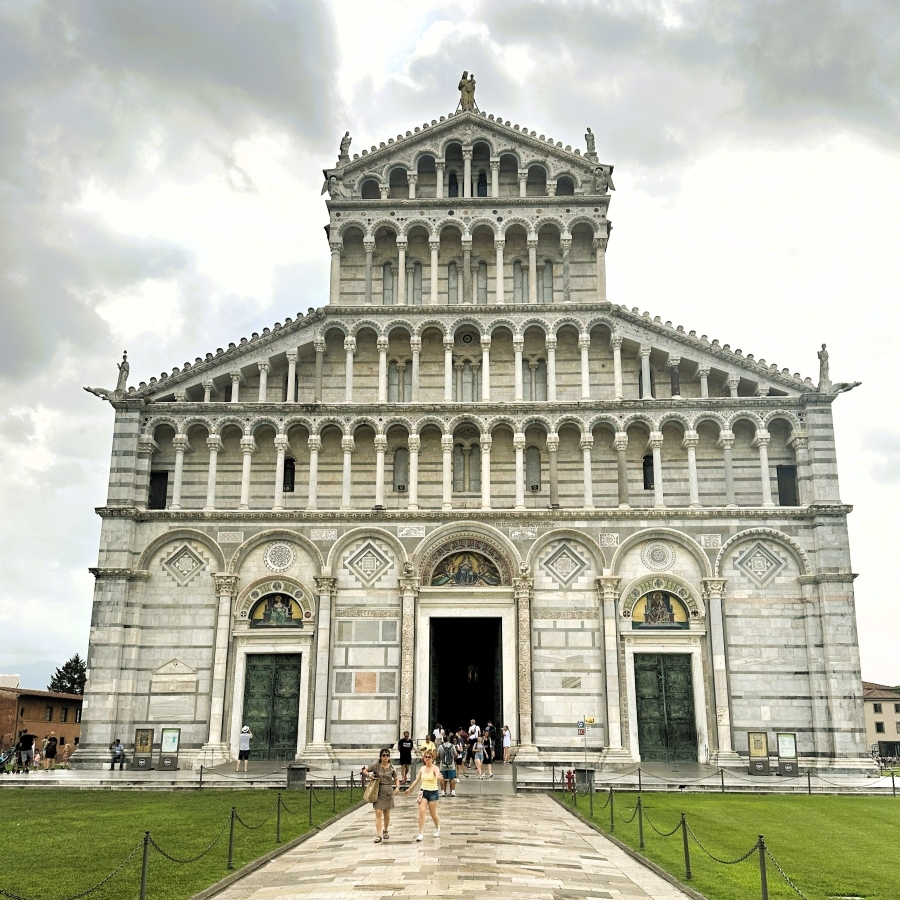
About Pisa Cathedral
By the 12th century, the Duomo was among the largest cathedrals in Europe, and it held that distinction for nearly a century. It still feels impressively grand today, especially in the way it stands between the Baptistery and the Leaning Tower like the anchor of the square. Its facade is a composition of grey and white marble, four tiers of arcades, and three bronze-framed portals — a Romanesque statement of Pisa’s former power as a maritime republic. The cathedral is shaped like a Latin cross, with three naves, a transept, an apse, and a dome that rises over the crossing.
Architecture & Artistic Highlights
Inside, the cathedral opens into a vast, light-filled nave divided by large Corinthian granite columns, topped by a gilded wooden coffered ceiling — one of the elements that leaves most visitors quietly stunned. The cathedral is also home to the tomb of St. Ranieri, the patron saint of Pisa, whose relics are preserved in a transparent coffin. His legacy is still honored each June during the citywide celebrations dedicated to him.
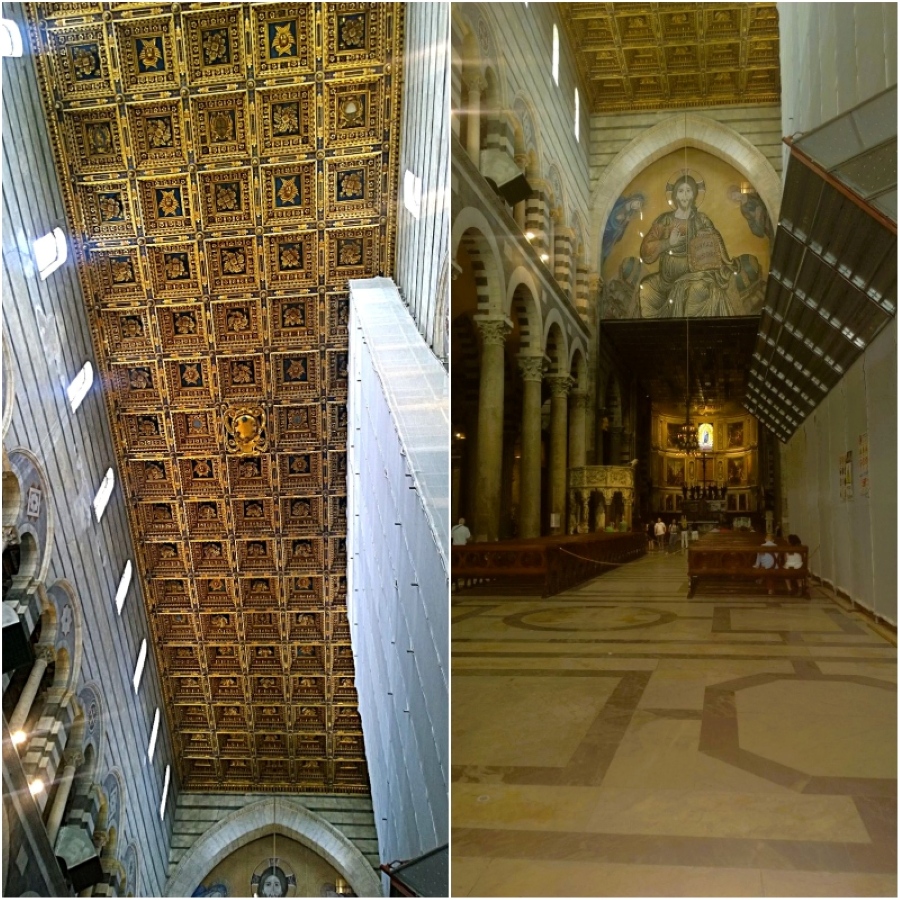
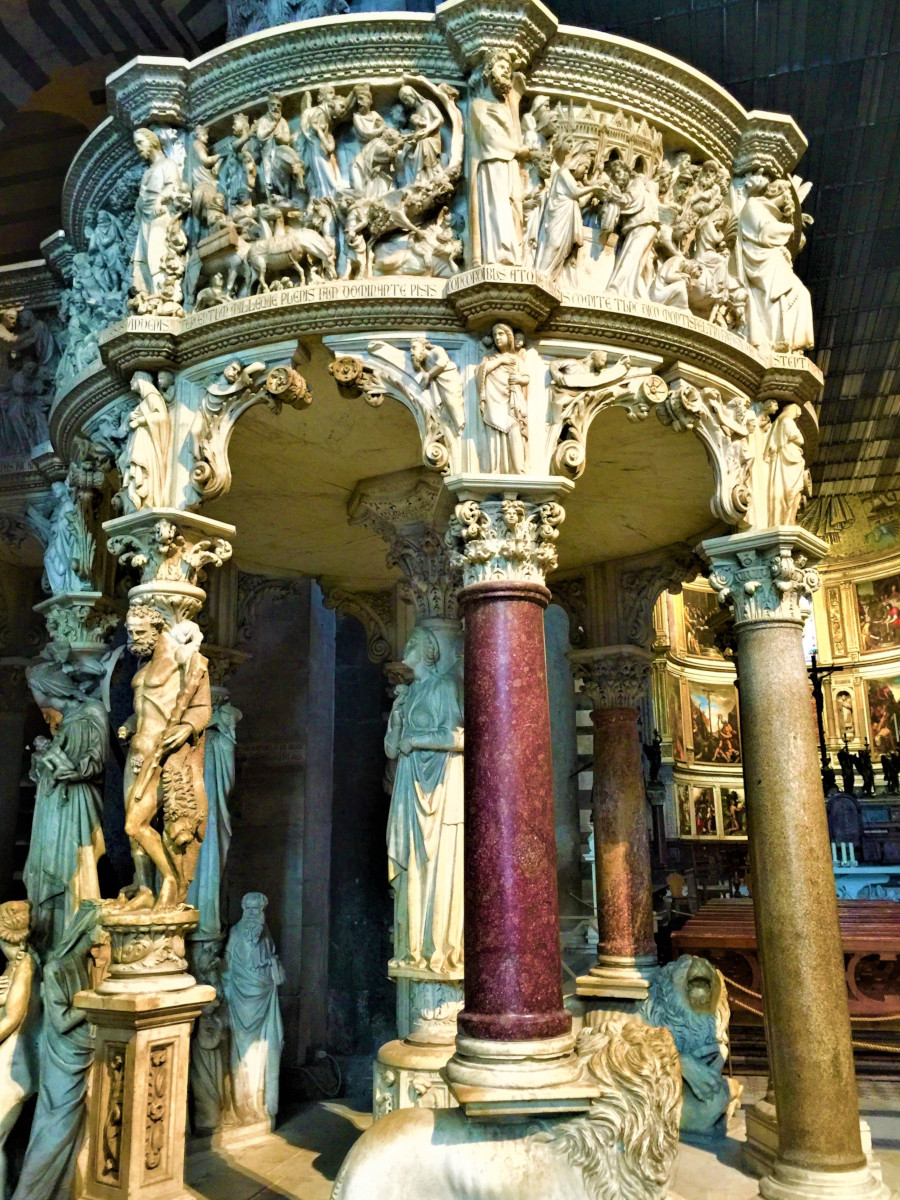
Among the many works of art housed here, the most significant is the polygonal marble pulpit carved by Giovanni Pisano, whose expressive, deeply carved panels narrate scenes from the life of Christ. Its dramatic reliefs and sweeping narrative style influenced generations of sculptors across Italy. Another notable masterpiece is the apse mosaic depicting Christ enthroned, flanked by the Virgin Mary and St. John the Evangelist. Nearby stands a bronze crucifix at the main altar, and throughout the side aisles and galleries are paintings, sculptures, and devotional works that turn the cathedral into a living archive of Tuscan religious art.
5. Taste Pisa’s local flavors — starting with Cecina
No visit to Pisa feels complete without trying cecina — a simple but beloved Tuscan flatbread made from chickpea flour, olive oil, water, and salt. Baked until the edges are crisp while the center stays soft and warm, it’s the kind of street food best eaten fresh from the oven, either on a bench or while wandering the narrow streets near Piazza dei Cavalieri. One of the most popular places to try it is Pizzeria Il Montino, a long-standing local spot just steps from the square, where cecina is served alongside slices of focaccia and enjoyed the way Pisans have for generations.
And if you’re curious about something sweet, look for torta co’ bischeri — also known as “pilgrim cake,” a traditional chocolate, rice, and pine-nut tart that originated in nearby Pontasserchio. It’s still baked in local pasticcerie during religious festivals and remains one of the area’s most distinctive desserts.
6. Stroll along the romantic lungarnos of Pisa
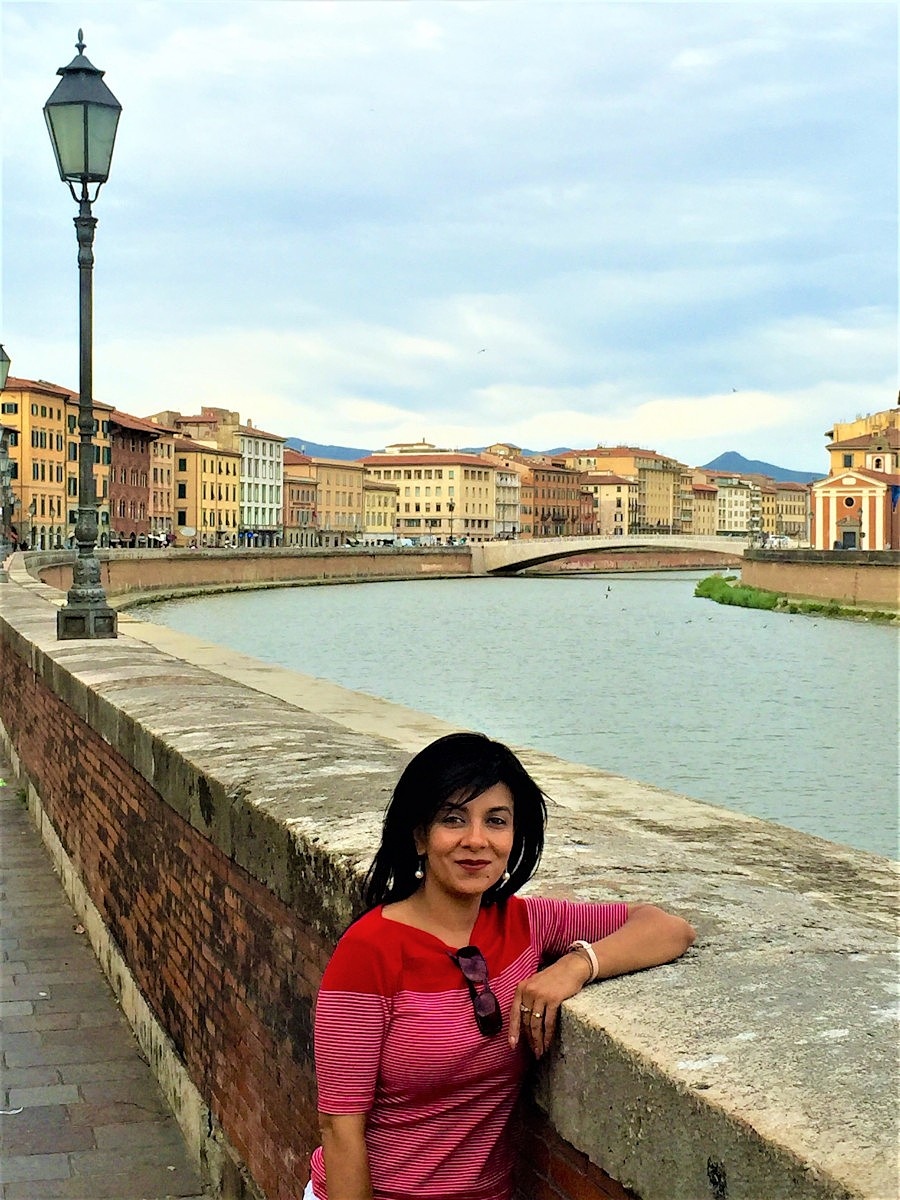
As the day grows quiet, one of the loveliest ways to experience Pisa is to walk the lungarnos—the streets that trace the curves of the Arno through the city’s center. Lined with ochre-toned buildings, arcaded facades, and graceful bridges, these riverside walks reveal a softer side of Pisa, far from the crowds around the Leaning Tower.
Some of the most well-known stretches include Lungarno Pacinotti, Lungarno Mediceo, Lungarno Simonelli, and Lungarno Galilei – named after Pisa’s most famous son, Galileo. The light here is especially beautiful in the early evening, when the buildings reflect in the water and the river becomes a long, slow mirror of the sky.
The Luminara Tradition
The lungarnos also form the heart of one of Pisa’s most cherished traditions: La Luminara di San Ranieri, when thousands of candles illuminate the riverside in honor of the city’s patron saint. Every year on the evening of June 16th, nearly 70,000 small flame-lit lamps are placed along the facades and parapets of the Arno, turning the riverfront into a glowing procession of candlelight. If your trip coincides with mid-June, witnessing this illumination is unforgettable.
7. Indulge in the delicious Tuscan cuisine of Pisa
If you want to experience Pisa the way residents do—not just the way tourists do—set aside time for an unhurried Tuscan meal. On our visit, the hotel staff recommended Osteria La Toscana, a family-run trattoria, as a great option and it ended up being one of the most memorable meals of our trip.
The menu changes seasonally, but you’ll find regional dishes like fresh pappardelle with slow-cooked ragù, ribollita, and hearty secondi that reflect the countryside around Pisa. What surprised us most was the care given to vegetarian options: instead of a single token dish, the restaurant offered a full multi-course vegetarian tasting menu with the same depth and flavor as the traditional plates. It was the kind of meal that feels unplanned yet unforgettable — a quiet reward of following a local’s tip.
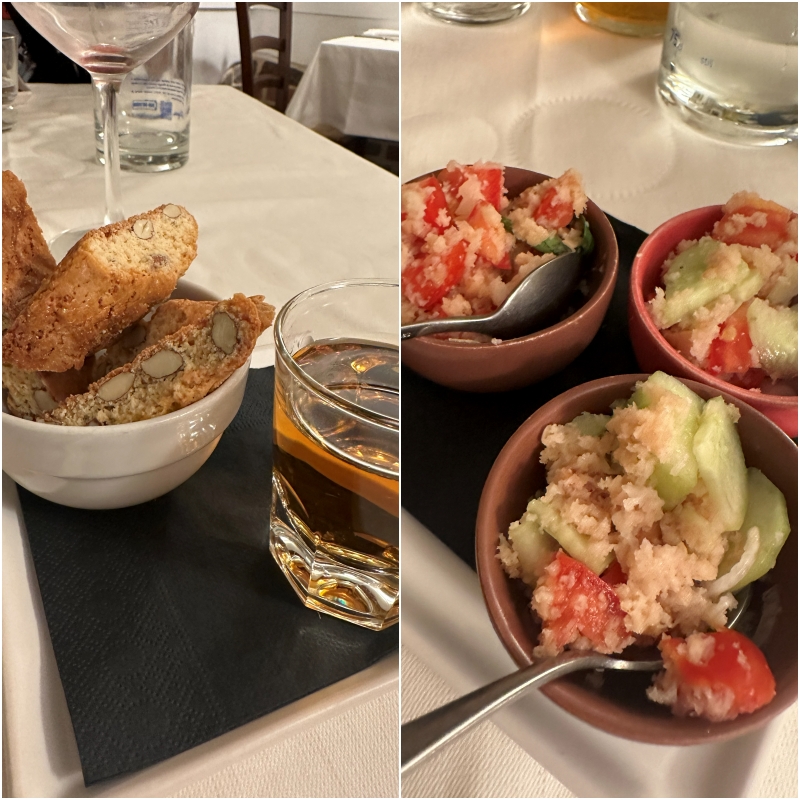
Another eatery that is a favorite of locals is Trattoria Sant’Omobono, known for its handwritten menu and home-style Tuscan dishes. Like most Tuscan cities, Pisa rewards anyone who strays a few streets past the main sights — the food, even more than the sights, is often waiting where the crowds aren’t. Expect the hallmarks of Tuscan cooking here in Pisa — ribollita, fresh pasta, panzanella, and the classic finale of cantucci with Vin Santo — timeless dishes served everywhere from family trattorias to tiny osterie.
8. Discover the churches of Pisa
Step beyond the Field of Miracles and you’ll find that Pisa is dotted with small but striking churches that reveal a different side of the city’s history — from its Romanesque foundations to its later Gothic flourishes. Many of these churches can be seen as you wander the riverside streets and medieval piazzas, and they’re often far quieter than the main monuments.
Two of the most distinctive are Santa Maria della Spina, a tiny Gothic jewel set along the Arno, and Santo Stefano dei Cavalieri in Piazza dei Cavalieri, built for the Order of the Knights of St. Stephen and decorated with marble, naval trophies, and a richly painted ceiling. They take only a few minutes to visit, but both offer a quiet pause from the crowds — and a glimpse into the layers of Pisa that most day-trippers miss.
9. Admire the architecture and history of Pisa at Piazza dei Cavalieri
A few minutes’ walk from the Field of Miracles brings you to Piazza dei Cavalieri, the former political center of the Pisan Republic and the second most important square in the city. When Pisa lost its independence to Florence, the piazza was redesigned for the Order of the Knights of St. Stephen, transforming the space from civic center to military and administrative headquarters.
Among the buildings that frame the square, the most striking is Palazzo della Carovana, a Renaissance palace decorated with elaborate sgraffito work and fronted by a statue of Cosimo I de’ Medici, symbolizing Florence’s control over Pisa and its naval history. Nearby stands the Palazzo dell’Orologio, once part of the medieval government complex and now home to the University of Pisa. With its layered history and quiet grandeur, this square offers a very different side of the city — one shaped not by tourism, but by centuries of power, scholarship, and architectural reinvention.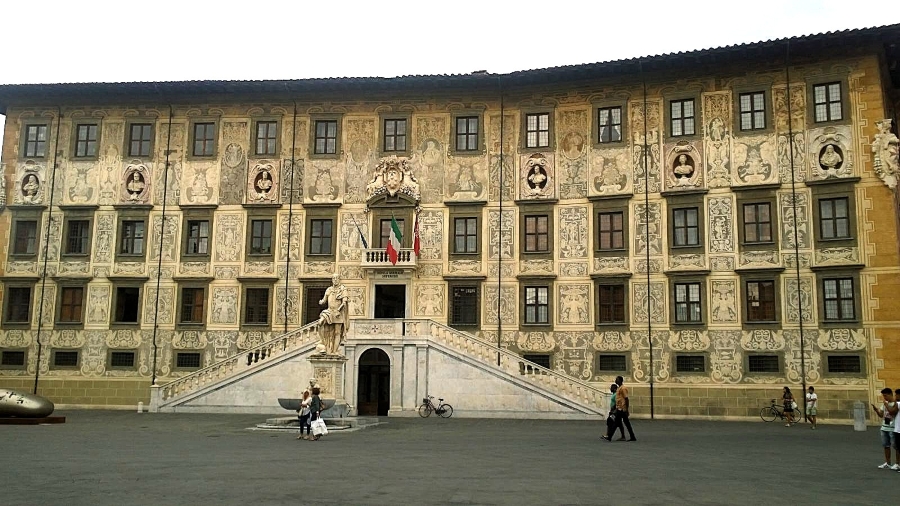
FAQs About Spending One Day in Pisa
These were the exact questions on my mind before visiting Pisa, so I hope the answers here help you plan your own day in the city with a little more ease.
How long do you really need in Pisa to see the Leaning Tower and main sights?
One full day is enough to see the Leaning Tower, Cathedral, Baptistery, and still have time to explore Pisa beyond Piazza dei Miracoli. If you arrive early or stay past sunset, you can enjoy the quieter riverfront streets, student piazzas, and the city without rushing from monument to monument.
Do you need to book Leaning Tower of Pisa tickets in advance?
You should—tickets are timed and capped per entry slot, so booking ahead is strongly recommended, especially from spring through early autumn. On busy days, the remaining same-day time slots often sell out by late morning, so booking online is the only way to guarantee the climb. So, to save time and avoid disappointment book in advance.
Can you walk everywhere in Pisa in one day?
Yes. Pisa is compact and walkable, especially if you arrive at Pisa Centrale and make your way toward Piazza dei Miracoli on foot. Most major sights, especially on your first visit to Pisa, are within a 20–25 minute walking radius, and wandering the lungarnos, university quarter, and smaller piazzas is part of what makes a short stay feel more immersive.
What time of day is best to visit Piazza dei Miracoli?
The square is busiest from late morning to mid-afternoon, so the most relaxed time to visit is either early in the morning or just before sunset. Both offer softer light for photos, fewer crowds, comparatively comfortable temperatures and a chance to experience the monuments without the peak-season rush.
Is it better to stay overnight in Pisa or in nearby Lucca?
It depends on the atmosphere you want. Pisa gives you the convenience of being steps from the Leaning Tower when the crowds thin out, while charming Lucca offers a slower rhythm behind its Renaissance walls and is a beautiful city to explore —ideal for travelers who prefer evenings spent walking, cycling, or dining in quieter piazzas.
Is Pisa worth visiting if you’ve already been to Florence?
Yes—Pisa has a completely different scale and character from Florence. The Field of Miracles alone is unlike anything else in Tuscany, and even a single day allows time to see the landmarks and explore lesser-visited areas along the Arno. It’s an easy add-on to Florence, Lucca, and Cinque Terre itineraries, whether as a day trip or an overnight stop.
Ciao Pisa!
For us, spending one full day in Pisa before continuing on to the next city on our itinerary felt like the ideal balance as first-time visitors that gave enough time to appreciate its history and architecture at our own pace. The second time around, we preferred staying in Lucca for a couple of days for its more relaxed vibe and Tuscan charm while day-tripping to Pisa to show our kids the highlights of Pisa.
The tower is what first brings you to Pisa, but giving the city time reveals a much broader story than the one everyone photographs. It may begin as a place you expect to visit once, but Pisa has a quiet way of inviting you back.
Until next time… Ciao Pisa!
Disclaimer: It’s a pleasure for us to share our travel experiences with all our readers and we sincerely hope to inspire your future travels. In order to help us maintain this blog and offset the costs of running it, we have sprinkled affiliate links throughout the site. If you choose to make a purchase via any of these affiliate links, we’ll earn a tiny commission at no additional cost to you.
If you enjoyed reading this post, don’t forget to share!

Hello ! I’m Aditi …..
Welcome to Land Of Travels – a travel blog that my husband Manish and I started to share our travel stories and travel tips. We are full-time professionals, dedicated parents, foodies, and it is our shared passion for travelling that lead us to become part-time bloggers.
I was born and brought up in Northern India, and have been living in Bay Area, California for more than two decades now. Since childhood, I’ve always had a passion to travel far & wide and experience different cultures. I am passionate about planning our trips and exploring off-the-beaten-path destinations.
My sincere hope is that the travel tips offered on this blog will help you plan your next memorable adventure.
Happy travels!
~ Aditi Sharma ~


I’ve never been to the field of miracles looks beautiful!!
What a cool place! I would love to visit Pisa someday.
How I wish I can visit Tuscan City one day. I love your photographs they made me envious of your travels 🙂
You got some amazing photos! Great memories! 🙂
I haven’t been to Pisa since high school, and that was on one of those organized trips where you’re at each site for like, half an hour. Can’t wait to return! Fun fact, btw: One of the near Chicago suburbs, Niles, has a replica. It’s a sister city to Pisa, apparently. I only know this because it was by my favorite hot dog place growing up!
That’s a fun fact indeed. I didn’t know there was a replica of Pisa near Chicago. I’d love to visit there some day.
We were in Tuscany last fall and absolutely loved it. While we didn’t make it to Pisa, it reminds me of the other towns we visited. This is such a beautiful part of Italy!
We spent a weekend in Pisa a few years ago, I just loved that town 🙂 Its one of the few towns that I feel that a weekend is enough to see it all 🙂
I have been to Tuscany many times but have yet to visit Pisa. I have promised myself that on my next trip to this wonderful region I will get there!
We were glad we stayed in Pisa instead of visiting it as a day trip. Staying overnight gave us the chance to explore it leisurely beyond the iconic Field of Miracles.
Some great tips here! Climbing the tower in the afternoon after many of the crowds have dispersed is a good idea. When I visited many moons ago there wasn’t a safety railing at the top, which made for an interesting time whilst circumnavigating the tower. In fact I have a photo of myself in front of that same bell! Great photos too, thanks for sharing.
Thank you! Glad you enjoyed reading the post and found it informative.
I remember coming here while backpacking in Europe. So many fond memories! Thank you for sharing!
I have never been to Pisa or Tuscany but certainly is on my list. It seems you had a wonderful time.
There’s really a lot more to do than visiting the leaning tower. I had one of the best pizza in my life in Pisa 🙂
That’s so true. We were glad we had decided to stay overnight in Pisa – it gave us the chance to explore the city beyond the famous square.
Great post Aditi! I definitely think that no more than one day is needed for Pisa, but you’ve listed so many of the other great things to do there that I think people tend to forget about! Its a beautiful town and you’ve managed to capture its essence so well here!
Thank you for your kind words. Glad you enjoyed reading the post. There’s definitely more to Pisa than the Square of Miracles – it’s a joy to explore the city at leisure.
I haven’t been to Pisa since I was a kid, but it would be such a fun place to experience again as an adult.
I love Pisa. Although the leaning tower is super touristy, I found it so much more chilled and relaxed in this little city after the crowds had gone.
That’s so true. We loved visiting Pisa as well and exploring the city beyond the Square of Miracles.
Such an interesting and detailed post! I’ve always wanted to visit Pisa especially the Leaning Tower and you’ve provided lots of helpful information
Thank you! Glad you found the post informative.
You know i hadn’t really thought about what what to see in Pisa besides the famous leaning tower. But the architecture throughout the historic areas, such as the cathedral, are worth a visit in their own right
Glad you found the post informative – the architecture is stunning in Pisa and it is definitely worth spending a day in this Tuscan city to discover it beyond the magnificent Square of Miracles.
I learned so much from reading your post, Aditi! I really knew nothing about this historic town or even the tower, so it was very interesting to read about how much the tower is leaning and how it has not always been the same over the decades. The Pisa Baptistery also looks really stunning, and I’m surprised that it’s not as famous as the tower. I could totally see how one day here could be the perfect amount of time to see everything and then be on your way.
I’ve never been to Pisa (only Florence and Rome) but I definitely want to go back and explore all of Italy!
I’ve always wanted to visit Italy! These are great options if you’re roadtripping the country!
I know the leaning tower is touristy but I loooooved it anyway! Great post
Thank you!
I can’t believe you did all of that in one day! The stroll along the Arno River looks lovely and this make me want to visit Pisa even more!
Pisa is relatively small so it’s easy to explore it after visiting the Field of Miracles. Thanks for the visiting the post.
Lovely post and enticing! Hope we can go there someday.
I love your posts! Always, so full of details and tips and so well written. This post is no exception!
I went to Pisa several times and always enjoyed the area. It’s true that there is so much to explore beyond the Leaning Tower.
Thank you so much for your kind words. Glad you enjoy reading our posts including this one.
I wish I had more time to explore Pisa when I was there in 2015. I only went to see the touristy part for a couple of hours before heading to another city. PIsa looks like a charming city to really explore. Thanks for sharing this guide.
Pisa turned out to be a pleasant surprise for us. Naturally, visiting the Leaning Tower was high on our list but we equally enjoyed exploring the lesser touristy parts of the city. Thanks for visiting the blog.
We were just in Italy, but we didn’t make it down to Pisa. We’ll do southern Italy next time… so much to see, and not enough Schengen days!
So true! Italy is such an amazing destination with so much to explore. We look forward to returning there and exploring it some more.
I love all things Italy! To be honest, I actually avoided going here because it is so popular with tourists. But there is still a part of me that wants to see it. Great tips about purchasing tickets, and love that there is so much more to this city than just the marvellous leaning tower.
The square of Miracles is a true highlight of a visit to Pisa and the besides the Tower, the Cathedral is stunning. You can always combine visiting Pisa with a trip to nearby Lucca or choose to stay in Lucca and visit Pisa on a day trip. I’d recommend a stay of a day though at least in Pisa to discover its lesser known gems.
I had visited Pisa during my exchange term in Europe on my way from Florence to Rome. The visit was for a grand total of 2 hours though since all we wanted to see was the leaning tower! But I guess Pisa deserves a second chance – love your pictures of some of the other sights.
We enjoyed exploring the Piazza dei Miracoli in the evening since it had become relatively crowd-free by then and that did add to our experience no doubt. Staying in Pisa overnight turned out to be a good option for us as we got the chance to explore its lesser-known historic sights.
Strange story, with all that is on my bucket list, the Leaning Tower of Pisa, wasn’t one of them, your stories and descriptions as well as amazing photography have made me reconsider. I love architecture. It is all so beautiful.
If you enjoy visiting places with amazing architecture and history, then Pisa deserves a visit for sure. We were glad we stayed there overnight as we were able to explore it leisurely. It was fun to discover its characteristic, less-touristy piazzas that lay beyond the Leaning Tower.
I love the architecture and the art. I enjoyed Pisa too. It’s a must when going to Tuscany. But sadly I didn’t go up the tower.
I agree- it’s definitely a must visit when in Tuscany.
Great post Aditi! I have a few friends who have visited Pisa, but most people just seem to visit the leaning tower, then leave. Your way of exploring more slowly looks a lot more fun.
I had no idea you could go up into the bell tower. I love those views from the top!
We truly felt that spending a day in Pisa gave us the chance to experience its non-touristy side besides visiting its famous monuments. It was fun climbing up those steps of the Leaning Tower for a bird’s eyeview of the city.
I have been seeing the leaning tower pictures from my childhood but never knew the full real name of the tower. Glad I came across this and I got to learn many new facts about this famous historic site. I never knew that visitors could climb the spiral tower. It would have been an exciting experience to climb the tower and views would have been amazing.
Definitely – climbing those steps of the tower was an exciting experience. The steps are slippery and uneven so visitors have to be careful if they choose to climb up the tower though. The views were indeed awesome and climbing the tower at the lesser crowded evening hours added to the experience.
I really didn’t know there was much more to the town than the Tower. Thanks for sharing! The views of the water and the views from the tower are stunning!
Strolling along the lungarnos of Pisa was a perfect way to wrap the day we spent exploring the quieter side of the town. The Field of Miracles is of course a highlight but it was a joy to discover the lesser known sights in town.
I’ve been to a few different spots in Italy but not Pisa – it looks amazing! I hope to visit someday!
We were pleasantly surprised to find there was so much to see in Pisa besides the Leaning Tower itself.
I have never been to Pisa, and this is a great list to inspire one if they are traveling there.
The people I know who have seen Leaning Tower of Pisa all say that it is a bit over-rated but the way you have mentioned, it looks like it is really worth to see it from inside as well.
There’s so much more to see in Pisa that just the Leaning Tower. We were glad we stayed overnight in this city which gave us a chance to explore it at a more leisurely pace.
Great post! I’ve been to Pisa in February and would love to go back in a better season. It was rainy and cloudy all the time, so I’ve skipped climbing the Leaning Tower, but looking at your photos I start to regret that decision – the city looks so nice from above!
Pisa is now on my bucket list!