
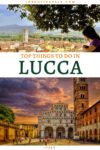
Lucca is an incredible gem of northern Tuscany that has managed to hold on to not just its history but also its sense of peace. It moves to a different rhythm than nearby Florence and Pisa and makes a great base for exploring the region. Lucca’s calm invites you to pause and experience its authentic Tuscan charm, the tapestry of its past, and a relaxed lifestyle. It’s no wonder that among the many things to do in Lucca, the most rewarding might be allowing yourself to linger and let this timeless city cast its Tuscan magic.
In addition to its relatively compact size, what makes it so easy to explore Lucca for all visitors is its flat terrain – a gentle contrast to the surrounding hilly Tuscan countryside. That effortless ease of exploring is what makes Lucca so special.
We visited Lucca in July – yes, in the peak tourist season – yet we never felt overwhelmed. Spending two days inside the historic center let us see the highlights without rushing. So here are some of our favorite things to do in Lucca—from walking the ancient walls to climbing towers and savoring local cuisine. We hope this Lucca travel guide helps make your visit memorable.
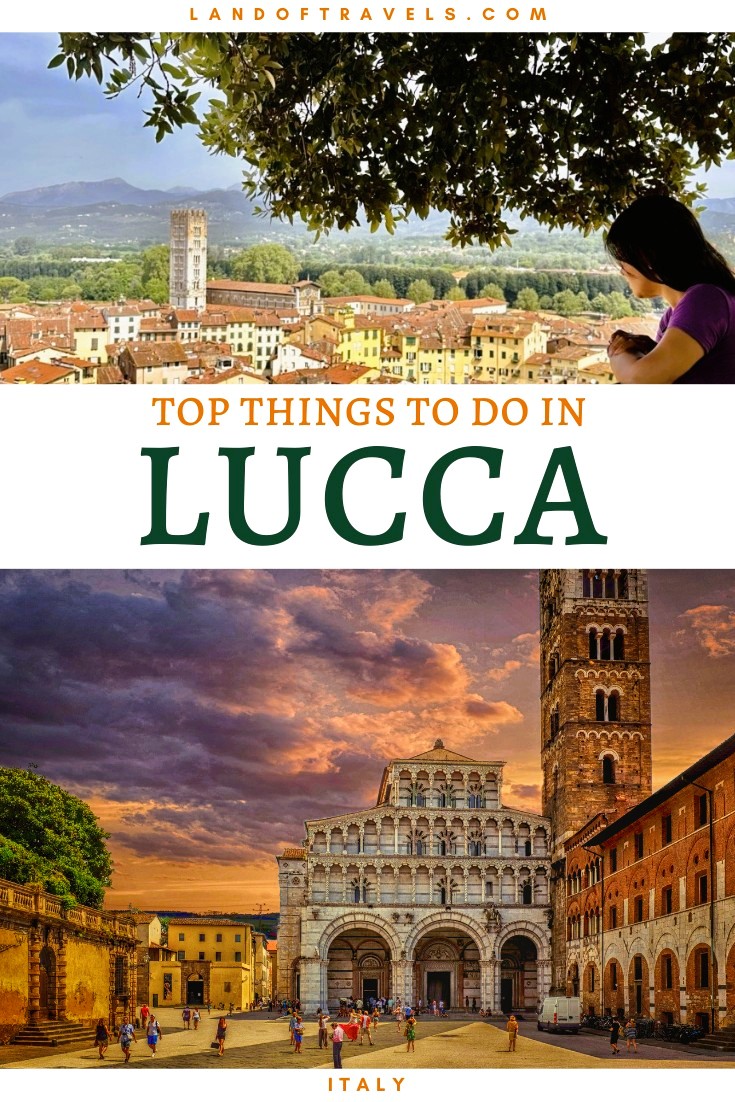
Table of Contents
A Glimpse into the History of Lucca, Italy
Lucca is steeped in history that reaches back to Etruscan times and to 180 BC, when it became a Roman colony. Sitting along the ancient pilgrimage route of the Via Francigena, Lucca grew as art and trade flourished, fueling its political and economic rise. By the Middle Ages, it had become an independent republic that kept threats at bay and largely avoided conquest.
The city’s Renaissance walls—still famously intact—shielded it from rival powers such as Florence and Pisa. Experiencing the pride locals still hold in that legacy of independence adds to the charm of this Tuscan gem.
How to Get to Lucca, Italy
Getting to Lucca is easy, which is one of the many reasons it fits so effortlessly into any Tuscany itinerary. If you’re planning on spending one day in Lucca, taking the train is by far the most convenient option — no parking stress, even during the busy season.
How to Get to Lucca by Train
Lucca is well connected by regional trains, making it an affordable springboard for exploring nearby cities like Florence, Pisa, and La Spezia (from where you can easily reach Cinque Terre). Lucca’s train station, La Stazione di Lucca, is located right outside the city walls near Porta San Pietro. As you exit the station, you’ll find taxis or you can simply stroll along the walkway into the historic center. Some hotels and B&B’s are located near the station (outside the walls of the historic center), but we chose to stay inside the old walls to fully soak in the city’s charm.
Train tickets for Lucca can be bought at Trenitalia ticket machines at the station or online in advance. If you’re using a paper ticket, remember to validate it before boarding to avoid fines. We had purchased Eurail passes and our train travel to Lucca was conveniently covered by our pass.
How to Drive to Lucca by Car
If you’re driving, Lucca is easily accessible via Italian toll roads. From Florence or Pisa, take the A11 and follow the Lucca Est or Lucca Ovest exit. From the coast, use the A12, connect to the A11 via Viareggio, and follow Lucca Ovest.
Keep in mind that access to the historic centre within the walls is restricted by a ZTL (Zona Traffico Limitato). Non-authorized vehicles and vehicles without a permit entering the ZTL zones face heavy fines. However, there are several paid parking lots available — Parcheggio Mazzini (on Via dei Bacchettoni, located inside the walls), Parcheggio Palatucci and Parcheggio Carducci (both situated just outside the walls). To avoid any ZTL-related fines, consider parking in one of these paid lots, or contact your hotel in advance to ask about obtaining a permit for entry.
Travel Tip: If you’re planning your visit around the Lucca Summer Festival, book accommodation early as the city fills up fast.
Best Time to Visit Lucca, Italy
Lucca is a beautiful city to visit year-round, with each season offering something unique. Like much of Italy, the peak tourist season falls in summer, when prices rise and day trippers arrive from Florence and Pisa. In contrast, spring (Mar–May) and fall (Sep–Nov) offer a more relaxed vibe and milder temperatures, making these months the ideal time to visit Lucca.
No matter when you visit, there are always plenty of things to do in Lucca that reveal a different slice of the city’s beauty and culture.
- Spring (Mar–May): Blooming wisteria, pleasant weather, ideal for cycling and jogging along the walls.
- Summer (Jun–Aug): Festivals (Lucca Summer Festival, Puccini Festival); longer, hotter days, lively evenings.
- Fall (Sep–Nov): Autumn foliage, quieter streets, olive and grape harvest season; expect occasional showers.
- Winter (Dec–Feb): Peaceful, locals-only feel, festive vibe with Christmas lights and seasonal baked specialties; expect cooler, wetter days.
We visited in July and even at the height of the tourist season, we never felt rushed. We chose to spend two days in Lucca and stayed inside the historic center enjoying the must-see sights at a leisurely pace.
Top Things to Do in Lucca — A Complete 1–2 Day Guide
Lucca is best explored over two or three days, giving you time to walk its walls, climb its towers, uncover hidden corners, and linger in its cafés. Stay within the city walls if possible to fully immerse yourself in the historic charm that defines Lucca. If you’re planning a 1–2 day Lucca itinerary, here are our favorite things to do in Lucca — a relaxed blend of must-sees and hidden gems of the city.
1. Walk or Bike along the Ancient City Walls of Lucca
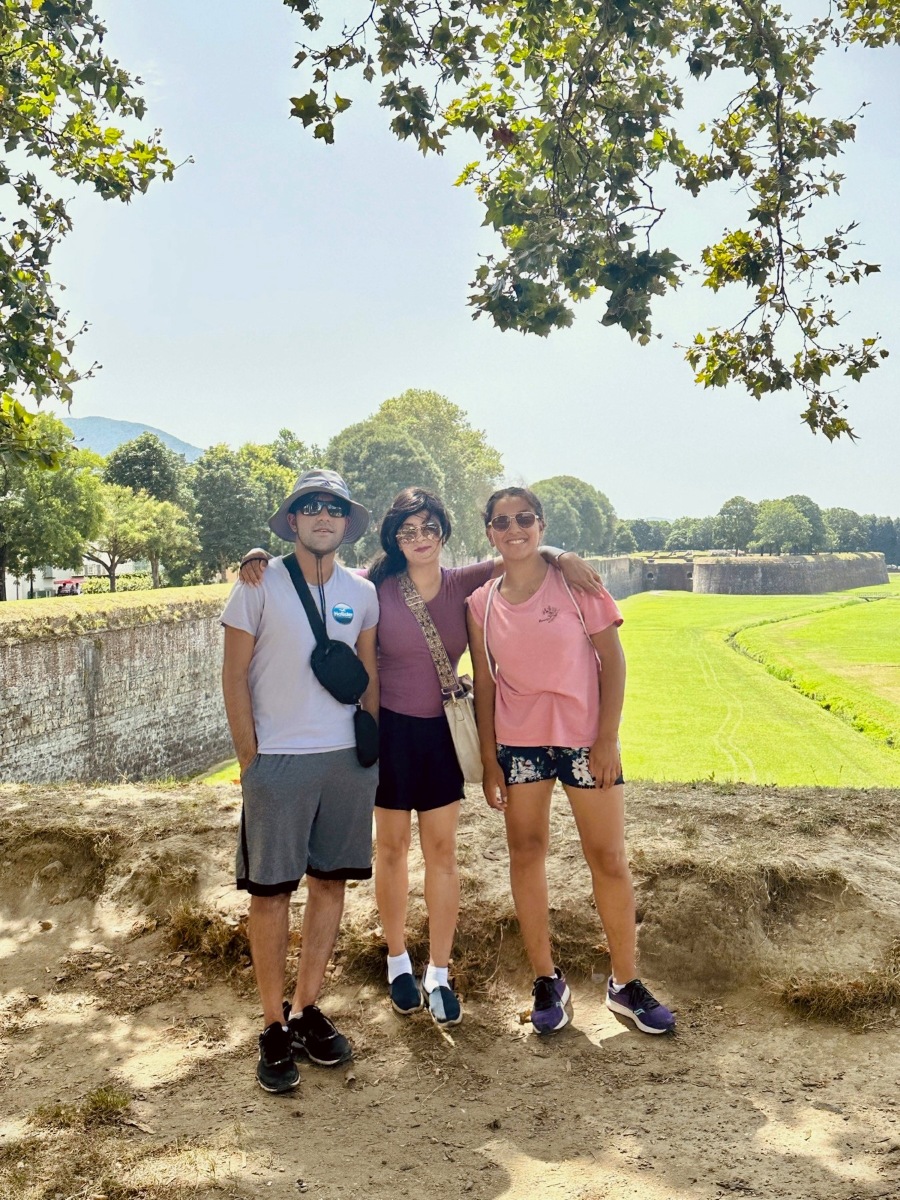
Encircling the entire historic center, Lucca’s Renaissance walls are unlike any other in Tuscany. Built to defend the city centuries ago. These perfectly preserved, fortified walls form a 4.2 km loop with a broad, tree-lined promenade offering postcard-worthy views. As you walk or bike along the ramparts, you’ll catch glimpses of Lucca’s terracotta rooftops, gardens, church towers, and even the distant Apuan Alps.
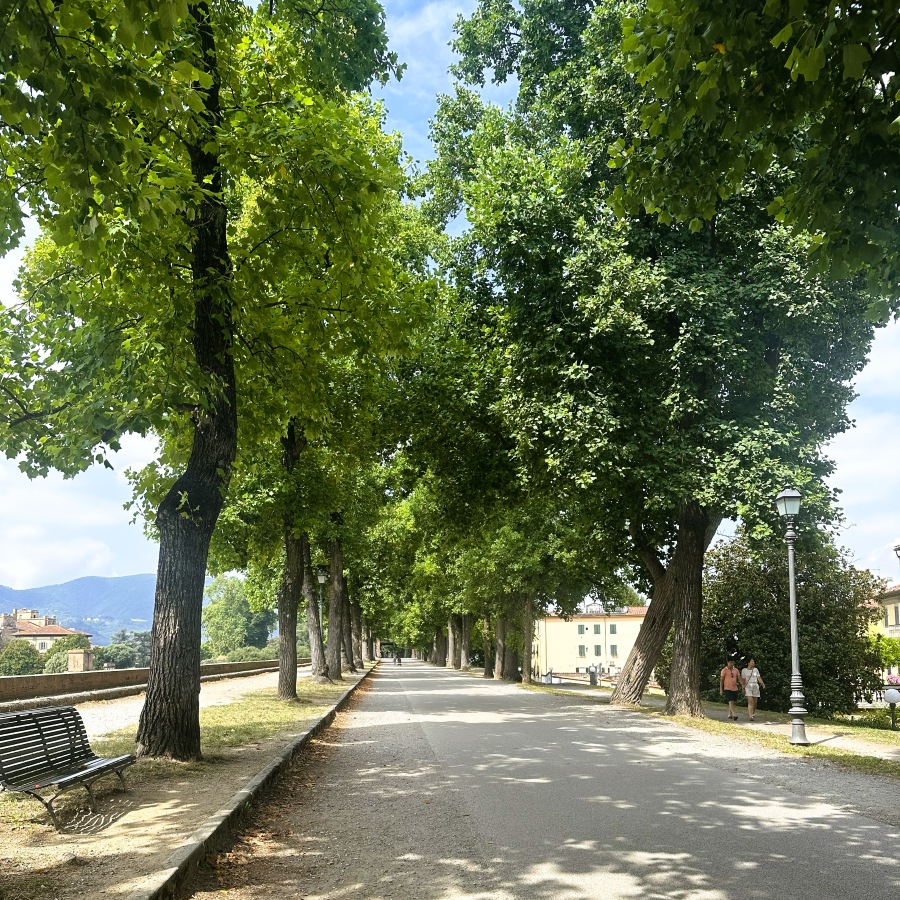
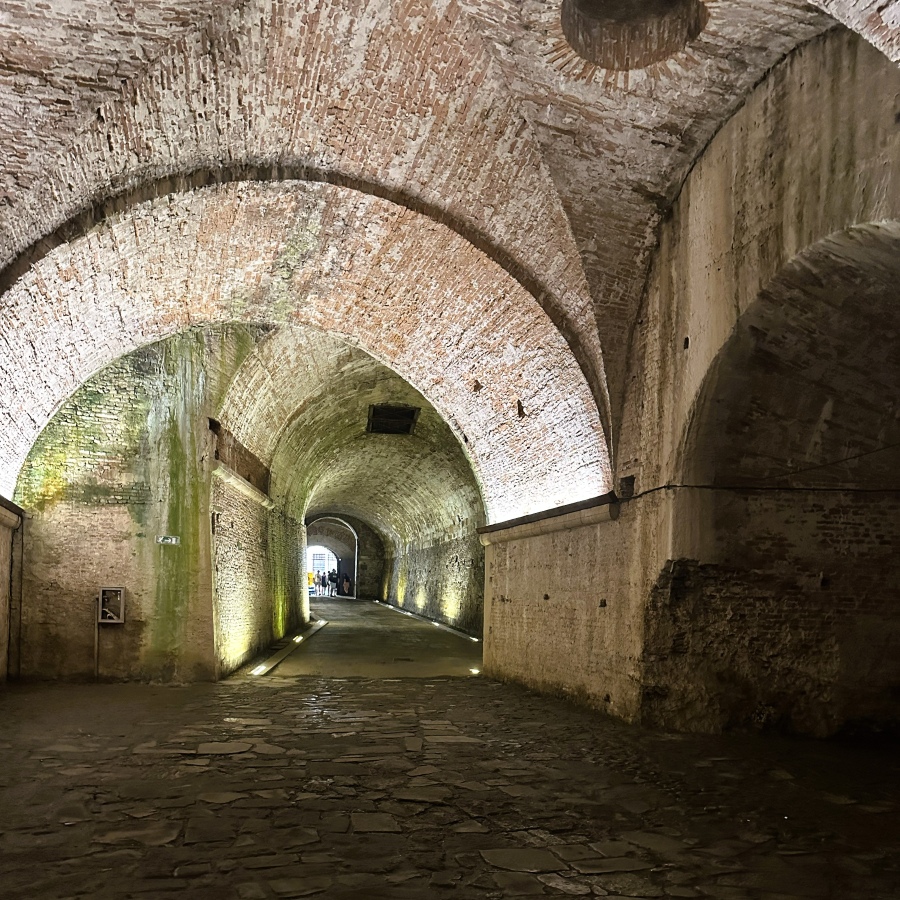
The walls are a beloved feature of Lucca and are frequented by locals and visitors alike. Here, you will find people cycling, jogging, enjoying their evening passeggiata, and families zipping away in four-seater pedal buggies. Benches and shaded bastions in the public park on the walls offer the perfect spot for a picnic. Beneath the ramparts, brick tunnels and vaulted passages connect the inner city to the outer parks. These 16th-century tunnels were used in the past for storing ammunition and moving troops; today they are open for guided tours and offer fascinating insights into the history of Lucca.
We chose to take a bike tour in Lucca which included a complete loop on the wall, a ride through the historic center, and a visit to the tunnels of Lucca’s walls. Several rental shops such as one located conveniently next to the main exit of the train station offer hourly or daily bike and buggy rentals as well.
Travel Tip: Rent your bike early in the day to explore the city and circle the walls at sunset for golden light and fewer crowds — it’s pure Lucca magic.
2. Climb the Guinigi Tower for Panoramic Views
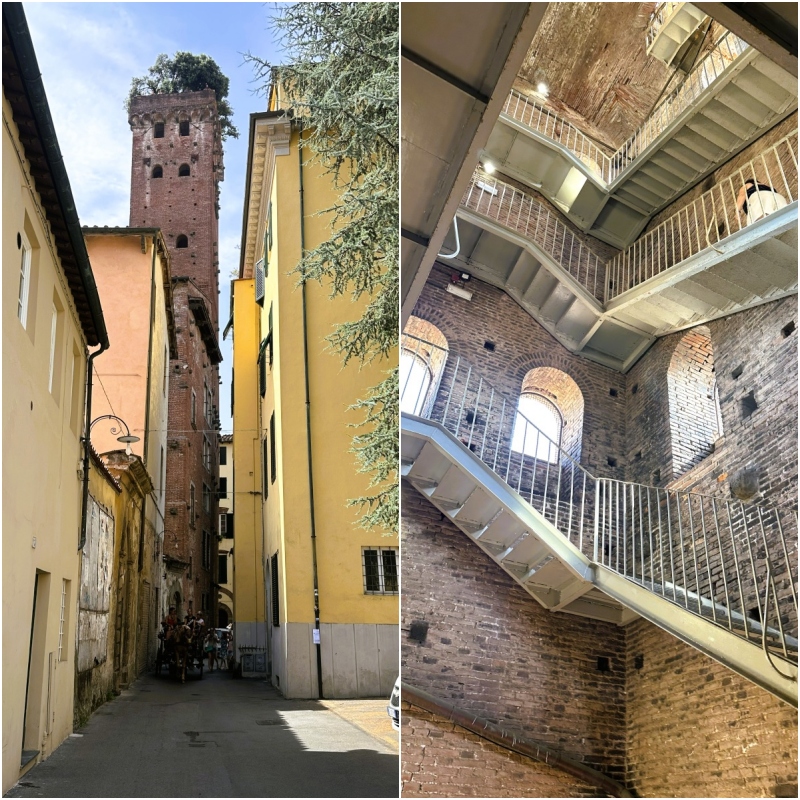
Torre Guinigi — a 14th-century tower built by the Guinigi family — is a distinctive landmark of Lucca. It catches your eye with its Romanesque-Gothic architecture and a unique rooftop garden featuring seven holm oak trees. Interestingly, while Lucca once had hundreds of towers built by wealthy families, only a few remain, and Torre Guinigi is the only one perfectly preserved to this day.
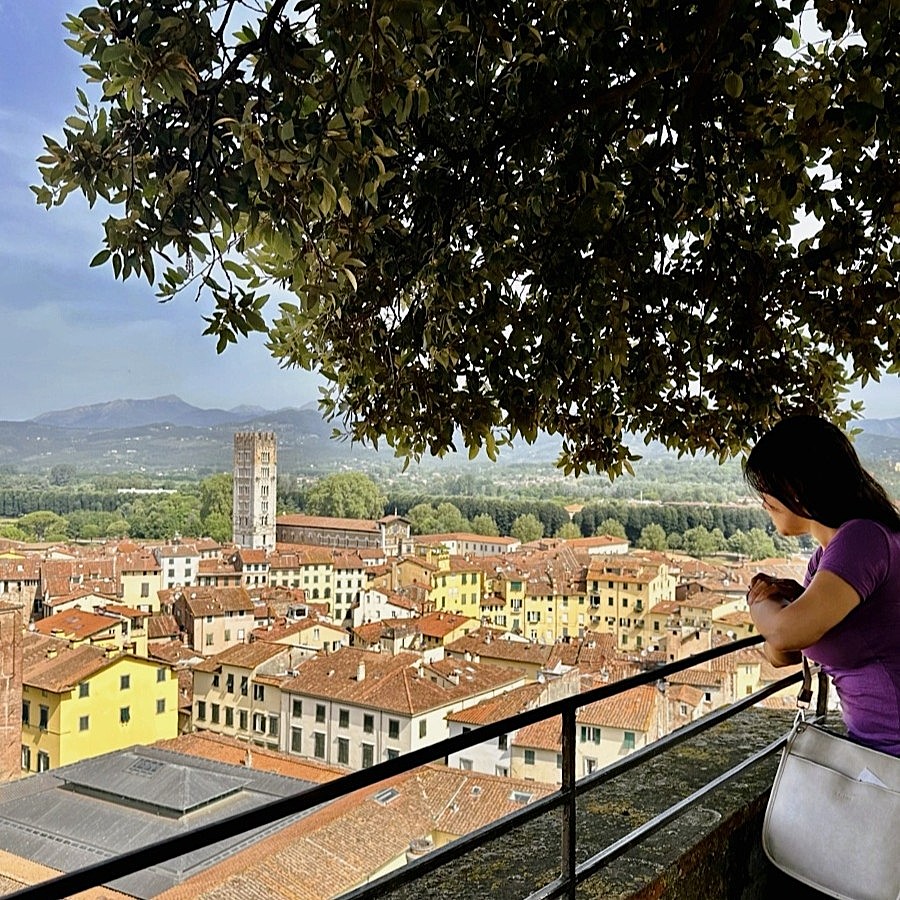
The climb up its 28 flights — about 220 steps in all — is well worth the effort, rewarding visitors with views of the city and Tuscan hills. It’s easily among the most memorable things to do in Lucca, especially if you enjoy panoramic views and don’t mind climbing stairs. Keep in mind there’s no elevator, so the rooftop isn’t accessible to visitors with reduced mobility. From our perspective, my kids and I found the climb steady, shaded, and relatively easy to manage.
We grabbed some traditional pastries from nearby caffetteria La Colonna before starting the climb and enjoyed them under the shade of the oak trees on the rooftop — without a doubt, one of the best viewpoints in Lucca. Even in summer, the wait to enter was surprisingly short, and we were able to purchase tickets on-site without much delay. You can also purchase tickets in advance directly through the official website to avoid any wait.
3. Wander the Timeless Streets of Lucca’s Old Town
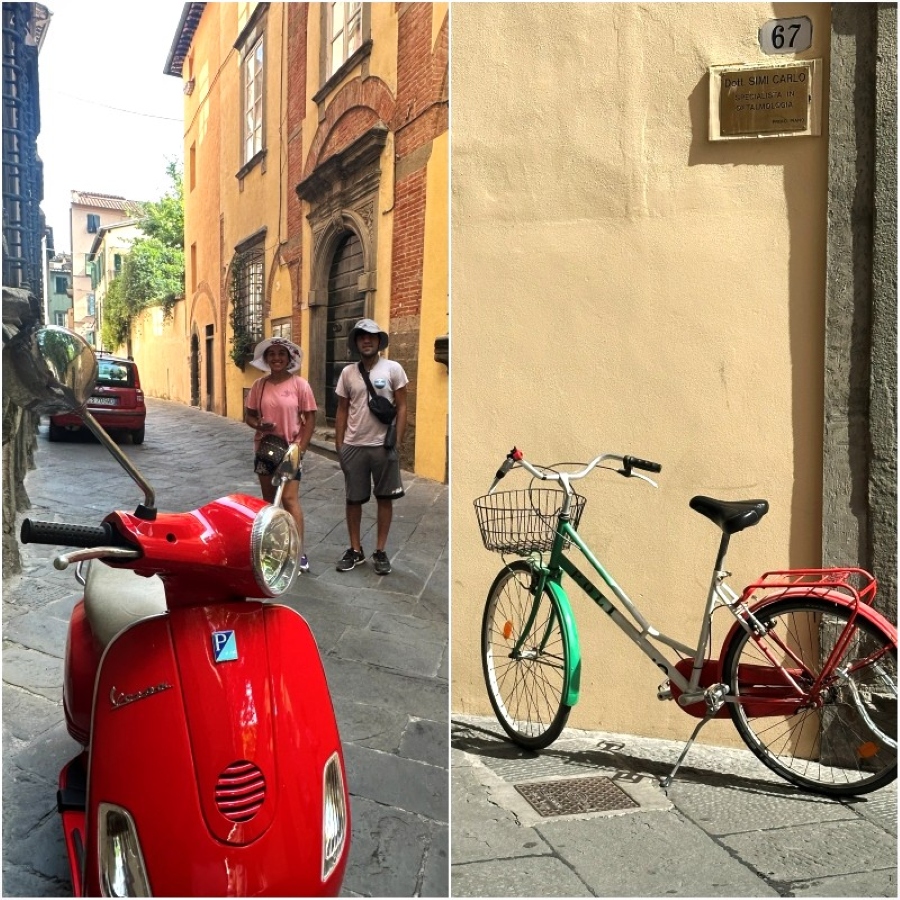
There’s something cinematic about how Lucca’s cobblestone lanes unfold — ochre walls, medieval towers, ivy-clad corners, a red scooter parked beneath a window, and the occasional bicycle resting against a doorway. The pace here is unhurried, inviting you to slow down and take it all in.
Lucca is best explored on foot or by bike, though a horse-drawn carriage ride offers a charming alternative if you’d like to see the city at an even gentler rhythm.
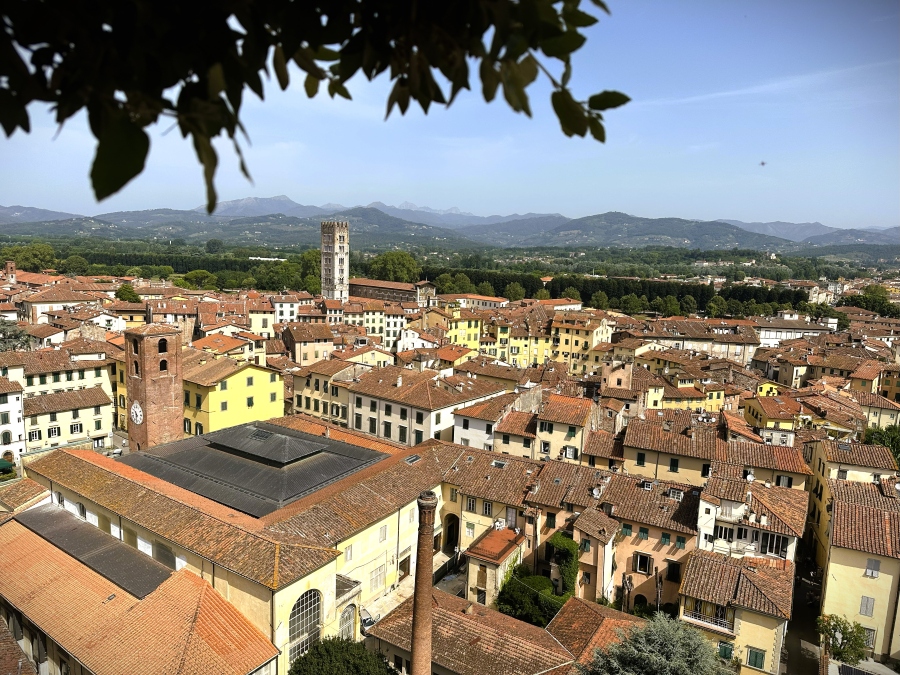
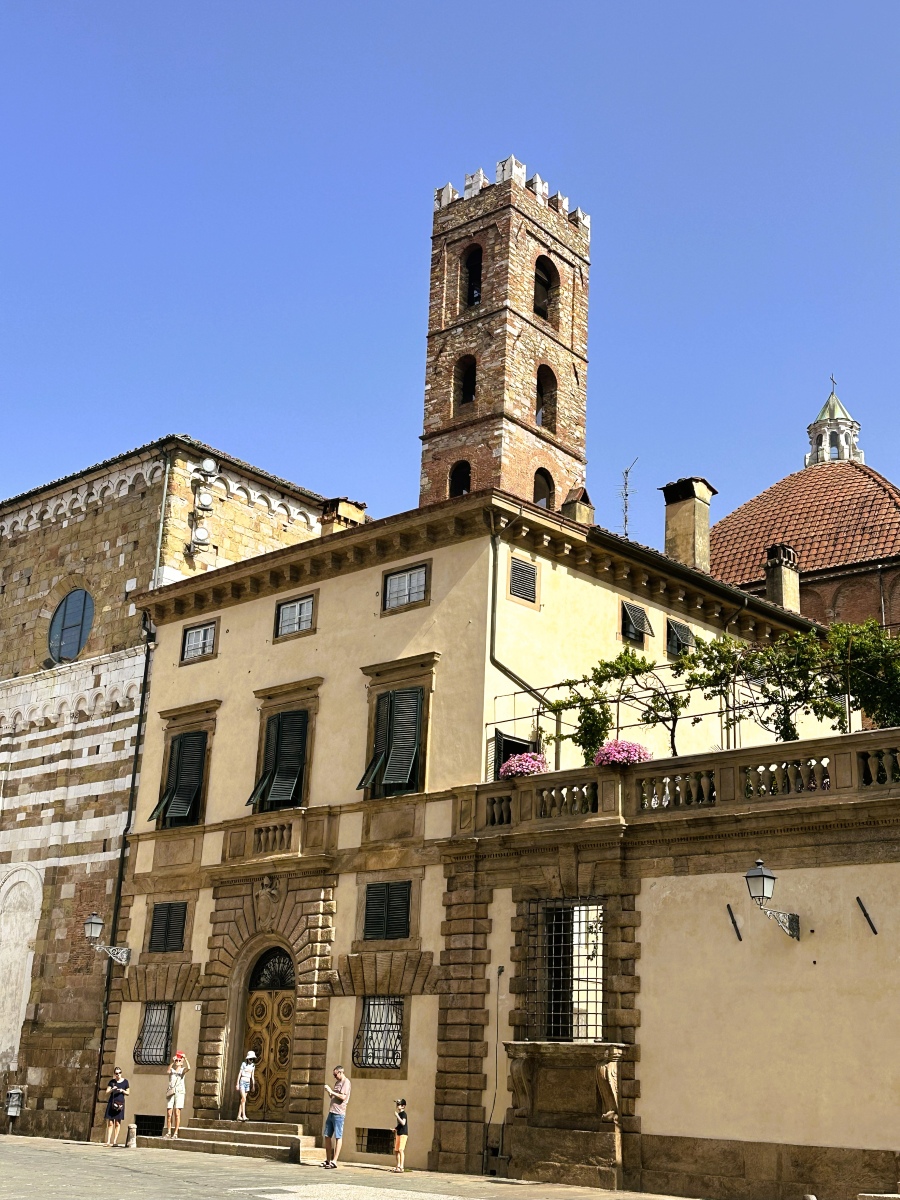
If you’re wondering where to begin your self-guided walk through Lucca, start at Porta San Pietro — the main gate near the train station — and follow your curiosity north. The bustling Piazza Napoleone, home to the Ducal Palace, gives you space to breathe before you make your way through the narrower lanes toward San Michele in Foro. From there, the main shopping street, Via Fillungo, welcomes you to Lucca’s lively heart — market stalls, boutiques, wine shops, and the scent of espresso at every turn. Strolling along these historic streets is one of the quintessential things to do in Lucca, blending everyday modern life with timeless Tuscan charm. A short detour leads you into the iconic oval-shaped Piazza dell’Anfiteatro. If you pause in this historic piazza lined with cafes all around, you might just find yourself imagining the sounds of the Roman crowds and chariot races that once filled this amphitheatre. From here, loop back towards Torre Guinigi and consider climbing to its rooftop for commanding views.
The first thing we did after checking in was grab a map and start wandering. Lucca’s narrow, shaded lanes made exploring this Tuscan gem feel effortless.
4. Relax in Piazza dell’Anfiteatro — Lucca’s Most Iconic Square
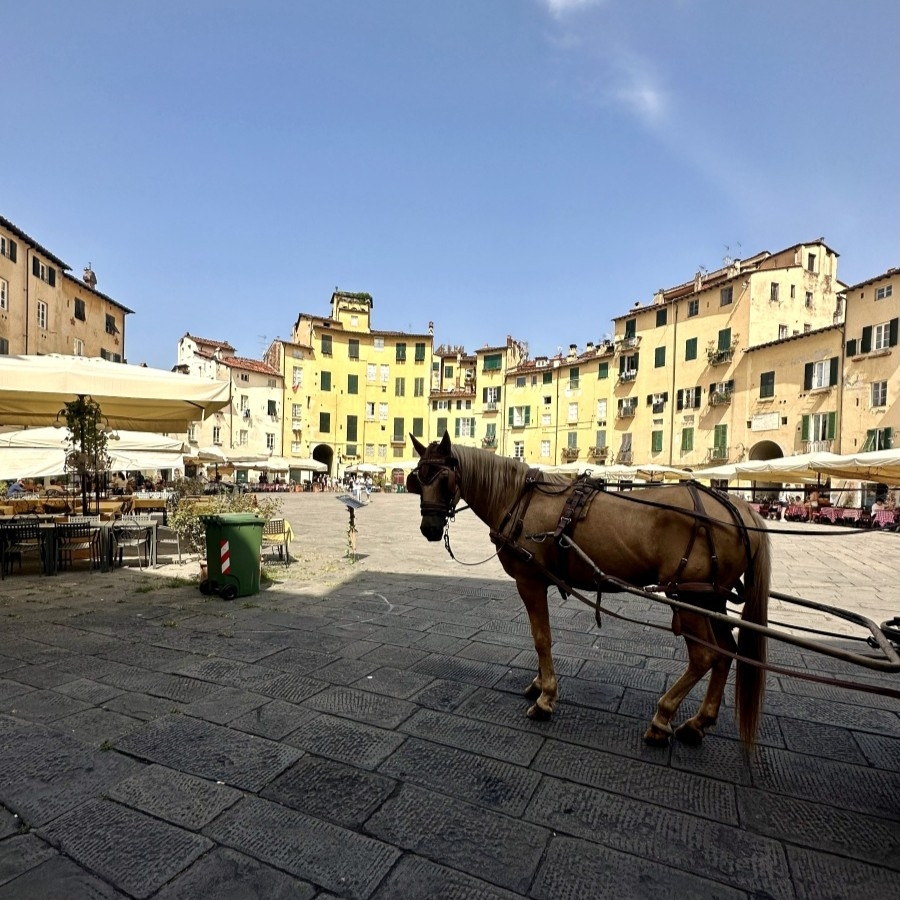
Once a Roman amphitheater, today Piazza dell’Anfiteatro is Lucca’s most distinctive square. Step inside this oval shaped piazza through one of the four narrow arches and you’ll find yourself in one of the city’s liveliest hubs.
This charming piazza often hosts markets and pop-up stalls throughout the year. If you’re visiting in late April, don’t miss the vibrant floral market held here during the Feast of Santa Zita. On other days, you might find artisan stands or local craft stalls—a perfect moment to grab a gelato and watch local life unfold.
Cafés and souvenir shops dot its edges. For an authentic Tuscan dinner, consider dining at Ristorante Peperosa. Book ahead (especially in high season) to secure an outdoor table overlooking the square and soak in the watch-the-piazza-life atmosphere—easily one of the most relaxing things to do in Lucca.
5. Explore the Historic Churches of Lucca
Did you know Lucca is nicknamed the ‘city of 100 churches’? Whether you’re strolling along its ramparts or taking an early-morning walk through its narrow alleys, you’ll almost always spot a steeple or hear the soft echo of church bells in the distance. Discovering Lucca’s historic churches isn’t just one of the top things to do in Lucca — it’s a way of catching a glimpse of the city’s artistic soul and spiritual fabric.
Duomo di San Martino (Lucca Cathedral)
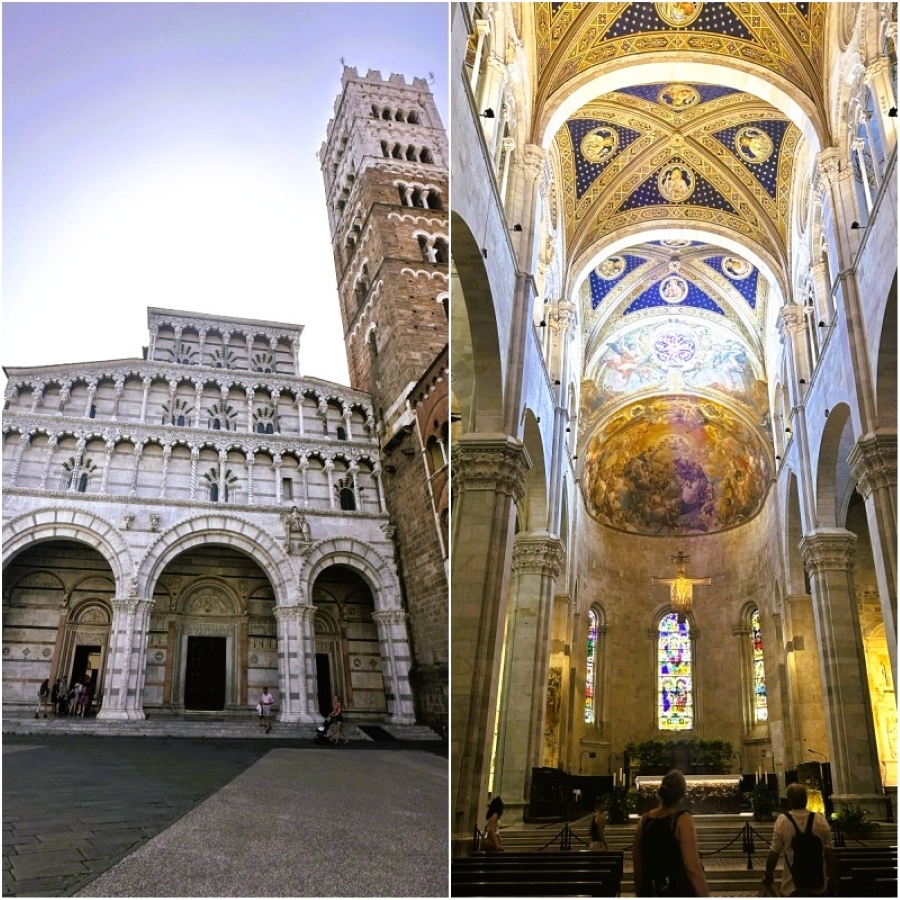
Located near the southeastern edge of the historic center, the Duomo di San Martino is Lucca’s main cathedral and one of its most striking architectural landmarks. Its intricately carved marble facade blends Romanesque and Gothic elements, and the soft hues of the stone may even remind you of the cathedral in nearby Pisa.
If you look closely at the portico, you’ll notice the Equestrian Statue of San Martino—a relief depicting the compassion of Saint Martin as he divides his cloak with a beggar.
Step inside, and the vast Gothic-style naves instantly envelop you in serenity. The cathedral houses the revered medieval relic Volto Santo (Holy Face)—an 8-foot wooden crucifix—as well as the exquisitely carved marble tomb of Ilaria del Carretto, one of the artistic masterpieces of the Lucca Cathedral.
Combined entry to the cathedral complex (which includes the museum and bell tower) costs around €10, and tickets can be purchased on-site or in advance online.
San Michele in Foro
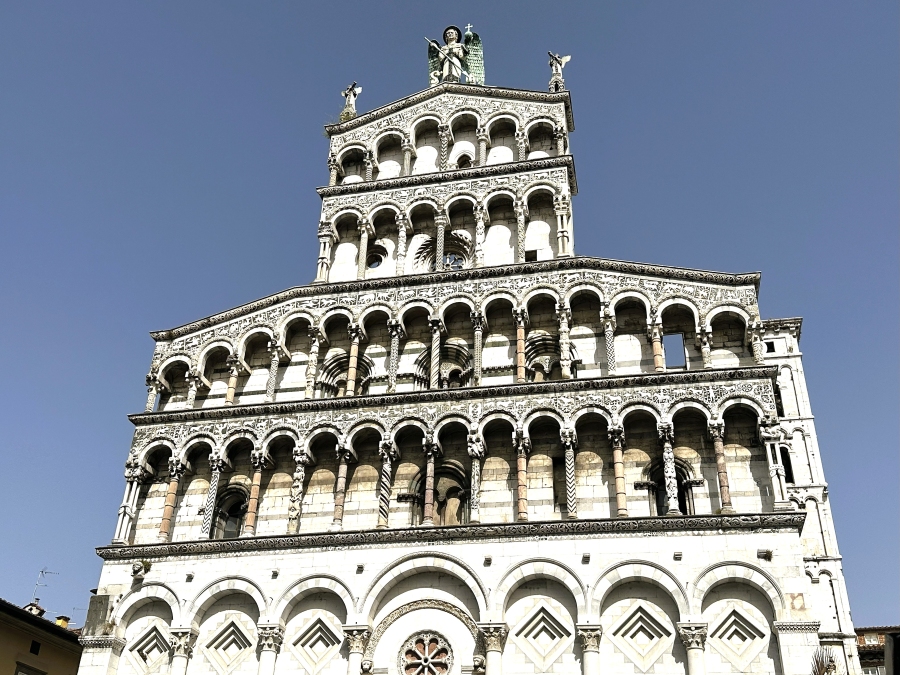
As you make your way to Piazza San Michele, your gaze will be instantly drawn to the striking architecture of Chiesa di San Michele in Foro—a Roman Catholic basilica and one of the most photographed churches in Tuscany. Built on the site of Lucca’s ancient Roman forum, its white-marble facade showcases intricate carvings and is crowned by a bronze statue of Archangel Michael slaying the dragon. Entry is free, though donations are always appreciated.
Basilica di San Frediano
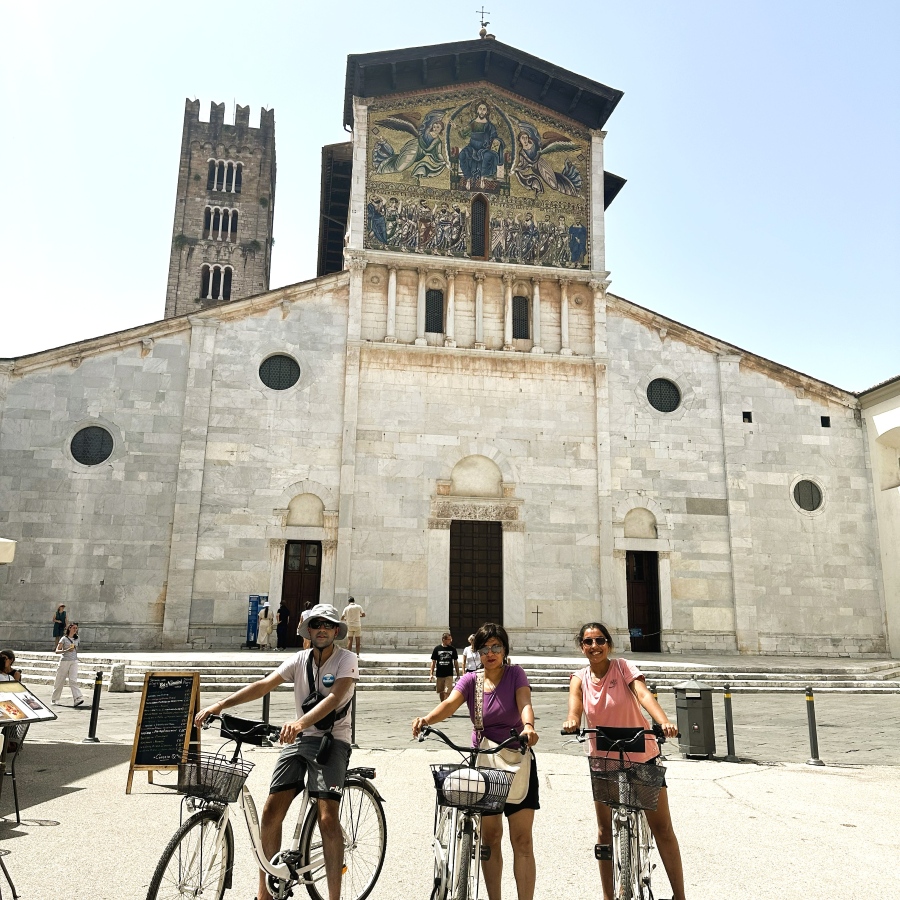
A short walk from Piazza dell’Anfiteatro and close to the Porta Santa Maria gate, the Basilica di San Frediano is one of Lucca’s oldest and most captivating churches. Its facade is crowned by a golden Byzantine-style mosaic depicting Christ ascending to heaven—especially radiant in the afternoon sun. Inside, the serene white-marble interior with three Romanesque naves is adorned with 13th-century frescoes and a beautifully carved baptismal font. Visitors can enter the basilica and bell tower with a ticket of about €8.
6. Taste Buccellato at Taddeucci — Lucca’s Signature Sweet Treat
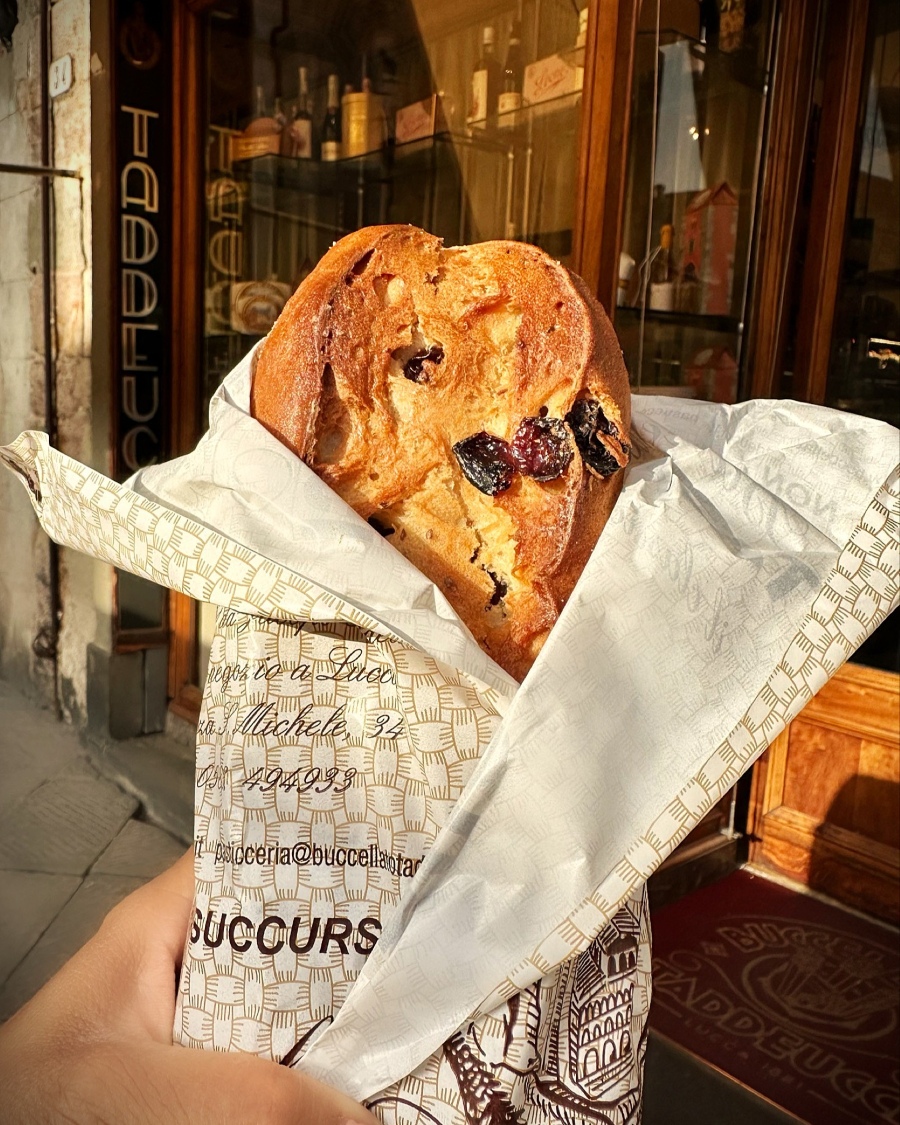
A visit to Lucca isn’t complete without trying the iconic buccellato di Lucca — the local sweet bread made with raisins and anise seeds. In fact, our bike tour guide mentioned to us that there is a saying – “Chi viene a Lucca e non mangia il buccellato è come non ci fosse mai stato” — literally, anyone who comes to Lucca and doesn’t eat buccellato hasn’t truly visited the city.
One of the best places to try Lucca’s famous buccellato as well as seasonal traditional products such as panettone, pandoro and colomba is Taddeucci. The inviting aroma of the baked goods at Taddeucci is hard to miss as you walk through Piazza San Michele. Enjoy a slice of this sweet bread slightly warmed, with an afternoon espresso—or dunked in Vin Santo (traditional dessert wine). Tasting buccellato is one of the sweetest things to do in Lucca, especially if you love trying local specialties.
7. Shop and Stroll Along Via Fillungo — Lucca’s Lively Main Street
Via Fillungo — Lucca’s lively main shopping street — threads through the historic center, lined with boutiques, artisan workshops, cafés, and gelaterias.Take your time as you wander — notice how modern storefronts blend gracefully with their medieval facades.
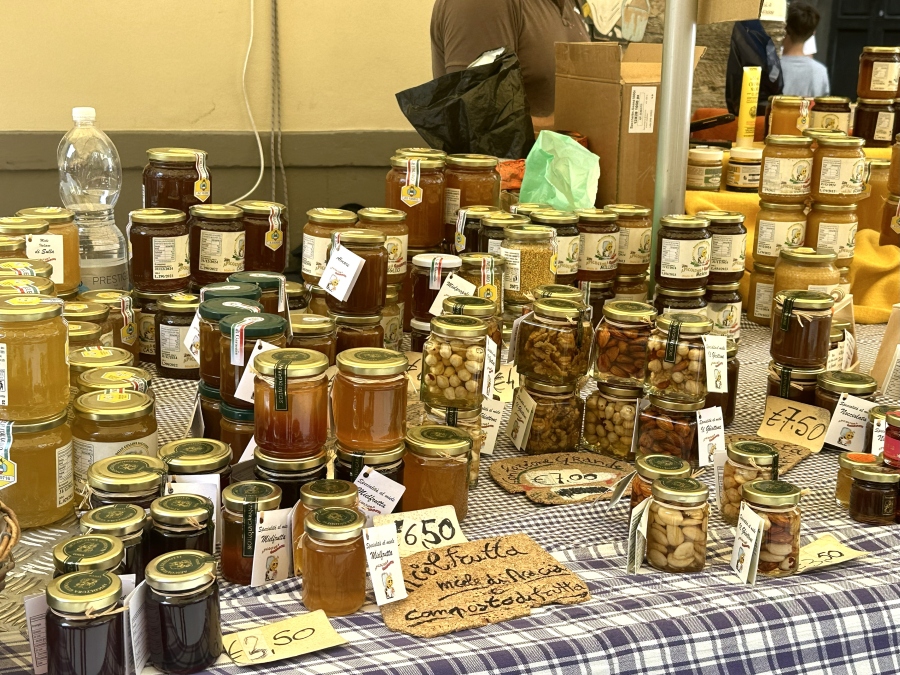
Along the way, you might find pop-up stalls selling local honey, olive oil, and handmade ceramics. Nearby, specialty stores like L’Oste di Lucca (near Via Cenami) stock Tuscan delicacies such as pici, cantuccini, and amaretti. On the other hand, wine lovers can discover some of the best selections of regional wines at Enoteca Vanni (just off Piazza del Salvatore). If you continue toward Piazza San Giusto, step inside the colorful Paolo Lazzerini Art Gallery — a delightful pause between shopping and strolling.
Exploring this part of the city is one of the most enjoyable things to do in Lucca, even if you are only window-shopping. We found ourselves returning to Via Fillungo more than once — sometimes for gelato and warm focaccia, other times just to soak in the rhythm of everyday life.
8. Discover Lucca’s Ancient Gates and Hidden Corners
When you venture beyond Lucca’s famous walls, you’ll find that many of its stories are etched into its remaining medieval gates and hidden gems like Palazzo Pfanner and the Orto Botanico di Lucca (Lucca’s Botanical Garden). If you are looking for some off-the-beaten path things to do in the city, be sure to include these in your Lucca itinerary.
The medieval gates of Lucca
Lucca’s walls have guarded the city for centuries, and if you look closely, you will notice traces of two eras – the Renaissance and the Medieval eras. While the current Renaissance walls with its six large gates are a prominent feature of this Tuscan city, Lucca in fact had an earlier medieval wall – its original inner circle of fortifications.
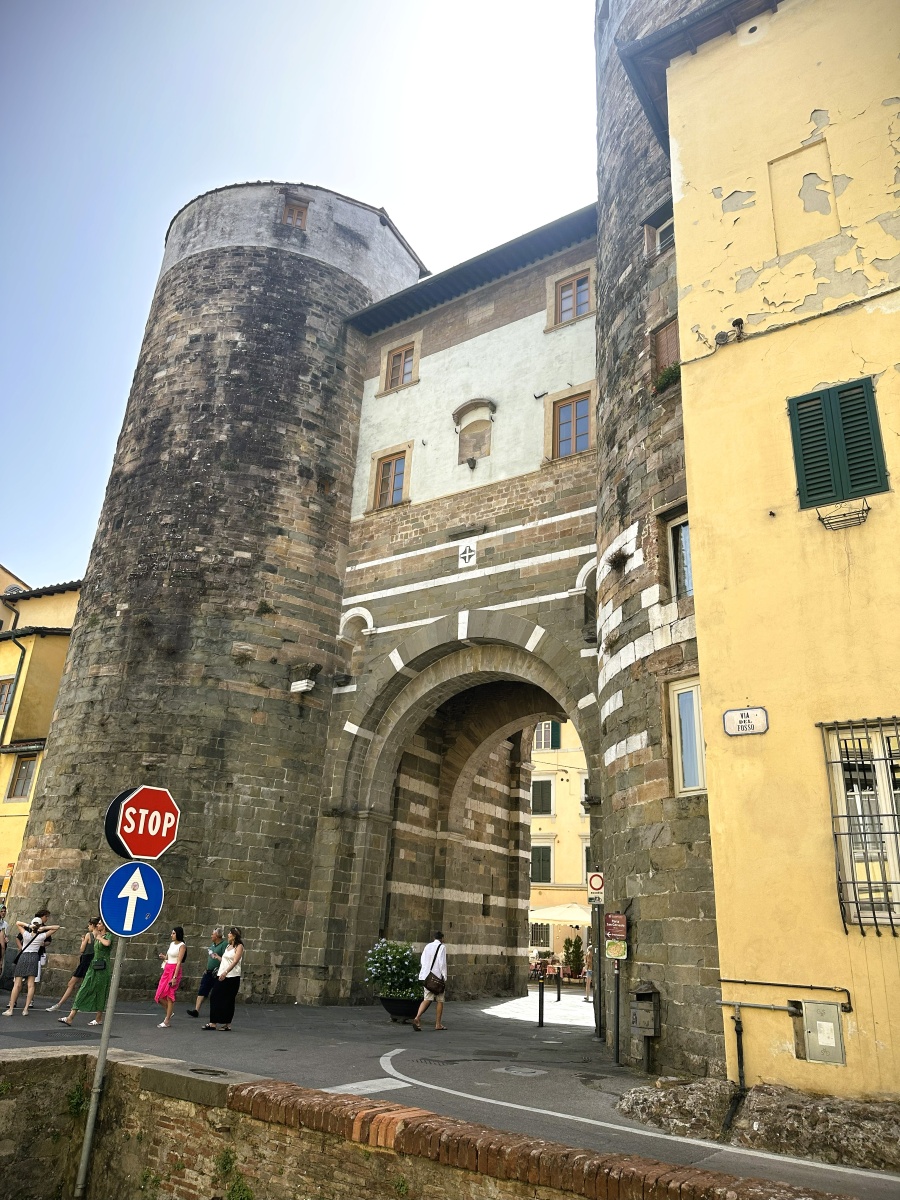
Three medieval gates from that earlier era can still be found within the city, not along the outer perimeter. The best preserved and most recognizable of these medieval gates is Porta San Gervasio (on Via Elisa) with its twin towers and red-brick arch. Alongside it, Porta dei Borghi near Via Fillungo and Porta San Donato also whisper echoes of Lucca’s bygone past.
Palazzo Pfanner
One of Lucca’s hidden gems that often gets overlooked by day-trippers is Palazzo Pfanner. Its elegant Baroque garden framed by lemon trees and statues charms visitors and is visible even from the wall promenade. Now a museum offering a glimpse into 17th-century aristocratic life, it also hosts weddings and special events. A combined ticket for the museum and gardens costs around €10. Fun fact: this palace has been featured in several movies like ‘Portrait of a Lady’ and ‘The Wings of the Dove’.
Botanical Garden of Lucca
Founded in 1820, the Orto Botanico di Lucca feels like an oasis of calm within the city walls. Tranquil paths wind past centuries-old trees in the Arboretum, a lily-covered pond, and sections of medicinal and native plants that showcase Tuscany’s natural heritage. It’s a serene stop for anyone seeking a quiet break from sightseeing.
9. Enjoy a Wine Tasting or Cooking Class in Lucca
Another great way to experience the flavors of Tuscany is by joining a wine tasting or cooking class — two of the most immersive things to do in Lucca for food and wine lovers. The exquisite wines of the Lucchesia region—Montecarlo DOC and Colline Lucchesi DOC—are a true reflection of the local terroir. Pair them with Lucca’s delicate extra-virgin olive oil DOP for the perfect finishing touch.
You’ll find plenty of tours that either take you to nearby vineyards and wineries or guide you through a relaxed tasting trail across Lucca’s trattorias, pairing local wines with small bites. If you prefer something hands-on, consider a traditional cooking class where you can learn how to make homemade pasta or tiramisu. You can even learn how to make traditional Tuscan and Lucchese dishes at the cooking class offered by Taddeucci— a fun experience for all ages.
10. Visit the Puccini Museum and Celebrate Lucca’s Musical Heritage
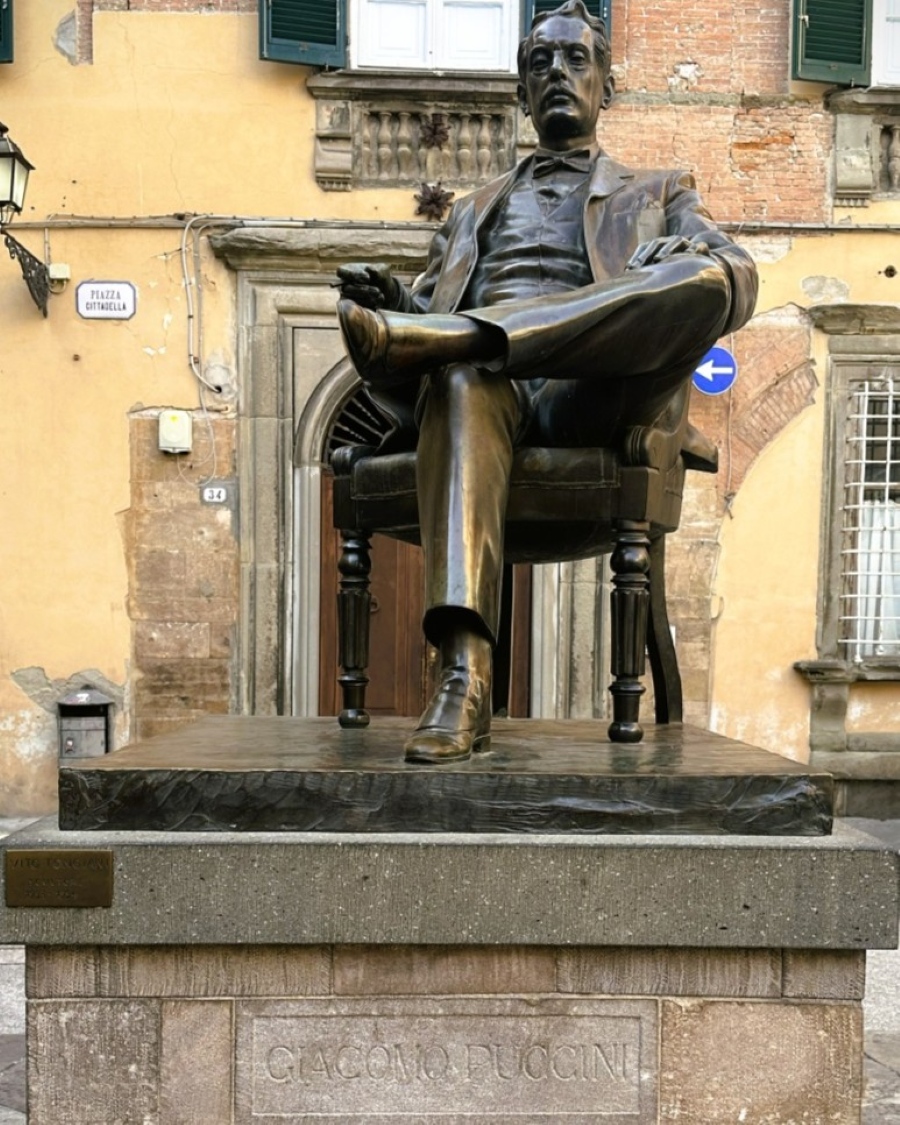
Lucca was the hometown of Giacomo Puccini (1858–1924), one of Italy’s greatest opera composers. A wonderful way to connect with his legacy is to visit the Puccini Museum during your trip to Lucca . Located in the heart of the old town near Piazza Cittadella, the museum—housed in Puccini’s birthplace—displays his original piano, handwritten scores, family portraits, and letters.
The museum’s bookshop and gift shop stock replicas of Puccini memorabilia, vintage volumes, and sheet music — a perfect place to pick up a souvenir of your visit. Just outside, in Piazza Cittadella, the bronze statue of Puccini is a popular photo stop.
To truly immerse yourself in Lucca’s music, pair the museum visit with an evening Puccini recital at the Church of San Giovanni (performances typically begin around 7 pm, with seasonal variations). It’s one of the most unforgettable things to do in Lucca for music lovers.
11. Experience Lucca’s Festivals — Where Music and Culture Come Alive
If you happen to visit Lucca in summer, you might just be in for a treat. The Lucca Summer Festival, held each year in Piazza Napoleone, attracts international artists from all around the world. Past lineups at the festival have featured legends like Elton John, Bob Dylan, Eric Clapton, and The Rolling Stones. Come during this time (June–July), and you’ll find Lucca buzzing with energy, open-air concerts and performances that fill its piazzas with music.
For classical music lovers, the Puccini Festival, held in an open-air theater in Torre del Lago (about 30 minutes from Lucca), makes for an unforgettable evening. It celebrates the composer’s works on the shores of Lake Massaciuccoli — a setting closely tied to Puccini’s life.
Together, these festivals capture the musical heritage and spirit of Lucca. Whether you visit for iconic performances at the Summer Festival or for Puccini’s timeless arias, these events reveal why Lucca is one of Tuscany’s most musical cities.
12. Indulge in Authentic Tuscan Cuisine
Indulging in Italian food is a must on any trip to Italy — and in Lucca, that means seeking out tordelli lucchesi (meat-filled pasta), zuppa di farro (spelt soup), cecina, and buccellato—best enjoyed with a glass of local Colline Lucchesi or Montecarlo wine. A perfect way to cap your dining experience is by trying the regional digestivo Biadina Lucchese.
Lucca’s culinary scene mirrors the city itself—timeless and full of character. From trattorias tucked behind ancient walls to elegant, Michelin-recognized dining rooms, every meal offers a glimpse into Tuscan tradition.
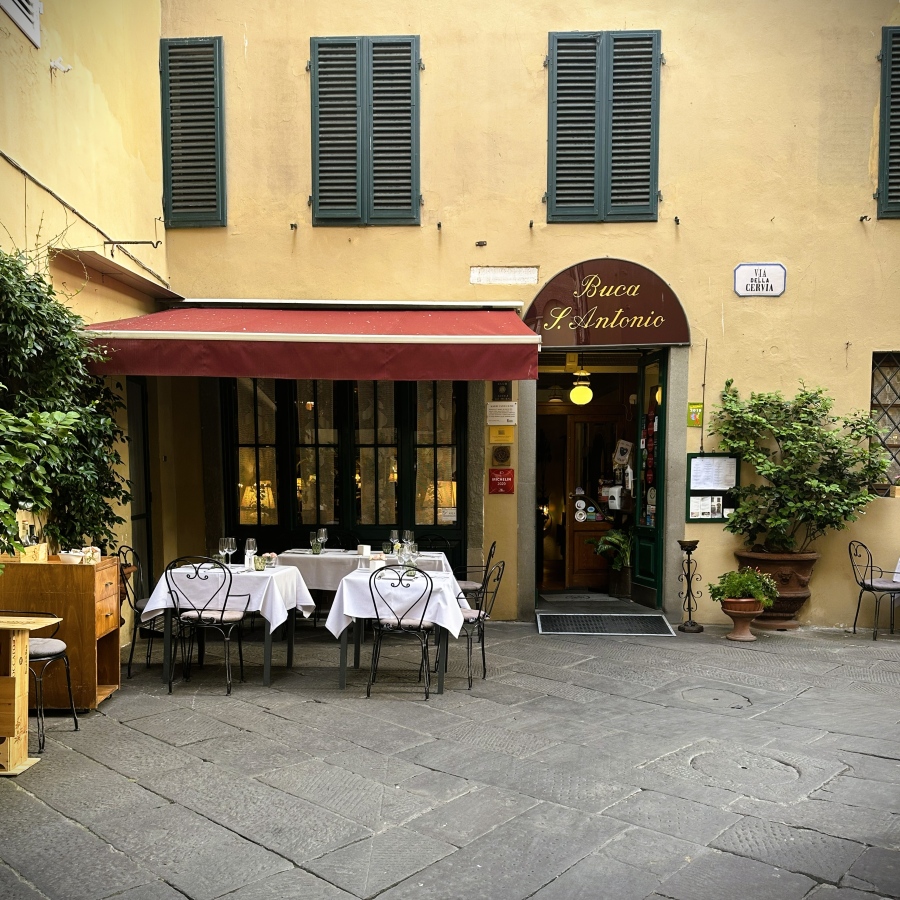
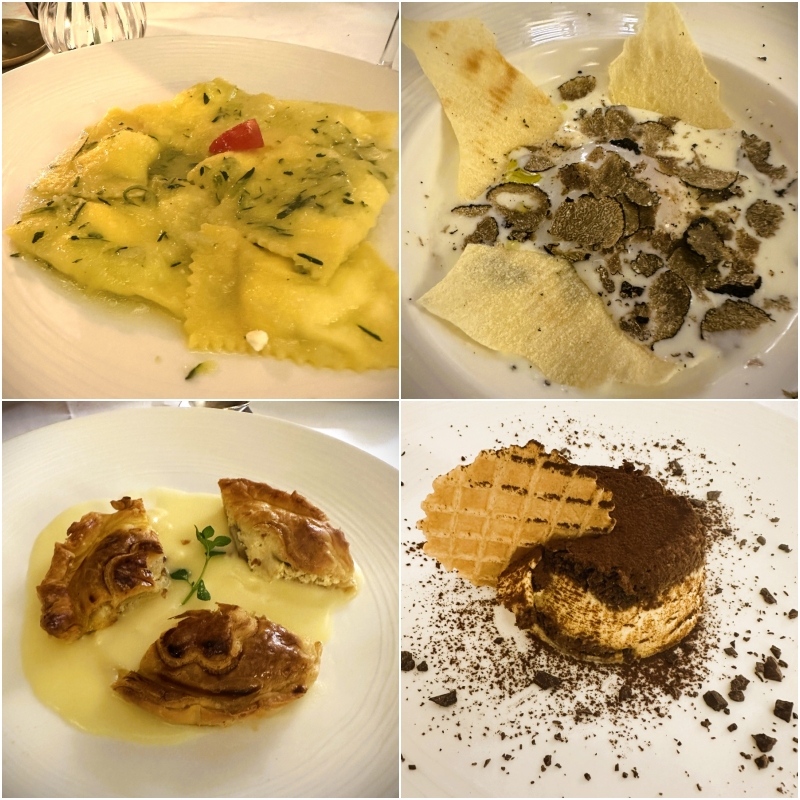
For an authentic experience, we chose Buca di Sant’Antonio, one of the oldest restaurants in town. The old-world setting—copper pans hanging from the ceiling, white tablecloths, and attentive service—set the tone beautifully. We lingered over tortino di funghi porcini and the restaurant’s signature tordelli, savoring the culinary spirit of Tuscany one bite at a time.
From rustic trattorias to refined dining rooms, Lucca’s food scene is one of the most delicious ways to experience Tuscany. Some other restaurants we loved in Lucca were :
-
Trattoria da Giulio in Pelleria – classic, family-style, great value.
-
Osteria Baralla – near Piazza dell’Anfiteatro, traditional and cozy.
-
Ristorante Giglio – refined, modern touch overlooking Piazza del Giglio.
Travel tip: Restaurants in Lucca fill up fast in peak season—reserve ahead. Typical dinner service starts after 7:30 pm, and many spots close mid-afternoon.
13. Pause at Piazzetta del Libro — A Hidden Gem for Book Lovers
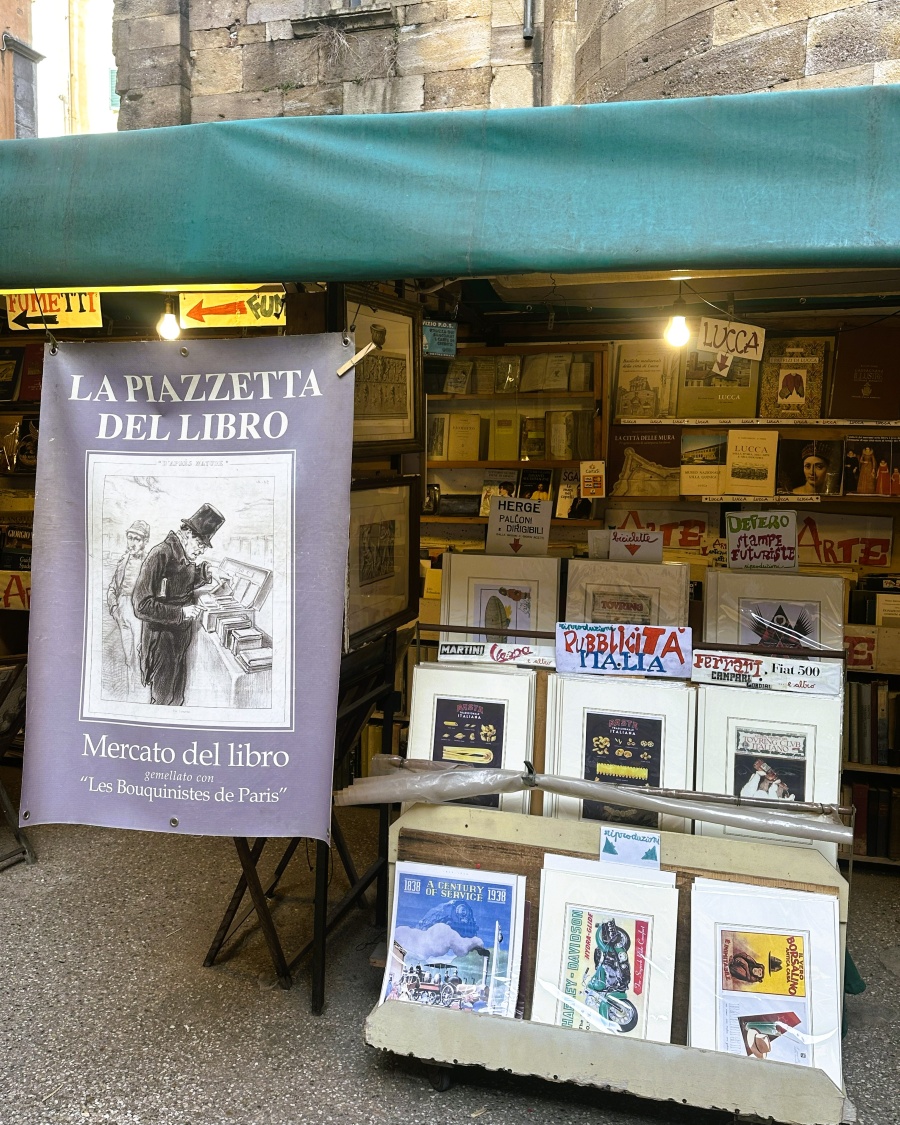
Tucked away just off Via Fillungo, in Piazza San Giovanni, lies the cozy Piazzetta del Libro. This small square feels like a secret corner of Lucca — one of those experiences locals cherish but many travelers miss. Its outdoor bookstalls are a treasure trove for collectors, filled with secondhand novels, vintage prints, and well-loved Italian classics. Whether you are simply browsing or hoping to take home a literary souvenir, a stop here offers a peaceful pause after a day of sightseeing. Among Lucca’s many hidden gems, Piazzetta del Libro remains a favorite for book lovers and slow travelers alike.
14. Take an Easy Day Trip from Lucca to Pisa
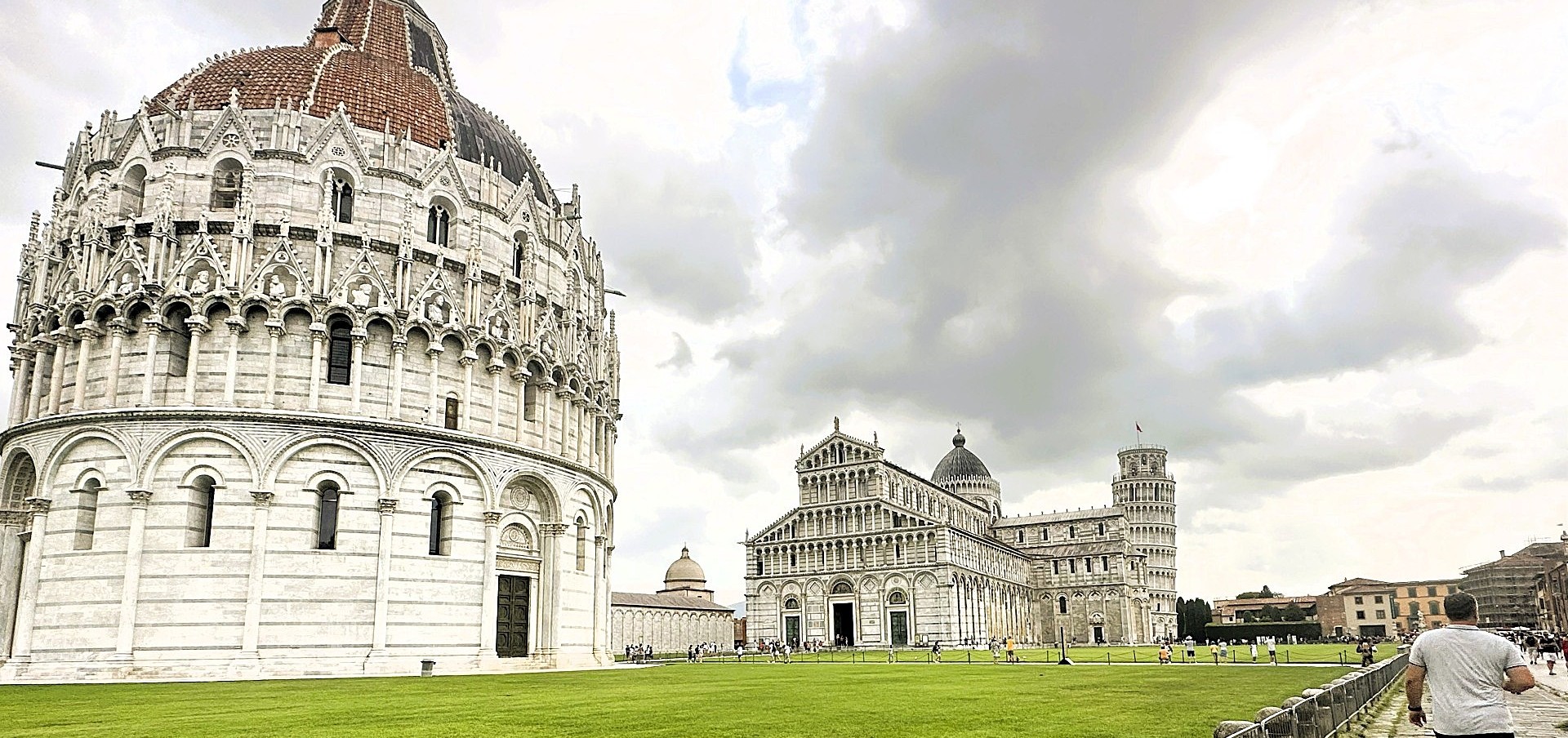
One of the easiest and most popular day trips from Lucca is to nearby Pisa. Frequent regional trains connect these two Tuscan cities. Once you board the train in Lucca, you’ll arrive at Pisa Centrale in about 30 minutes. From the Pisa train station, it’s a pleasant 20-minute walk — or a short bus ride — to Piazza dei Miracoli, home to the Leaning Tower of Pisa, Cathedral, and Baptistery.
You can also opt to take a bus from Lucca to Pisa, but the train is generally faster and more convenient. Tickets can be purchased at the station or online through Trenitalia, and if you are traveling with a Eurail pass, the journey between Lucca and Pisa is covered by the pass.
The first time we visited Pisa, we had stayed in Pisa itself and explored the city and its sights in one day. The second time around, we visited Pisa as a day trip from Lucca. In my humble opinion, and as many travelers also find, staying in Lucca felt like a more relaxed and authentic base than Pisa. If you’re planning your Lucca itinerary, you can easily explore Pisa as a half- or full-day trip from Lucca — and find further details in my Pisa travel guide.
A day trip from Lucca to Pisa is one of the most effortless ways to experience two of Tuscany’s most famous cities in one incredible trip.
Lucca at a Glance
Whether you’re walking its ancient walls at sunset, savoring tordelli lucchesi in a cozy trattoria, or listening to Puccini’s music drift through its piazzas, Lucca reveals itself slowly and leaves a lasting impression. Compact yet layered with history, it’s a Tuscan gem that invites you to linger — not rush. With its architecture, history, cuisine, and rustic charm, Lucca truly is one of Tuscany’s most captivating small cities. Among all the things to do in Lucca, perhaps the most memorable is simply to pause — to breathe, and let the rhythm of this walled city draw you in.
We thoroughly enjoyed experiencing this beautiful corner of Tuscany and hope to return someday. Until then… Arrivederci, dear Lucca!
View this post on Instagram
Disclaimer: It’s a pleasure for us to share our travel experiences with all our readers and we sincerely hope to inspire your future travels. In order to help us maintain this blog and offset the costs of running landoftravels.com, we have sprinkled affiliate links throughout the site. If you choose to make a purchase via any of these affiliate links, we’ll earn a tiny commission at no additional cost to you.
If you enjoyed reading this post, please don’t forget to share it!


Hello ! I’m Aditi …..
Welcome to Land Of Travels – a travel blog that my husband Manish and I started to share our travel stories and travel tips. We are full-time professionals, dedicated parents, foodies, and it is our shared passion for travelling that lead us to become part-time bloggers.
I was born and brought up in Northern India, and have been living in Bay Area, California for more than two decades now. Since childhood, I’ve always had a passion to travel far & wide and experience different cultures. I am passionate about planning our trips and exploring off-the-beaten-path destinations.
My sincere hope is that the travel tips offered on this blog will help you plan your next memorable adventure.
Happy travels!
~ Aditi Sharma ~


We have never been but it looks absolutely lovely and would make such a nice getaway for me and my husband
That’s good that you didn’t feel too overwhelmed even though you went in the main tourist time. Lucca sounds like a lovely place, and not somewhere I’d heard of before x
Lucca has such a gentle pace that it really helps you settle in, even during the busier times. I’m so glad the post gave you a feel for what it is like.
How beautiful Lucca is!! I love all the buildings and flowers. What a lovely place to enjoy
Lucca truly is charming — the flowers, the quiet lanes, and its architecture make it such a peaceful place to wander. I am happy the photos and details brought a little of that magic to you!
I’ve never been to Lucca and now I feel so bad I did not! I will do it next time I am in Italy, it is gorgeous…
Italy has so many gems that it’s impossible to see them all in one trip. Lucca is absolutely worth adding to your list next time… it’s gorgeous, calm, and full of little surprises around every corner.
What a great list of things to do in Lucca! ? Definitely bookmarking this for when I plan a trip. So many cool spots to explore!
Thank you so much! Lucca really is full of hidden corners and lovely surprises— I’m so glad the list inspired you, and I hope it helps you make the most of your trip when you go.
This is an area of Italy I knew nothing about, you have really shared its beauty and now a place I would love to visit
Lucca is one of those places that quietly charms you, and it means a lot to me that the post helped bring its beauty forth —hope you get to experience it in person one day.
My cousin recently went to Lucca and said it was fantastic, but he didn’t go to half the things on your list! It looks like you made the most of the area.
Lucca has so much to offer and it really rewards slow wandering. I’m glad your cousin enjoyed it too—there’s definitely plenty to go back for!
Lucca really does look like a beautiful place to explore. It definitely looks like it is full of history and I would love to explore inside the city walls.
Absolutely—those Renaissance walls are one of the most magical parts of the city! Walking or cycling along the top gives you such a peaceful view of Lucca’s towers and gardens. I hope you get to explore it someday!
Oh, wow. I would devote an entire trip to just absorbing the beauty! It’s absolutely gorgeous there!
Lucca really is one of those places in Tuscany where you can slow down and just let the beauty sink in. Every corner feels like an invitation to wander. I hope you get the chance to experience it at your own pace someday — it’s truly unforgettable.
What a gem! Thanks for breaking everything down so cleanly! Walking and day trips are definitely two of my most favourite activities, and I’m happy to see so much of it can be done in (and from) Lucca!
I love Tuscany!! I didn’t have time to visit Lucca on my trip, though. But I’d love to go back and fit it in! It looks delightful
I loved Lucca when I visited in 2018. It was an easy day trip by train from northern Tuscany where I stayed in an agritourismo (farm stay). I think the coolest thing was walking on the city walls.
Lucca looks like such a charming town with so many fun things to do. The bike tour would be right up my alley as a fun way to see all that incredible architecture!
Absolutely — Lucca packs so much charm into such a small space! A bike ride along the walls really is the perfect way to take it all in – it was one of the highlights for our family.
I love the idea of spending a few days is such a small and charming town. The fact that it wasn’t busy during peak season is such a rare find in Tuscany. Thank you for sharing.
That quieter feel is what won me over too — it feels lively yet not overrun. Hope you get to visit Lucca soon.
I’ll be honest, I’d never heard of this city! But, glad it’s now on my radar, I love charming historic spots like this.
Lucca doesn’t always make the big Italy lists, but once you discover it, it becomes unforgettable. I hope you get to experience it for yourself the next time you’re in Tuscany!
I’ve been wanting to visit Tuscany for so long. Lucca looks like a perfect place to add to my future itinerary.
It fits beautifully into a Tuscany route — slow, walkable, and full of little surprises. Hope you get there soon!
Hello! You’re lucky to visit Lucca. Lucca is one of my favs in Tuscany. What an incredible architecture, plus picturesque natural landscapes!
True – the mix of architecture and nature feels so effortless. Happy to meet another Lucca fan :)!
Your thought on travelling to smaller towns in peak season is the right one. I have been to Italy only once and having ticked off the more famous spots, I am looking forward to exploring more of such places in next travels.
If you loved Italy the first time, Lucca will completely steal your heart. Smaller towns have their own special way of showing the soul of Tuscany.
Great itinerary for a visit to Lucca! I’ve never been to Italy, but I’ve read so many blog posts and seen so many photos, I feel that if I ever have the chance to go, I’ll have plenty to do! I’d absolutely love to challenge myself and climb the stairs at the Guinigi Tower. I can only imagine the view from up there! I have always been a sucker for a view!
Thank you for your kind words. You’ll love Lucca — the climb is worth every step, and the tree-top terrace feels almost unreal. Add buccellato afterwards and it’s the perfect sweet reward.
Lucca sounds like my kind of place to visit. It would be fun to explore by bike. I also like the fact that it’s easy to get to Pissa and other areas in Tuscany by train.
Yes! The bike-friendly streets and quick train links are part of what make Lucca so stress-free to visit. I think you’ll love the pace of life there.
We have visited a lot of spots in Italy but have missed Lucca. We have plans to return to Tuscany and will definitely add Lucca to the list. I love the idea of exploring by bike. And heading high for panoramic views. We would definitely try the buccellato di Lucca.
You’ll love it for sure. And buccellato with a coffee in Piazza San Michele is quintessential Lucca. So glad it made your list!
Lovely blog post! I have been to Tuscany over two decades ago and enjoyed our Spring trip. Missed out on Lucca. Would love to climb the Guinigi tower for the panoramic views, and also explore the historic churches. The ancient gates sound interesting. Biking is probably the best way to explore these smaller European towns.
Thank you for your kind words. You’re right, biking is such a great way to explore Lucca — the promenade on the walls were practically made for slow cycling and leisurely walks. Hope Lucca gets a spot on your next Italy adventure!
Wonderful article! I was born and raised in Tuscany, close to Livorno, and I visited Lucca a few times when I was a teenager. Now, reading your article, I see all the things I never even knew were there 🙂 This article is surely a must-have guide for everyone visiting Lucca, including people like me, who were raised in the region.
Thank you so much, Maricla! That means so much coming from someone who grew up in Tuscany. Lucca really has a quiet magic that makes you want to slow down and explore it deeply. I am so glad that this post helped you rediscover a place you already knew.
What a delightful-sounding village! I would want to spend more than just a few days there!
It truly is such a delight to explore. Lucca has a quiet charm that invites you to wander slowly and stay a little longer than planned. I hope you get the chance to experience it for yourself soon!
Our son recently visited Lucca and loved it. We didn’t make it there on our previous trips, but hope to have a chance to explore further.
That’s wonderful to hear! Lucca has such a peaceful rhythm – it really is a place that stays with you. I hope you get the chance to experience it yourself on a future trip – am sure you will love it as well.
I absolutely loved visiting Lucca during my Tuscany trip — it’s such a charming and peaceful town! Walking or biking along the ancient city walls was one of my favorite experiences, and climbing the Guinigi Tower for those panoramic views was unforgettable. Your post captures the essence of Lucca perfectly — it really is a place where you just want to slow down and soak in the atmosphere.
Thank you so much, Agnes! I’m so glad the post brought back good memories — biking along the walls and taking in the view from Torre Guinigi were highlights for us too.
Made so descriptive & clear
Thank you.
How descriptive!. All things are described so vividly